Turning a vehicle might seem like one of the simplest actions in driving. After all, it’s something every driver does multiple times on every journey. But here’s the truth—most driving errors and near-misses happen not because turning is difficult, but because drivers skip or rush the essential steps leading up to it.
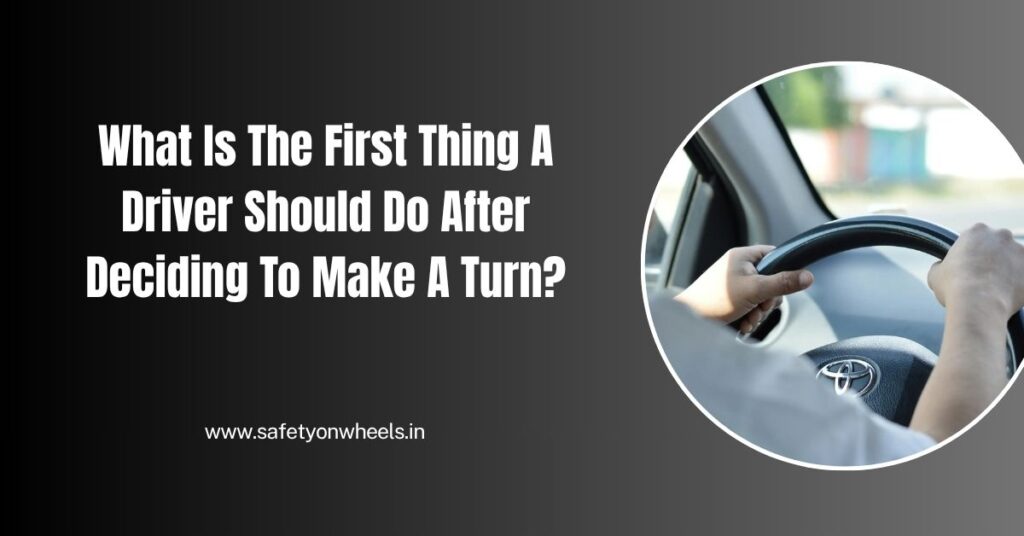
This brings us to an important question: what is the first thing a driver should do after deciding to make a turn?
The answer is straightforward but critical. The first thing a driver should do is check mirrors and surroundings to assess traffic conditions before taking any action.
This initial step sets the foundation for a safe, smooth, and predictable turn. In this detailed guide, we’ll break down why this step matters, what follows next, and how to execute turns like a confident and responsible driver.
What Is The First Thing A Driver Should Do After Deciding To Make A Turn?
The first thing a driver should do after deciding to make a turn is check mirrors and surroundings to ensure it is safe to proceed.
This includes:
- Looking in the rear-view mirror
- Checking side mirrors
- Observing blind spots
- Assessing nearby vehicles, cyclists, and pedestrians
Only after this awareness check should a driver proceed with signaling and positioning.
Skipping this step is like stepping into a busy road without looking—it’s risky and unnecessary.
Also read: How Do A Lot Of Students Incorrectly Prepare For Thinking About College?
Why Checking Mirrors Comes First?
Many drivers assume signaling is the first step, but signaling without awareness can create confusion or danger.
Awareness Before Action
Checking mirrors helps you:
- Understand traffic behind and around you
- Identify fast-approaching vehicles
- Detect cyclists or motorcyclists in blind spots
Preventing Sudden Movements
Without checking mirrors:
- You may cut off another vehicle
- You might force others to brake suddenly
Building Predictability
Safe driving relies on being predictable. Awareness ensures your actions don’t surprise other road users.
The Complete Turning Sequence Explained
Turning safely involves a sequence of steps, each building on the previous one.
Step 1: Check Mirrors and Surroundings
This is your starting point.
You gather information about:
- Traffic behind
- Vehicles in adjacent lanes
- Road conditions
Step 2: Signal Your Intentions
After confirming it’s safe:
- Use your indicator to show your direction
This gives other drivers time to:
- Adjust their speed
- Prepare for your movement
Step 3: Position Your Vehicle Correctly
Move into the appropriate lane or position.
For example:
- Left turn: move toward the left side
- Right turn: position closer to the center or right lane
Step 4: Adjust Speed
Slow down gradually.
Avoid:
- Sudden braking
- Sharp deceleration
Step 5: Check Again Before Turning
Before executing the turn:
- Re-check mirrors and blind spots
- Look for pedestrians and cyclists
Step 6: Execute the Turn Smoothly
Turn the steering wheel:
- Gradually
- Without jerks
Maintain control and stay within your lane.
The Importance of Blind Spot Checks
Mirrors don’t show everything.
What Are Blind Spots?
Blind spots are areas:
- Not visible in mirrors
- Located around the sides of your vehicle
Why They Matter
Ignoring blind spots can lead to:
- Collisions with nearby vehicles
- Dangerous lane changes
Quick Shoulder Check
A brief glance over your shoulder:
- Confirms no hidden vehicles
- Adds an extra layer of safety
Common Mistakes Drivers Make When Turning
Even experienced drivers can develop bad habits.
Skipping Mirror Checks
This is the most common mistake and often leads to:
- Near-misses
- Sudden braking situations
Signaling Too Late
Late signaling:
- Confuses other drivers
- Reduces reaction time
Poor Positioning
Incorrect lane positioning can:
- Block traffic
- Increase accident risk
Turning Too Fast
Speeding through a turn:
- Reduces control
- Increases risk of skidding
Real-Life Scenarios Where Proper Turning Matters
Understanding practical situations helps reinforce safe habits.
Turning at Intersections
Intersections are high-risk areas.
Drivers must:
- Watch for cross traffic
- Yield when necessary
Turning in Traffic
In busy roads:
- Timing becomes crucial
- Awareness must be constant
Turning Near Pedestrian Areas
Pedestrians may:
- Cross unexpectedly
- Be less visible
How Experience Improves Turning Decisions
With practice, turning becomes smoother and more intuitive.
Faster Observation
Experienced drivers:
- Scan mirrors quickly
- Detect risks earlier
Better Judgment
They:
- Choose the right moment to turn
- Avoid unnecessary delays
Improved Control
Practice leads to:
- Smoother steering
- Better speed management
The Role of Defensive Driving
Defensive driving enhances turning safety.
Expect the Unexpected
Assume that:
- Other drivers may not follow rules
- Pedestrians may act unpredictably
Keep a Safety Margin
Maintain:
- Enough space
- Adequate time to react
Stay Focused
Avoid distractions while preparing to turn.
Tips to Master Safe Turning Every Time
Improving your turning technique doesn’t require advanced skills—just consistency.
Build a Habit
Always follow the same sequence:
- Check
- Signal
- Position
- Turn
Stay Calm
Avoid rushing decisions.
Practice Regularly
The more you drive, the more natural safe turning becomes.
Learn from Mistakes
Every driving experience is a chance to improve.
The Bigger Picture: Small Actions, Big Safety Impact
Turning is a routine action, but it involves multiple safety checks and decisions.
A simple mirror check can:
- Prevent accidents
- Improve traffic flow
- Build driver confidence
Safe driving is not about complexity—it’s about consistency.
Also read: When May You Overtake Another Vehicle On The Left?
Final Thoughts
So, what is the first thing a driver should do after deciding to make a turn? The answer is clear: check mirrors and surroundings to ensure it is safe before taking any further action.
This single step sets the tone for everything that follows. It allows you to make informed decisions, avoid sudden surprises, and maintain control of your vehicle.
In driving, small habits create big results. And when it comes to turning safely, it all begins with a simple glance in the mirror.