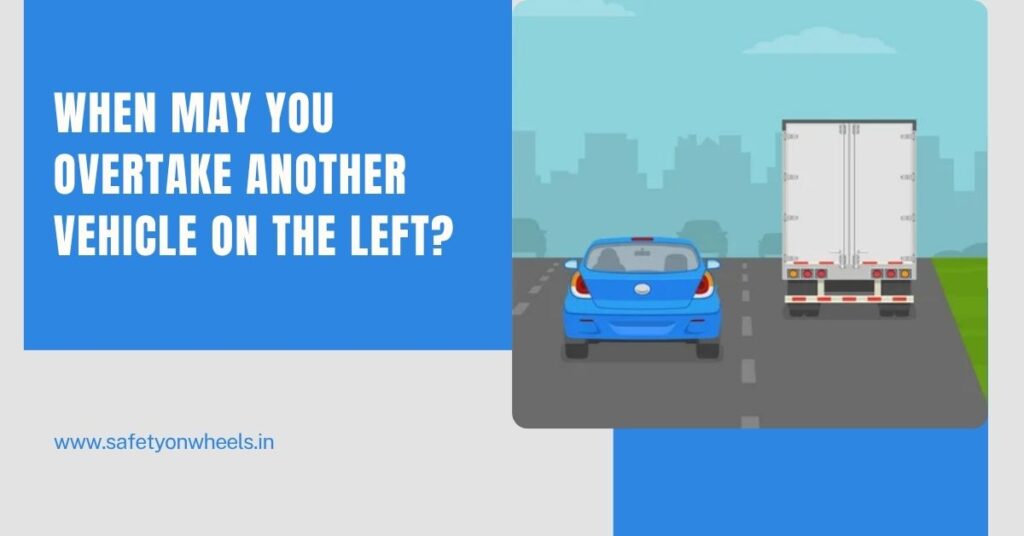
Overtaking is one of the most misunderstood driving maneuvers. Most drivers grow up hearing a simple rule: always overtake on the right. While that’s generally true, it’s not the full story.
There are specific situations where overtaking on the left is allowed—and even safer than overtaking on the right. But here’s the catch: doing it at the wrong time or in the wrong way can quickly turn into a dangerous mistake.
So, when may you overtake another vehicle on the left?
In this detailed guide, we’ll break down the exact situations where left-side overtaking is permitted, the risks involved, and how to do it safely without compromising control or violating road rules.
When May You Overtake Another Vehicle on the Left?
You may overtake another vehicle on the left only when it is safe, legal, and appropriate—typically when the vehicle ahead is turning right, when traffic is moving slowly in multiple lanes, or when road markings and conditions clearly allow it.
In simple terms, overtaking on the left is an exception, not the rule. It requires careful judgment, awareness, and proper road conditions.
Let’s explore these situations in detail.
Also read: When Should You Update Your Vehicle Registration Certificate?
Situations Where Overtaking on the Left Is Allowed
Understanding the correct scenarios is key to avoiding confusion and staying safe.
When the Vehicle Ahead Is Turning Right
This is one of the most common and widely accepted situations.
If a vehicle:
- Signals a right turn
- Moves toward the center or right side of the road
You may pass on the left if there is enough space and no obstruction.
This prevents unnecessary delays and keeps traffic flowing smoothly.
In Multi-Lane Traffic
On roads with clearly marked lanes moving in the same direction:
- Vehicles may travel at different speeds
- Passing on the left can occur naturally
This is often called lane discipline driving, not traditional overtaking.
However, drivers must:
- Stay within lane markings
- Avoid sudden lane changes
In Slow-Moving or Congested Traffic
During heavy traffic:
- Vehicles may move at varying speeds
- Faster lanes may shift dynamically
In such cases, passing on the left may happen as part of normal traffic flow.
Still, it requires caution and awareness.
When Directed by Road Signs or Markings
Sometimes, road design or signage:
- Allows or directs vehicles to pass on a specific side
Always follow:
- Lane arrows
- Road markings
- Traffic signs
Why Overtaking on the Left Can Be Risky
Even when allowed, overtaking on the left carries higher risks compared to the right.
Limited Visibility
Drivers often:
- Check mirrors and blind spots on the right more carefully
- Expect overtaking from the right side
This makes left-side overtaking less predictable.
Blind Spots
The left side of a vehicle can have:
- Larger blind spots, especially for trucks or buses
Entering this zone increases collision risk.
Unexpected Movements
The vehicle ahead may:
- Change lanes suddenly
- Adjust position without warning
This is more dangerous if you’re overtaking from the left.
Key Safety Rules to Follow
If you ever need to overtake on the left, safety should be your top priority.
Ensure Clear Visibility
Only proceed when:
- You can clearly see the road ahead
- There are no hidden obstacles
Maintain a Safe Speed
Avoid:
- Sudden acceleration
- Excessive speed differences
Smooth and controlled movement reduces risk.
Watch for Signals
Pay close attention to:
- Turn indicators
- Brake lights
- Road behavior
Avoid Blind Spots
Never stay alongside another vehicle longer than necessary.
Complete the maneuver quickly and safely.
Keep Adequate Space
Ensure there is:
- Enough room to pass
- Safe distance from other vehicles
Situations Where You Should NOT Overtake on the Left
Knowing when not to overtake is just as important.
On Single-Lane Roads
If there is:
- No clear lane for passing
- Limited space
Avoid overtaking on the left entirely.
Near Intersections or Crossings
Intersections are unpredictable.
Vehicles may:
- Turn suddenly
- Stop unexpectedly
In Poor Visibility Conditions
Avoid overtaking when:
- Visibility is reduced
- Weather conditions are poor
Around Large Vehicles
Trucks and buses:
- Have significant blind spots
- May not see you on the left
Understanding the Difference Between Passing and Overtaking
Many drivers confuse these two terms.
Overtaking
- Involves leaving your lane
- Requires maneuvering around a slower vehicle
Passing in Traffic
- Happens within marked lanes
- Does not involve risky lane changes
Most left-side movement in traffic is actually passing, not overtaking.
Understanding this distinction helps you make better decisions.
The Role of Lane Discipline
Proper lane discipline reduces confusion and improves safety.
Stay in Your Lane
Avoid unnecessary:
- Lane switching
- Aggressive driving
Follow Traffic Flow
Move with:
- The speed of your lane
- Surrounding vehicles
Use Indicators Properly
Clear signaling ensures:
- Other drivers understand your intentions
- Safer lane changes
Common Mistakes Drivers Make
Even experienced drivers can make errors.
Assuming It’s Always Allowed
Left-side overtaking is situational, not universal.
Ignoring Blind Spots
Failing to check blind spots can:
- Lead to collisions
- Create dangerous situations
Driving Aggressively
Aggressive behavior:
- Reduces reaction time
- Increases risk
Misjudging Space
Incorrect judgment can result in:
- Close calls
- Loss of control
Practical Tips for Safer Overtaking Decisions
Good driving habits make all the difference.
Think Before You Act
Ask yourself:
- Is it necessary?
- Is it safe?
Stay Predictable
Avoid sudden or confusing movements.
Keep a Defensive Mindset
Assume other drivers may:
- Not see you
- Make mistakes
Practice Awareness
Constant observation improves:
- Reaction time
- Decision-making
The Bigger Picture: Smart Driving Over Quick Driving
Overtaking is not about speed—it’s about judgment.
Choosing the right moment:
- Improves safety
- Reduces stress
- Prevents accidents
Safe drivers focus on:
- Control
- Awareness
- Responsibility
Also read: What Are Three Ways To Lower The Cost Of College?
Final Thoughts
So, when may you overtake another vehicle on the left? Only in specific situations—such as when a vehicle is turning right, in multi-lane traffic, or when road conditions clearly allow it—and always with caution.
Overtaking on the left is not inherently wrong, but it demands higher awareness and better judgment. The risks are greater, and the margin for error is smaller.
In the end, safe driving isn’t about taking shortcuts—it’s about making smart, well-timed decisions that protect you and everyone around you.