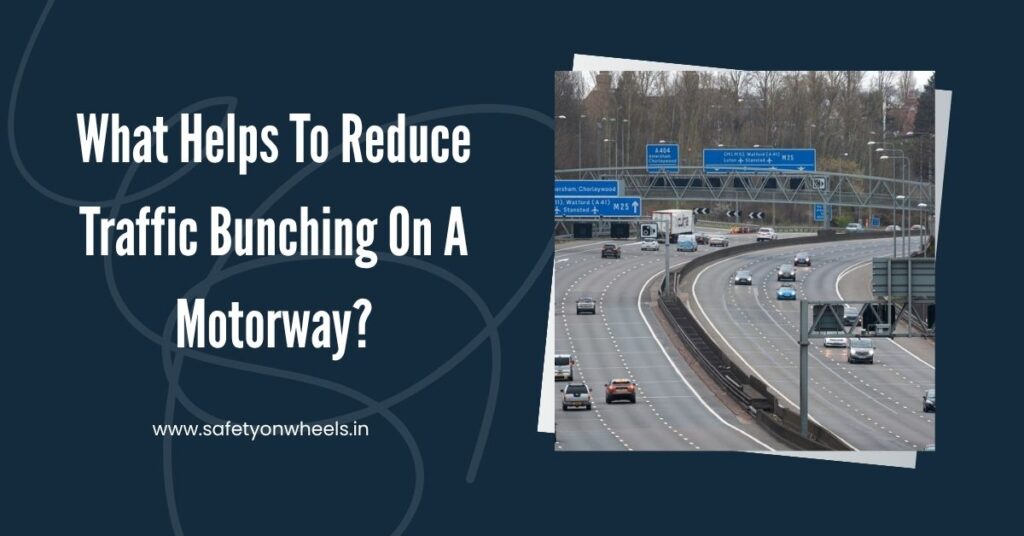
You’re cruising along a motorway at a steady speed, everything feels smooth—and then suddenly, brake lights appear ahead. You slow down, then speed up again, only to repeat the cycle a few minutes later. No accident, no visible obstacle. Just waves of stop-and-go traffic.
This frustrating pattern is called traffic bunching.
It’s one of the most common causes of congestion on high-speed roads, and interestingly, it often starts with small, avoidable driver behaviors. The good news? It can also be reduced with equally small but smarter actions.
So, what helps to reduce traffic bunching on a motorway?
The answer lies in a combination of driver discipline, awareness, consistent speed control, and intelligent traffic systems. In this guide, we’ll break it all down clearly so you understand not just the “what,” but the “why” behind smoother motorway driving.
What Helps To Reduce Traffic Bunching On A Motorway?
Traffic bunching is reduced by maintaining a safe following distance, keeping a steady speed, avoiding unnecessary braking, following lane discipline, and using traffic management systems like variable speed limits.
In simple terms, smoother driving leads to smoother traffic.
Understanding Traffic Bunching and Why It Happens
Before we solve the problem, let’s understand what causes it.
The Chain Reaction Effect
Traffic bunching often begins with:
- A slight brake from one driver
- A delayed reaction from the next
Each driver behind:
- Brakes a little harder than the one before
This creates a ripple effect, sometimes called a “traffic wave.”
Human Reaction Time
The average driver takes about:
- 1 to 1.5 seconds to react
At motorway speeds, that delay:
- Covers a significant distance
- Increases the chance of sudden braking
High Traffic Density
When vehicles:
- Travel too close together
There’s less room to absorb changes in speed, leading to:
- Clusters of vehicles
- Reduced flow efficiency
Also read: When Will You Feel The Effects Of Engine Braking?
The Importance of Maintaining Safe Following Distance
If there’s one habit that dramatically reduces bunching, it’s this.
Why Following Distance Matters
A proper gap:
- Gives you time to react smoothly
- Prevents sudden braking
The Time Gap Rule
Drivers should aim for:
- At least a 2-second gap in normal conditions
- 3–4 seconds in wet or poor conditions
This spacing:
- Acts like a buffer
- Absorbs speed changes
Real Impact on Traffic Flow
Research in traffic engineering shows:
- Even small increases in following distance
- Can significantly reduce congestion waves
Consistent Speed: The Secret to Smooth Traffic
Speed consistency plays a major role in preventing bunching.
Avoid Speed Fluctuations
Frequent changes like:
- Accelerating hard
- Braking suddenly
Disrupt traffic flow.
Drive at a Steady Pace
Maintaining a constant speed:
- Helps vehicles behind adjust smoothly
- Reduces unnecessary braking
Use Cruise Control Wisely
On open motorways:
- Cruise control helps maintain steady speed
- Reduces driver-induced speed changes
The Role of Anticipation in Driving
Good drivers don’t just react—they anticipate.
Look Beyond the Car Ahead
Focus on:
- Traffic further up the road
- Patterns in brake lights
Early Adjustments
Instead of:
- Braking suddenly
You can:
- Ease off the accelerator early
This creates:
- Smoother deceleration
- Less disruption
Read Traffic Behavior
Watch for:
- Lane changes
- Merging vehicles
Anticipation reduces surprises—and surprises cause bunching.
Lane Discipline and Its Impact on Traffic Flow
Lane behavior affects more than just your own driving.
Use Lanes Correctly
Stick to:
- Your designated lane
- Overtaking lanes only when needed
Avoid Unnecessary Lane Changes
Frequent switching:
- Interrupts traffic flow
- Forces others to slow down
Don’t Block Faster Lanes
Staying in overtaking lanes:
- Causes faster vehicles to bunch up
- Increases congestion
How Technology Helps Reduce Bunching
Modern motorways don’t rely on drivers alone. Technology plays a crucial role.
Variable Speed Limits
Electronic signs adjust speeds based on:
- Traffic conditions
- Road situations
These systems:
- Prevent sudden slowdowns
- Spread vehicles more evenly
Ramp Metering
Entry ramps may use traffic signals to:
- Control how many vehicles enter the motorway
This prevents:
- Overcrowding
Smart Traffic Monitoring
Sensors and cameras:
- Detect congestion early
- Allow authorities to respond quickly
Common Driver Mistakes That Cause Bunching
Sometimes, it’s not what you do—it’s what you shouldn’t do.
Tailgating
Driving too close:
- Leaves no reaction time
- Forces sudden braking
Over-Braking
Braking more than necessary:
- Triggers chain reactions
Aggressive Driving
Quick acceleration and braking:
- Disrupt flow
- Increase congestion
Ignoring Road Conditions
Weather, road work, or visibility:
- Require speed adjustments
Practical Tips to Reduce Traffic Bunching
Let’s simplify everything into actionable advice.
Keep a Safe Gap
Always:
- Maintain proper following distance
Drive Smoothly
Avoid:
- Sudden inputs
- Jerky movements
Stay Predictable
Consistency helps:
- Other drivers anticipate your actions
Use Engine Braking
Easing off the accelerator:
- Helps slow down gradually
- Reduces brake use
Stay Calm
Patience:
- Improves decision-making
- Reduces aggressive behavior
Why Reducing Traffic Bunching Matters?
This isn’t just about convenience—it has real-world benefits.
Improved Safety
Smoother traffic:
- Reduces collision risk
Better Fuel Efficiency
Steady driving:
- Uses less fuel
Shorter Travel Times
Less congestion:
- Means faster journeys
Lower Stress Levels
Smooth driving:
- Makes the experience more comfortable
The Bigger Picture: Driving as a System
Motorway driving isn’t an individual activity—it’s a shared system.
Collective Responsibility
Every driver:
- Influences traffic flow
Small Actions, Big Impact
Simple habits like:
- Keeping distance
- Driving smoothly
Can:
- Improve conditions for everyone
Think Beyond Your Car
Driving isn’t about:
- Getting ahead
It’s about:
- Moving efficiently together
Also read: What Types Of Jobs Would Require A 2-year Degree?
Final Thoughts
So, what helps to reduce traffic bunching on a motorway?
The answer is simple but powerful: maintain safe distances, drive at a consistent speed, anticipate traffic, follow lane discipline, and support the flow rather than disrupt it.
While technology and road design help, the biggest difference comes from individual drivers making smarter choices.
The next time you’re on a motorway, remember this—smooth driving doesn’t just benefit you. It improves the journey for everyone around you.
And sometimes, the fastest way to get somewhere… is to stop trying to rush.