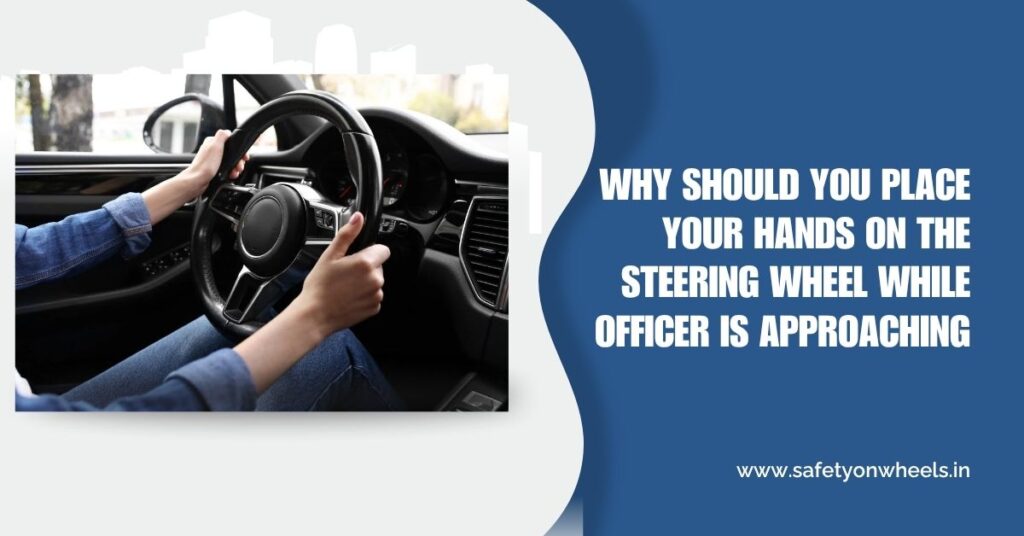
Getting pulled over by a law enforcement officer can feel stressful, even for experienced drivers. Your heart rate rises, your thoughts race, and suddenly even simple actions feel complicated. In that moment, small decisions matter more than you might think. One of the most important—and often overlooked—actions is placing your hands visibly on the steering wheel while the officer approaches your vehicle.
This simple gesture plays a major role in ensuring safety, communication, and trust during a traffic stop. In this guide, we’ll break down exactly why it matters, how it helps both you and the officer, and what best practices you should follow to handle the situation calmly and confidently.
Why Should You Place Your Hands on the Steering Wheel While Officer Is Approaching
Placing your hands on the steering wheel is not just a polite habit—it’s a critical safety practice. When an officer approaches your vehicle, they are entering an unknown situation. They don’t know who you are, what your intentions are, or what’s inside your vehicle. Their priority is to assess risk quickly.
By keeping your hands clearly visible on the steering wheel, you immediately communicate one key message: you are not a threat.
This action reduces uncertainty and helps the officer feel more at ease. It allows them to focus on the reason for the stop rather than worrying about sudden movements. From your perspective, it also sets a calm and cooperative tone for the interaction.
In short, visible hands equal reduced tension. And in high-stress environments like roadside stops, that matters a lot.
Also read: What Helps To Reduce Traffic Bunching On A Motorway?
Understanding Officer Safety Concerns During Traffic Stops
Traffic stops are among the most unpredictable situations officers face. According to global law enforcement safety studies, a significant percentage of officer injuries occur during routine stops. The risk doesn’t come from every driver, but from the uncertainty of not knowing which stop could turn dangerous.
When an officer walks toward your vehicle, they are scanning for potential threats. Quick or hidden hand movements can raise suspicion, even if your intentions are harmless. For example, reaching into your glove compartment without warning might be misinterpreted as reaching for a weapon.
Keeping your hands on the steering wheel removes that uncertainty. It gives the officer a clear visual confirmation that you are not holding anything dangerous. This simple action helps prevent misunderstandings and keeps the situation under control.
Think of it this way: you are helping the officer do their job safely, and in return, the interaction becomes smoother for you.
How This Simple Action Builds Trust and Cooperation
Trust during a traffic stop is built in seconds, not minutes. Your body language often speaks louder than your words. When you place your hands on the steering wheel, you demonstrate awareness, respect, and cooperation without saying a single word.
This behavior signals that you understand basic safety protocols. Officers are trained to notice such cues. A cooperative driver is more likely to experience a calm and professional interaction.
On the other hand, unclear or sudden movements can create tension. Even if you verbally say, “I’m just getting my license,” moving your hands out of sight before explaining can lead to unnecessary concern.
By keeping your hands visible, you establish a baseline of trust. From there, communication becomes easier and more effective.
The Psychology Behind Visible Hands
There’s a psychological aspect to this behavior that goes beyond driving rules. Humans naturally associate visible hands with safety. It’s a basic instinct—when we can see someone’s hands, we feel more secure.
Law enforcement training emphasizes this principle. Officers are taught to watch hands closely because hands can act quickly. This is why they often ask drivers to keep their hands where they can be seen.
By placing your hands on the steering wheel, you align with this expectation. You reduce the officer’s cognitive load, meaning they don’t have to constantly assess your movements. This leads to a calmer interaction for both sides.
It’s a small action, but it has a powerful psychological impact.
Best Practices During a Traffic Stop
Knowing what to do during a traffic stop can make the experience much smoother. While placing your hands on the steering wheel is essential, it’s part of a broader set of good practices.
Stay Calm and Pull Over Safely
As soon as you notice the signal to stop, slow down and pull over to a safe location. Use your indicators to show your intention. Avoid abrupt stops unless necessary.
Keep Your Hands Visible
Place both hands on the steering wheel, ideally at the “10 and 2” or “9 and 3” position. Keep them there until the officer gives further instructions.
Avoid Sudden Movements
Do not reach for documents, your phone, or anything else until the officer asks. If you need to move, inform the officer first. For example, say, “My license is in my wallet in my pocket. May I reach for it?”
Follow Instructions Clearly
Listen carefully and respond politely. If you don’t understand something, ask for clarification instead of guessing.
Turn On Interior Lights at Night
If it’s dark, turning on your interior light helps improve visibility inside the vehicle. This adds another layer of reassurance for the officer.
Common Mistakes Drivers Make
Even well-meaning drivers can make mistakes during a traffic stop. Being aware of these can help you avoid unnecessary complications.
One common mistake is reaching for documents too early. While it may seem helpful, it can actually create suspicion. Always wait for instructions.
Another mistake is keeping hands out of sight, such as resting them in your lap or on the door. Even casual positions can make it harder for the officer to assess the situation.
Some drivers also try to exit the vehicle immediately. Unless instructed, stay inside your car. Exiting without permission can escalate the situation quickly.
Finally, avoid using your phone during the stop. It can appear distracting or suspicious, even if you’re just trying to call someone.
Legal and Safety Perspective
From a legal standpoint, keeping your hands visible is not always explicitly written as a law, but it is widely recognized as a safety protocol. Many driver education programs and law enforcement agencies strongly recommend it.
More importantly, this practice aligns with broader road safety principles. Safe driving isn’t just about controlling your vehicle—it’s also about interacting responsibly with others on the road, including law enforcement.
By following this simple step, you contribute to a safer environment for everyone involved.
Real-Life Impact of Proper Behavior
Drivers who follow proper traffic stop etiquette often report smoother and quicker interactions. Officers are more likely to approach calmly and focus on resolving the situation efficiently.
In contrast, unclear behavior can prolong the stop. It may lead to additional questioning or precautionary measures, even if no violation occurred.
This doesn’t mean that visible hands guarantee a specific outcome, but they significantly reduce the chances of misunderstanding. And in high-pressure situations, reducing uncertainty is always beneficial.
Teaching New Drivers This Habit
For new drivers, traffic stops can feel intimidating. That’s why it’s important to teach this habit early. Driving schools and instructors should emphasize not just road rules, but also interaction etiquette.
Parents and experienced drivers can also play a role. Simple guidance like “keep your hands on the wheel if you’re pulled over” can make a big difference.
Building this habit early ensures that drivers respond correctly without hesitation when the situation arises.
Also read: What Are 3 Pieces Of Information You Can Learn About Careers In The Career Center?
Final Thoughts
Placing your hands on the steering wheel while an officer approaches may seem like a small detail, but it carries significant importance. It enhances safety, reduces tension, and builds trust within seconds.
Driving is not just about reaching your destination—it’s also about handling every situation responsibly, including interactions with law enforcement. By keeping your hands visible, staying calm, and following instructions, you create a safer experience for yourself and the officer.
In moments of uncertainty, simple actions speak volumes. And this is one of those actions that can make all the difference.