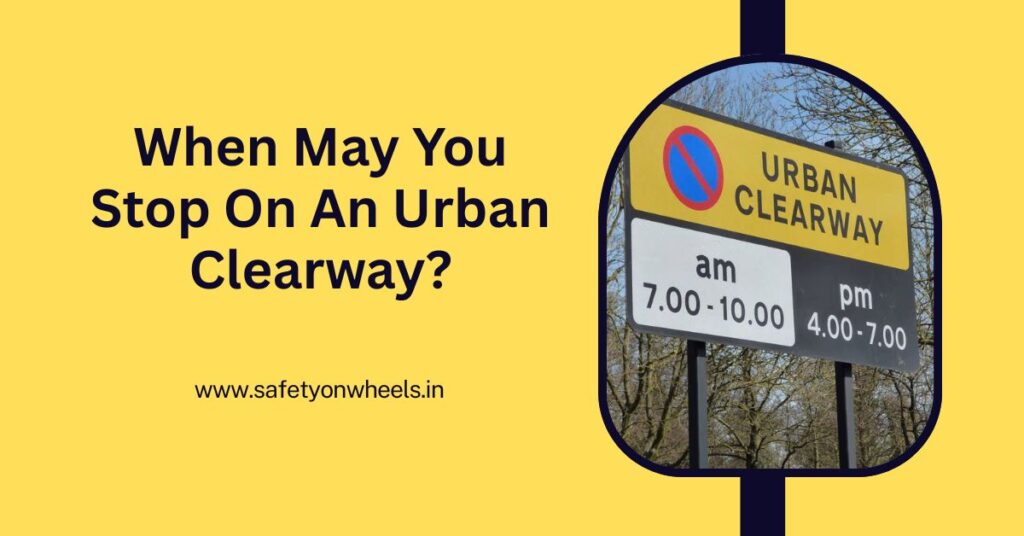
Urban clearways are designed with one primary goal: keep traffic moving efficiently during busy periods. If you’ve ever driven through a congested city road during peak hours, you already understand why stopping restrictions exist.
But many drivers still get confused by the rules, especially when signs vary by time and location. This leads to a crucial question: when may you stop on an urban clearway?
The answer isn’t simply “never.” There are specific conditions where stopping is allowed—and understanding them can save you from fines, confusion, and unsafe situations.
In this detailed guide, we’ll explain when stopping is permitted on an urban clearway, why these rules exist, and how to stay compliant while driving confidently.
When May You Stop On An Urban Clearway?
You may stop on an urban clearway only outside the restricted times shown on the road signs, or in specific permitted situations such as emergencies or when directed by authorities.
During the restricted hours displayed on the clearway sign, stopping is strictly prohibited, even for a short time.
In simple terms:
- During restriction hours: No stopping at all
- Outside restriction hours: Stopping may be allowed depending on local rules
Understanding this distinction is key to avoiding penalties.
What Is an Urban Clearway?
Before diving deeper, it’s important to understand what an urban clearway actually is.
An urban clearway is a road where:
- Stopping is prohibited during specific times
- Traffic flow must remain uninterrupted
These roads are typically found in:
- Busy city areas
- High-traffic corridors
- Commuter routes
Clearway signs clearly display:
- The restricted time periods
- Any exceptions or conditions
Also read: What Is The First Thing A Driver Should Do After Deciding To Make A Turn?
Why Clearway Rules Are Strict?
Clearway restrictions may seem harsh, but they serve a practical purpose.
Reducing Traffic Congestion
Even a single stopped vehicle can:
- Block a lane
- Slow down traffic significantly
Clearways help maintain smooth traffic flow during peak hours.
Improving Road Safety
Stopping on busy roads can:
- Increase the risk of rear-end collisions
- Create confusion for other drivers
Supporting Public Transport
Clearways often benefit:
- Buses
- Emergency vehicles
By keeping lanes clear, these services operate more efficiently.
Situations Where You May Stop Legally
Despite strict rules, there are certain situations where stopping is allowed.
Outside Restricted Hours
This is the most common exception.
If the clearway sign shows:
- Specific time limits (for example, 7 AM to 10 AM)
You may stop:
- Before or after those times
Always double-check the sign, as restrictions vary by location.
In Case of Emergency
You may stop if:
- Your vehicle breaks down
- There is a medical emergency
- Immediate safety is at risk
However, you should:
- Move the vehicle out of traffic if possible
- Use hazard lights
When Directed by Authorities
You must stop if:
- A police officer signals you
- Traffic control requires it
These instructions override clearway restrictions.
Avoiding an Accident
Stopping is allowed if:
- It prevents a collision
- It ensures safety in a sudden situation
Safety always takes priority over rules.
Situations Where Stopping Is Not Allowed
Knowing when not to stop is just as important.
During Restricted Hours
This includes:
- Picking up passengers
- Dropping someone off
- Quick stops “just for a second”
Even a brief stop can lead to penalties.
For Convenience
Stopping to:
- Answer a call
- Check directions
- Take a break
is not allowed during restriction times.
In Traffic Lanes
You must never:
- Block active traffic lanes
- Park partially on the road
Understanding Clearway Signs and Markings
Clearway signs provide all the information you need—if you know how to read them.
Time-Based Restrictions
Signs typically display:
- Specific hours when stopping is prohibited
For example:
- “No stopping Mon–Fri 7 AM–10 AM”
Additional Instructions
Some signs may include:
- Arrows indicating affected areas
- Exceptions for certain vehicles
Importance of Reading Carefully
Misinterpreting signs is a common cause of fines.
Always:
- Read the entire sign
- Check both time and direction
Common Mistakes Drivers Make
Even experienced drivers can get clearway rules wrong.
Assuming Short Stops Are Allowed
Many believe stopping briefly is okay—but during restricted hours, it isn’t.
Ignoring Time Restrictions
Drivers often:
- Forget to check the time
- Assume rules apply all day
Misreading Signs
Confusing:
- Clearways with parking zones
- Time-based rules with permanent restrictions
Following Other Drivers
Just because someone else stops doesn’t mean it’s legal.
Penalties for Violating Clearway Rules
Ignoring clearway restrictions can lead to consequences.
Fines
Stopping illegally may result in:
- Monetary penalties
Vehicle Removal
In some cases:
- Vehicles may be towed
Points or Legal Action
Repeated violations can:
- Affect your driving record
- Lead to stricter penalties
Practical Tips to Stay Compliant
Avoiding mistakes is easier than dealing with penalties.
Always Check Signs
Before stopping:
- Look for clearway signs
- Note the time restrictions
Plan Ahead
If you need to stop:
- Choose designated parking areas
- Avoid restricted zones
Stay Alert
Traffic conditions change quickly.
Keep:
- Awareness of surroundings
- Focus on road signs
Use Alternative Areas
Look for:
- Parking bays
- Side streets
The Bigger Picture: Keeping Roads Moving
Clearways are not just about restrictions—they’re about efficiency.
By following the rules, drivers:
- Reduce congestion
- Improve travel time
- Enhance overall road safety
It’s a system that works best when everyone cooperates.
Also read: Differentiate Between Literary Elements And Literary Devices
Final Thoughts
So, when may you stop on an urban clearway? Only outside the restricted hours shown on signs or in exceptional situations like emergencies or when directed by authorities.
During restricted times, stopping is not just discouraged—it’s prohibited.
Understanding and respecting these rules helps you:
- Avoid fines
- Drive more confidently
- Contribute to smoother traffic flow
In the end, safe and responsible driving is about more than just following rules—it’s about understanding why they exist and making smart decisions on the road.