Road markings play a crucial role in guiding drivers safely through traffic. While most drivers recognize basic symbols like lane dividers, pedestrian crossings, and stop lines, some markings still cause confusion. One such marking is the curved arrow painted on the road surface.
If you’ve ever approached an intersection or a lane and noticed a curved arrow pointing left, right, or even looping around, you might have wondered what it means and how you should respond. Road markings exist for a reason—they help regulate traffic flow, prevent accidents, and communicate instructions quickly without relying solely on signs.
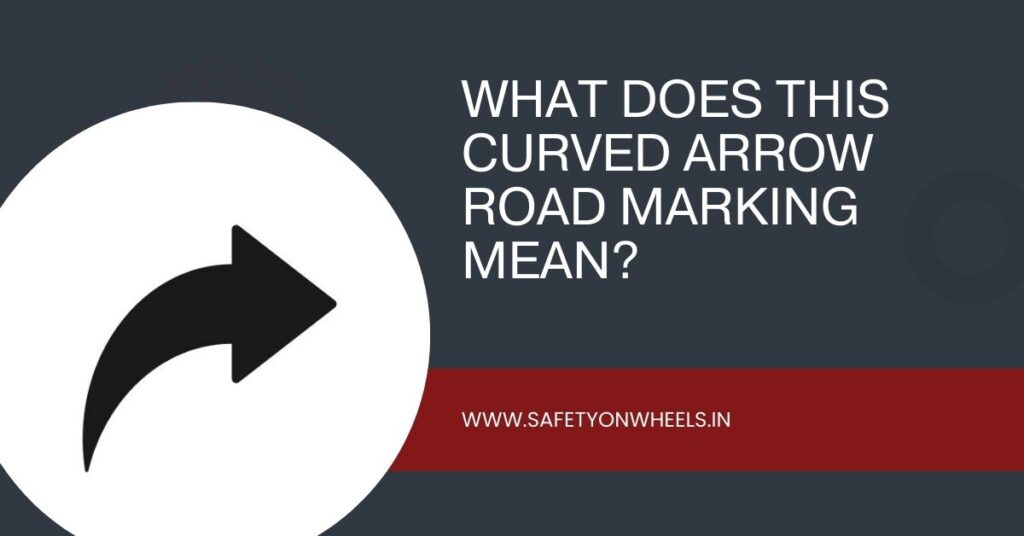
So, what does this curved arrow road marking mean? In most cases, a curved arrow indicates the direction drivers must follow when turning or changing lanes. It tells motorists that the lane is designated for a specific turning movement rather than continuing straight.
Understanding this marking is essential because ignoring it can lead to traffic violations, dangerous lane changes, or even collisions at busy intersections.
In this guide, we’ll break down what curved arrow road markings mean, where you’re most likely to see them, how they improve traffic safety, and how drivers should respond when encountering them.
Why Road Markings Matter for Safe Driving?
Before diving into the meaning of curved arrows specifically, it’s important to understand why road markings exist at all.
Road markings act as visual instructions directly on the pavement, providing real-time guidance even when traffic signs or signals might not be immediately visible.
Instant Communication for Drivers
Unlike roadside signs that drivers must look toward, road markings appear directly in the driver’s line of sight.
This placement helps drivers make quicker decisions, especially at intersections or complex road layouts.
Managing Traffic Flow
Traffic engineers design lane markings to guide vehicles smoothly through busy areas.
Without these markings, drivers might:
- Change lanes unpredictably
- Block turning lanes
- Create traffic congestion
Clear pavement markings help prevent these problems.
Also read: What Should You Do When You’re Passing Loose Sheep On The Road?
Supporting Traffic Laws
Many road markings carry the same legal importance as traffic signs. Ignoring them can result in traffic violations, fines, or penalty points depending on local regulations.
For this reason, drivers should treat pavement markings with the same attention they give to traffic signals.
What Does This Curved Arrow Road Marking Mean?
When drivers ask what does this curved arrow road marking mean, the most accurate answer is that it indicates a mandatory or designated turning direction for that lane.
The curved arrow tells drivers how they must proceed from that specific lane.
Directional Guidance
A curved arrow typically points toward the direction vehicles must follow.
Common examples include:
- Left-curved arrow: The lane is designated for a left turn.
- Right-curved arrow: The lane is designated for a right turn.
- U-shaped arrow: The lane allows or requires a U-turn.
These markings help organize traffic at intersections and reduce conflicts between vehicles traveling in different directions.
Lane-Specific Instructions
Curved arrows usually appear within individual lanes rather than across the entire roadway.
Each arrow corresponds to that specific lane’s allowed movement.
For example:
- The left lane may show a curved arrow for left turns.
- The middle lane may display a straight arrow for continuing forward.
- The right lane may show a right-turn arrow.
By assigning each lane a clear purpose, traffic flows more efficiently.
Preventing Last-Minute Lane Changes
Without clear lane guidance, drivers might attempt sudden lane changes near intersections.
Curved arrows signal the correct lane choice early, helping drivers prepare ahead of time.
Common Types of Curved Arrow Road Markings
Not all curved arrows look identical. Road designers use several variations depending on the traffic situation.
Standard Left-Turn Arrow
This arrow curves gently toward the left side of the road.
You’ll typically see it:
- At intersections
- In dedicated turning lanes
- Near traffic lights
Drivers in this lane should prepare to turn left when the signal allows.
Right-Turn Arrow
A right-turn arrow curves toward the right side of the road.
This marking commonly appears:
- At intersections with separate right-turn lanes
- Near slip roads
- At junctions where right turns must remain controlled
Drivers should remain in the lane and follow the indicated turning direction.
U-Turn Arrow
A U-shaped curved arrow indicates that vehicles may perform a U-turn from that lane.
Traffic engineers often use this marking at wide intersections where turning around safely is possible.
Combined Arrows
Some lanes display multiple arrows.
For example:
- A straight arrow combined with a curved arrow may indicate that drivers can either continue straight or turn.
These markings allow flexibility while still organizing traffic flow.
Where You’re Most Likely to See Curved Arrow Markings?
Curved arrows appear in several common driving environments.
Busy Intersections
Intersections represent the most frequent location for these markings.
Traffic engineers use arrows to organize:
- Left-turn lanes
- Right-turn lanes
- Straight-through lanes
Without these markings, intersections would become chaotic during heavy traffic.
Multi-Lane Roads
On roads with several lanes, curved arrows guide drivers toward correct turning lanes well before reaching the intersection.
This reduces sudden lane changes.
Roundabout Approaches
Some roundabout entrances include curved arrows to guide vehicles into the correct entry lanes.
These markings help prevent confusion for drivers unfamiliar with roundabouts.
Urban Traffic Zones
Cities often use pavement arrows to manage complicated traffic patterns where space is limited.
Drivers should pay close attention to lane markings in these areas.
Why Curved Arrow Markings Improve Road Safety
Traffic engineers design road markings with one primary goal: reducing accidents.
Curved arrows contribute significantly to this goal.
Reducing Intersection Collisions
Many accidents occur at intersections when drivers attempt to turn from the wrong lane.
Curved arrows clearly identify the correct lane for each movement.
Improving Traffic Efficiency
When drivers choose the correct lane early, traffic moves more smoothly through intersections.
This reduces congestion and delays.
Preventing Driver Confusion
Unclear road layouts can cause hesitation or sudden braking.
Clear directional arrows provide immediate visual instructions.
How Drivers Should Respond When They See a Curved Arrow
Recognizing the marking is only the first step. Drivers must also know how to react properly.
Choose the Correct Lane Early
When approaching an intersection, look ahead for lane arrows and move into the appropriate lane in advance.
Waiting until the last second increases the risk of dangerous lane changes.
Follow the Indicated Direction
Once you enter a lane marked with a curved arrow, you should follow that direction.
For example, if the arrow indicates a right turn, you should not continue straight from that lane.
Watch for Additional Signs
Sometimes road markings work together with traffic signs or signals.
For instance, a lane may have a curved arrow but also display a turn-only sign above the road.
Always consider both markings and signs together.
Common Mistakes Drivers Make with Lane Arrows
Even experienced drivers occasionally misinterpret pavement arrows.
Ignoring the Marking
Some drivers continue straight from a turning lane, especially when traffic appears light.
However, doing so may create dangerous situations for other drivers expecting predictable movements.
Changing Lanes Too Late
Sudden lane changes near intersections increase collision risk.
Drivers should choose the correct lane well before reaching the arrow marking.
Misreading Combined Arrows
Combined arrows can confuse drivers who glance quickly at the pavement.
Take a moment to understand whether the lane allows one movement or several.
Tips for Reading Road Markings More Effectively
Drivers who improve their awareness of road markings tend to make safer decisions.
Look Ahead While Driving
Scanning the road several seconds ahead gives you time to notice arrows and prepare.
Pay Attention During Lane Changes
When switching lanes, check for pavement markings that might restrict movement.
Practice Defensive Driving
Defensive drivers expect that others may ignore lane arrows.
Maintain safe distances and stay alert.
Also read: What Is the Primary Purpose of Business Monitoring in Agentic AI Systems?
Final Thoughts
Understanding what does this curved arrow road marking mean helps drivers navigate intersections and multi-lane roads safely. These markings serve as clear visual instructions that indicate the direction vehicles should travel from specific lanes. By guiding drivers toward left turns, right turns, or other movements, curved arrows help organize traffic flow, reduce confusion, and prevent accidents. When you encounter one of these markings, the safest approach is to follow the indicated direction, choose your lane early, and remain attentive to nearby signs and signals. With a little awareness and practice, recognizing and obeying curved arrow road markings becomes a natural part of confident and responsible driving.