
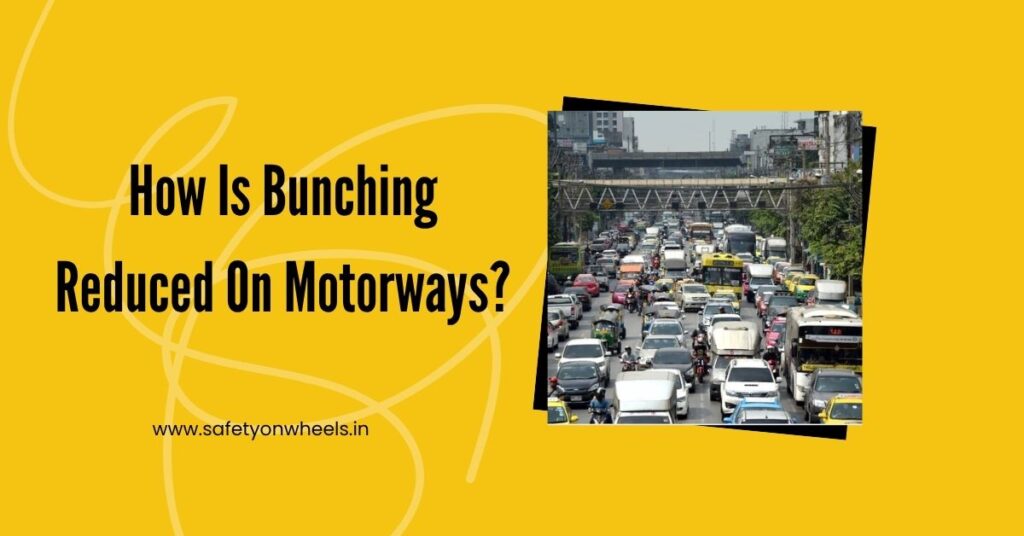
If you’ve ever driven on a motorway and suddenly found yourself braking for no obvious reason, you’ve experienced a classic traffic phenomenon: bunching. It happens when vehicles cluster too closely together, creating waves of congestion that ripple backward through traffic.
What makes bunching frustrating is that it often starts without a clear cause. One driver brakes slightly, the next reacts a bit more aggressively, and within seconds, a smooth-flowing motorway turns into a slow-moving queue.
So, how is bunching reduced on motorways?
The answer lies in a combination of smart driving habits, road design, traffic management systems, and driver awareness. This guide explains the concept clearly and shows how both drivers and infrastructure work together to prevent it.
How Is Bunching Reduced on Motorways?
Bunching is reduced by maintaining safe following distances, using consistent speeds, avoiding unnecessary braking, and applying traffic management measures such as variable speed limits and lane control systems.
In simple terms, smoother driving equals smoother traffic flow.
What Causes Bunching on Motorways?
Before solving the problem, it helps to understand what creates it.
Sudden Braking
A small reduction in speed can:
- Trigger a chain reaction
- Force drivers behind to brake harder
This creates a ripple effect known as a “shockwave.”
Following Too Closely
When drivers:
- Leave little space between vehicles
They have less time to react, which:
- Increases braking intensity
- Compresses traffic flow
Lane Switching and Overtaking
Frequent lane changes:
- Disrupt steady movement
- Force other drivers to adjust speed
Speed Variations
Inconsistent speeds:
- Create gaps and clusters
- Lead to uneven traffic flow
Also read: Where May You Overtake On A One-way Street?
The Role of Safe Following Distance
One of the simplest and most effective ways to reduce bunching is maintaining proper distance.
Why Distance Matters
A safe gap:
- Gives you time to react
- Reduces the need for sudden braking
The Time Gap Rule
Drivers should maintain:
- At least a 2-second gap in normal conditions
- 3–4 seconds in poor weather
This small adjustment can significantly:
- Smooth traffic flow
- Reduce congestion
Real-World Impact
Studies show that maintaining consistent spacing:
- Improves traffic efficiency
- Reduces accident risk
Smooth Driving Techniques That Prevent Bunching
Good driving habits play a major role in preventing traffic clusters.
Maintain a Steady Speed
Avoid:
- Frequent acceleration and braking
Instead:
- Keep your speed consistent
Anticipate Traffic Ahead
Look beyond the vehicle in front:
- Observe brake lights further ahead
- Adjust early instead of reacting late
Use Gentle Inputs
Smooth acceleration and braking:
- Prevent sudden changes
- Help maintain flow
Avoid Tailgating
Driving too close:
- Forces quick reactions
- Increases congestion
The Impact of Lane Discipline
Lane behavior significantly affects motorway traffic flow.
Stay in the Correct Lane
Use lanes appropriately:
- Keep left or right depending on local rules
- Use overtaking lanes only when necessary
Avoid Unnecessary Lane Changes
Frequent switching:
- Disrupts traffic rhythm
- Forces others to slow down
Merge Smoothly
When joining traffic:
- Match speed with the flow
- Avoid abrupt entry
How Technology Helps Reduce Bunching
Modern motorways use advanced systems to manage traffic flow.
Variable Speed Limits
Electronic signs adjust speed limits based on:
- Traffic density
- Road conditions
These limits:
- Prevent sudden slowdowns
- Spread traffic evenly
Ramp Metering
Traffic lights on entry ramps:
- Control the rate of vehicles entering the motorway
This prevents:
- Overloading
- Immediate congestion
Traffic Monitoring Systems
Sensors and cameras:
- Track traffic patterns
- Detect congestion early
Authorities can then:
- Adjust signals
- Issue warnings
The Science Behind Traffic Flow
Traffic behaves more like a fluid than a series of independent vehicles.
Traffic Waves Explained
When one driver brakes:
- The effect multiplies backward
Even a small slowdown can:
- Cause large delays behind
Flow vs. Density
High traffic density:
- Increases the chance of bunching
Balanced spacing:
- Maintains smoother flow
Human Reaction Time
Average reaction time:
- Around 1–1.5 seconds
Short gaps:
- Leave no room for error
The Role of Driver Awareness and Behavior
Technology helps, but drivers remain the biggest factor.
Stay Focused
Distractions:
- Reduce reaction time
- Increase sudden braking
Drive Defensively
Expect:
- Sudden changes
- Mistakes from other drivers
Be Patient
Aggressive driving:
- Leads to frequent speed changes
- Increases congestion
Common Mistakes That Increase Bunching
Avoiding these mistakes can make a noticeable difference.
Constant Speed Changes
Frequent acceleration and braking:
- Disrupt traffic flow
Overusing Brakes
Unnecessary braking:
- Triggers chain reactions
Blocking Overtaking Lanes
Staying in overtaking lanes:
- Slows faster traffic
- Causes clustering
Ignoring Road Conditions
Weather or road changes:
- Require speed adjustments
Practical Tips to Keep Traffic Flowing Smoothly
Let’s make it simple and actionable.
Keep a Safe Distance
Always:
- Maintain proper spacing
Drive Predictably
Consistency helps:
- Other drivers anticipate your actions
Use Cruise Control (When Appropriate)
On long stretches:
- Helps maintain steady speed
Stay Calm in Traffic
Patience:
- Prevents aggressive behavior
- Keeps flow steady
Why Reducing Bunching Matters
This isn’t just about convenience—it’s about safety and efficiency.
Fewer Accidents
Smoother traffic:
- Reduces sudden braking
- Lowers collision risk
Better Fuel Efficiency
Consistent speeds:
- Reduce fuel consumption
Shorter Travel Times
Less congestion:
- Means quicker journeys
Reduced Driver Stress
Smooth flow:
- Makes driving more comfortable
Also read: What Does It Mean To Say That Active Listening Is An Attitude?
Final Thoughts
So, how is bunching reduced on motorways?
It comes down to a combination of smart driving habits, proper spacing, consistent speeds, and effective traffic management systems.
While infrastructure and technology play their part, the biggest difference comes from individual drivers. Small actions—like maintaining distance and avoiding sudden braking—can have a ripple effect that improves traffic flow for everyone.
Motorway driving works best when it feels almost effortless. And that only happens when drivers move as part of a system, not as isolated individuals trying to get ahead.
In the end, reducing bunching isn’t complicated. It just requires awareness, patience, and a commitment to smooth, predictable driving.