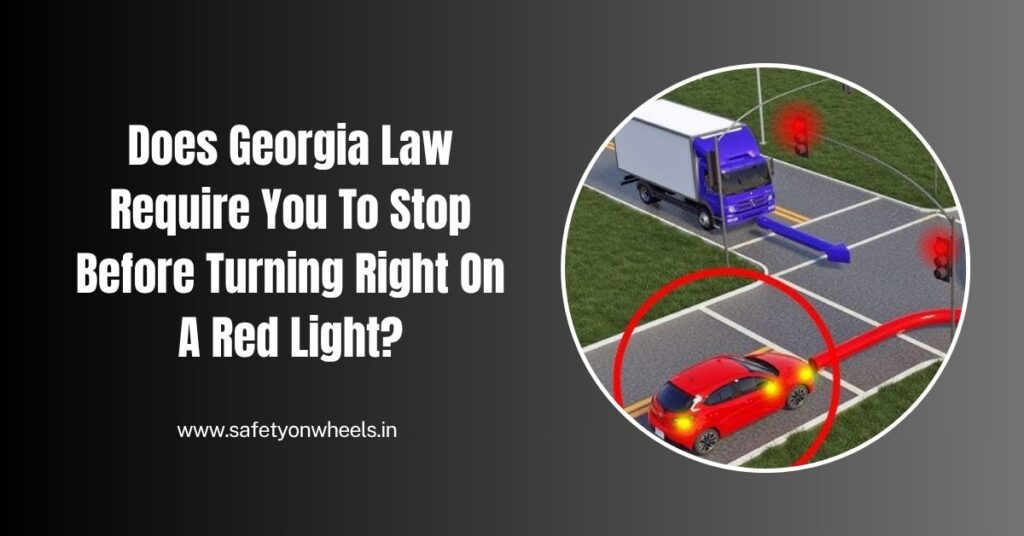
Traffic rules often feel straightforward—until a small detail creates confusion. One such common question drivers ask is: can you turn right on red without stopping first? More specifically, does Georgia law require you to stop before turning right on a red light?
The short answer is yes—but understanding the full rule, its exceptions, and how it applies in real-world driving situations is where things get interesting.
This blog guide breaks down the law clearly, explains the reasoning behind it, and helps you avoid costly mistakes while driving in Georgia.
Does Georgia Law Require You to Stop Before Turning Right on a Red Light?
Let’s address the core question directly.
Yes, Georgia law requires you to come to a complete stop before turning right on a red light.
This rule is defined under Georgia traffic laws, which state that drivers must:
- Stop completely at the marked stop line, crosswalk, or before entering the intersection
- Yield to pedestrians and other vehicles with the right of way
- Proceed only when it is safe to do so
What “Complete Stop” Actually Means
A complete stop is not a slow roll or a quick pause—it means:
- Your vehicle’s wheels must fully stop moving
- You must check traffic conditions before proceeding
Rolling through a red light—even if the road looks clear—counts as a violation.
Also read: What Should You Do When You Leave Your Car Unattended For A Few Minutes?
Understanding the Logic Behind the Law
At first glance, stopping before a right turn on red may seem unnecessary, especially when traffic is light. However, this rule exists for strong safety reasons.
Protecting Pedestrians
Pedestrians often cross intersections assuming vehicles will stop at red lights. A rolling turn can easily put them at risk.
Managing Cross Traffic
Even when turning right, your movement interacts with traffic from multiple directions. Stopping ensures you properly assess:
- Vehicles coming from the left
- U-turning vehicles
- Cyclists approaching the intersection
Reducing Collision Risks
According to U.S. traffic safety studies, failure to stop before turning on red contributes to a significant number of intersection-related accidents each year.
A full stop gives you the time needed to make a safe, informed decision.
Situations Where You Cannot Turn Right on Red
While Georgia generally allows right turns on red after stopping, there are important exceptions you need to watch for.
“No Turn on Red” Signs
If you see a clearly posted sign stating “No Turn on Red,” you must obey it.
In this case:
- Do not turn, even after stopping
- Wait for the green signal
Ignoring this sign can result in fines and penalties.
Red Arrow Signals
A red arrow is stricter than a standard red light.
When facing a red arrow:
- You must stop
- You cannot turn until the arrow turns green
This applies even if there is no visible traffic.
Restricted Intersections
Some intersections—especially in busy urban areas—restrict right turns on red due to:
- Heavy pedestrian activity
- Complex traffic flow
- Limited visibility
Always observe signage carefully.
Step-by-Step: How to Turn Right on Red Safely in Georgia
Knowing the law is one thing—applying it correctly is what keeps you safe.
Step 1: Approach the Intersection Carefully
Slow down as you near the red light. Pay attention to signs, signals, and road markings.
Step 2: Come to a Complete Stop
Stop at:
- The stop line, if marked
- The crosswalk, if present
- The intersection edge, if neither exists
Pause long enough to confirm your vehicle is fully stationary.
Step 3: Check for Pedestrians
Look both ways for pedestrians crossing or preparing to cross.
They always have the right of way.
Step 4: Yield to Traffic
Check for:
- Vehicles approaching from the left
- Vehicles making U-turns
- Cyclists in bike lanes
Do not rush this step—visibility can be deceptive.
Step 5: Turn When Safe
Only proceed when:
- The path is completely clear
- No one has the right of way over you
Make a smooth, controlled turn.
Common Mistakes Drivers Make
Even experienced drivers sometimes misunderstand or ignore key details of this rule.
Rolling Stops
Many drivers slow down but don’t fully stop. This is one of the most common violations.
Why it’s risky:
- Reduces reaction time
- Increases accident risk
- Can result in traffic tickets
Ignoring Pedestrians
Focusing only on vehicle traffic often leads drivers to overlook pedestrians.
Remember: Pedestrians always come first.
Missing Traffic Signs
Drivers sometimes fail to notice “No Turn on Red” signs, especially in unfamiliar areas.
Rushing the Turn
Impatience can lead to poor judgment, especially in busy intersections.
A few extra seconds can prevent serious consequences.
Penalties for Not Stopping Before Turning on Red in Georgia
Failing to follow this rule can lead to legal and financial consequences.
Traffic Tickets and Fines
Drivers caught making improper right turns on red may face fines, which vary by county.
Points on Your Driving Record
Traffic violations can add points to your license, potentially affecting:
- Insurance premiums
- Driving privileges
Increased Liability in Accidents
If you cause an accident while failing to stop, you may be held legally responsible.
How Georgia Compares to Other States
Georgia’s rule is not unique, but its enforcement is consistent with most U.S. states.
General Rule Across the U.S.
In most states:
- Right turn on red is allowed
- A complete stop is mandatory
However, some areas enforce stricter rules or have more restricted intersections.
Why Consistency Matters
Even if you’re used to driving in another state, always follow local laws.
Traffic rules can vary slightly, and assumptions can lead to violations.
Practical Driving Tips for Safer Intersections
Improving your habits at intersections can make a noticeable difference.
Stay Alert, Not Automatic
Don’t treat right turns on red as routine. Each intersection is different.
Use a “Stop, Look, Decide” Approach
Instead of rushing, follow a simple mental checklist:
- Stop completely
- Look carefully
- Decide safely
Watch for Hidden Hazards
Be cautious of:
- Blind spots
- Fast-moving traffic
- Distracted pedestrians
Practice Defensive Driving
Assume that others may make mistakes—and be ready to react.
Real-World Scenarios to Understand the Rule Better
Scenario 1: Empty Road at Night
You approach a red light with no visible traffic.
You must still:
- Come to a complete stop
- Check surroundings
- Then proceed
Scenario 2: Busy City Intersection
Pedestrians and vehicles move in multiple directions.
Extra caution is required:
- Wait longer
- Double-check all directions
Scenario 3: Confusing Signal Layout
Multiple signals and signs can create uncertainty.
When in doubt:
- Stop fully
- Read signs carefully
- Proceed only when sure
Also read: What Effects Did the Government Response to the Great Depression Have on the Credit Industry?
Final Thoughts
So, does Georgia law require you to stop before turning right on a red light? Absolutely—and it’s not just a legal requirement, but a critical safety practice that protects everyone on the road. A complete stop gives you the time and control needed to assess traffic, notice pedestrians, and make a safe decision rather than a rushed one. While the rule may feel like a small detail in your daily driving routine, ignoring it can lead to fines, accidents, or serious consequences. The smartest drivers treat every red light as a moment to pause, observe, and act responsibly. In the long run, those extra few seconds don’t slow you down—they make your driving safer, more confident, and far more reliable.