Driving in poor visibility conditions can quickly turn from routine to risky. Fog, heavy rain, or snow can reduce visibility to just a few meters, making it difficult for drivers to see the road—and even harder for others to see them.
This is exactly where rear fog lights come into play.
You may have noticed a bright red light at the back of vehicles that’s much stronger than regular tail lights. It’s not just for style or extra brightness—it serves a very specific safety purpose.
So, why are vehicles fitted with rear fog lights? The answer lies in visibility, safety, and accident prevention. In this guide, we’ll explore how rear fog lights work, when to use them, and why they are critical in certain driving conditions.
Why Are Vehicles Fitted With Rear Fog Lights?
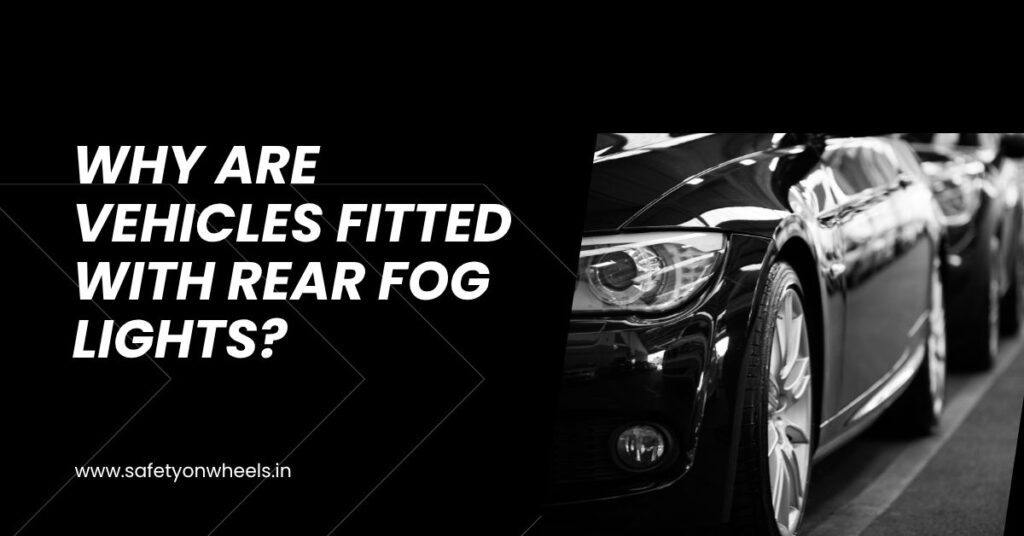
Vehicles are fitted with rear fog lights to make them clearly visible to drivers behind in conditions of severely reduced visibility such as fog, heavy rain, or snow.
Unlike standard tail lights, rear fog lights:
- Are significantly brighter
- Penetrate dense fog and mist more effectively
- Help prevent rear-end collisions
In simple terms, rear fog lights ensure that your vehicle can be seen from a safe distance when normal lights are not enough.
Also read: You’re In A Built-up Area At Night And The Road Is Well Lit. Why Should You Use Dipped Headlights?
Understanding Rear Fog Lights and How They Work
To appreciate their importance, it’s helpful to understand how rear fog lights differ from regular lighting systems.
What Are Rear Fog Lights?
Rear fog lights are:
- High-intensity red lights mounted at the rear of a vehicle
- Designed to cut through low-visibility conditions
- Usually activated manually by the driver
They are often positioned:
- On one side (commonly the driver’s side) or
- Symmetrically on both sides in some vehicles
How They Differ From Tail Lights?
Tail lights:
- Are always on when headlights are active
- Provide basic visibility
Rear fog lights:
- Are much brighter
- Used only in poor visibility
- Designed for long-distance visibility
Why Brightness Matters?
In foggy conditions, normal tail lights can become almost invisible beyond a short distance. Rear fog lights remain visible from much farther away, giving other drivers more time to react.
The Science Behind Fog and Visibility
Fog creates unique challenges for drivers.
How Fog Affects Light
Fog consists of tiny water droplets that:
- Scatter light in multiple directions
- Reduce contrast and clarity
- Create a “wall” effect that limits visibility
Why Standard Lights Fail
Regular lights:
- Get diffused in fog
- Lose intensity over distance
- Blend into the background
Rear fog lights are designed to:
- Emit a stronger, more focused beam
- Remain visible through dense particles
This makes a critical difference in safety.
When Should You Use Rear Fog Lights?
Knowing when to use rear fog lights is just as important as having them.
Appropriate Situations
Use rear fog lights when:
- Visibility drops significantly (typically below 100 meters)
- Driving in dense fog
- Experiencing heavy rain or snow
When Not to Use Them
Avoid using rear fog lights:
- In clear weather
- In light rain or mild mist
- In well-lit urban areas
Why Misuse Is a Problem
Using rear fog lights unnecessarily can:
- Dazzle drivers behind you
- Cause discomfort and distraction
- Reduce their ability to judge distance
So while they improve safety in fog, they can reduce safety when misused.
Safety Benefits of Rear Fog Lights
Rear fog lights play a vital role in preventing accidents.
Increased Visibility Distance
They allow your vehicle to be seen from a much greater distance compared to standard tail lights.
Reduced Rear-End Collisions
Many accidents in fog occur because drivers cannot see the vehicle ahead in time. Rear fog lights:
- Provide early warning
- Give drivers more reaction time
Improved Traffic Awareness
Clear visibility helps:
- Maintain safe following distances
- Reduce sudden braking
- Improve overall traffic flow
Common Mistakes Drivers Make
Despite their importance, rear fog lights are often misunderstood.
Leaving Them On Too Long
Some drivers forget to switch them off when visibility improves, causing glare for others.
Using Them as Regular Lights
Rear fog lights are not a substitute for tail lights. They should only be used in specific conditions.
Ignoring Visibility Levels
Drivers sometimes activate them too early or too late. Proper judgment is key.
Confusing Them With Brake Lights
Because they are bright red, rear fog lights can sometimes be mistaken for brake lights, especially if used incorrectly.
How Rear Fog Lights Improve Driving Confidence
Driving in fog can feel stressful and uncertain.
Psychological Benefits
Knowing your vehicle is clearly visible to others:
- Reduces anxiety
- Improves focus
- Encourages smoother driving
Better Decision-Making
With improved visibility:
- Drivers maintain safer speeds
- Lane discipline improves
- Sudden reactions decrease
Proper Usage Tips for Maximum Effectiveness
Using rear fog lights correctly ensures they deliver their intended benefits.
Activate Only When Necessary
Turn them on only when visibility drops significantly.
Turn Them Off Promptly
Switch them off as soon as conditions improve.
Combine With Safe Driving Practices
Rear fog lights are not a substitute for caution. Always:
- Reduce speed
- Increase following distance
- Stay alert
Check Functionality Regularly
Ensure your rear fog lights:
- Work properly
- Are clean and unobstructed
The Role of Rear Fog Lights in Modern Vehicles
Modern vehicles integrate rear fog lights as part of advanced safety systems.
Standard Safety Feature
In many regions, rear fog lights are:
- Required by regulations
- Included in vehicle safety standards
Integration With Lighting Systems
Some vehicles automatically:
- Adjust lighting based on conditions
- Provide dashboard indicators for fog light use
Future Developments
As vehicle technology advances, lighting systems may become even more adaptive, improving visibility and safety further.
The Bigger Picture: Visibility Equals Safety
At its core, driving safety depends heavily on visibility.
You need to:
- See the road clearly
- Be seen by others
Rear fog lights address the second part—making sure others can detect your presence in difficult conditions.
This simple feature can:
- Prevent accidents
- Save lives
- Improve overall road safety
Also read: How to Do a Zentangle Snowflake Painting for Kids
Final Thoughts
So, why are vehicles fitted with rear fog lights? The answer is clear: to ensure your vehicle remains visible to others in conditions where standard lights are not enough.
They are not meant for everyday use, but when used correctly, they become one of the most effective tools for preventing rear-end collisions in poor visibility.
The key is simple—use them when needed, and switch them off when conditions improve.
Because in challenging driving conditions, being seen is just as important as seeing.