
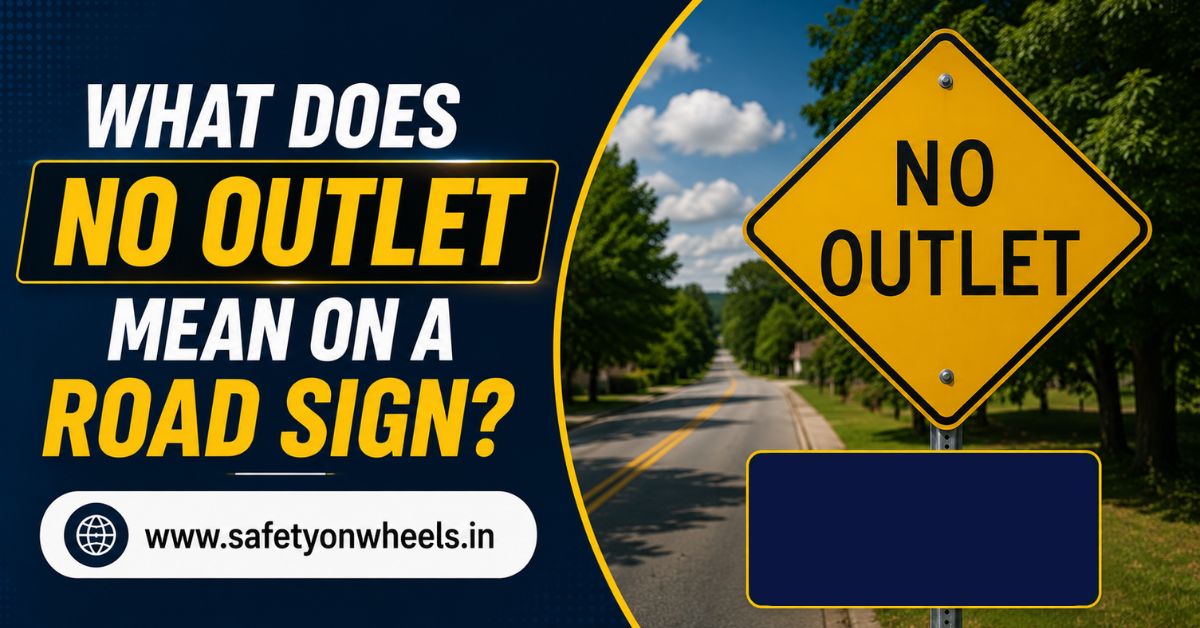
Road signs are designed to communicate important information quickly and clearly. Whether you’re driving through a busy city, a quiet suburb, or a rural area, road signs help you make safe decisions and avoid unnecessary confusion. Among the many signs drivers encounter, one that often causes uncertainty is the “No Outlet” sign.
At first glance, some drivers mistake it for a warning that the road is closed or inaccessible. Others confuse it with a dead-end sign. While these signs share similarities, they do not mean exactly the same thing.
Understanding what does no outlet mean on a road sign can save you time, prevent navigation mistakes, and help you better understand road layouts. This is especially useful when driving in unfamiliar neighborhoods, residential developments, industrial zones, or rural areas.
In this guide, we’ll explain the meaning of a no outlet sign, where you typically see it, how it differs from other road signs, and why transportation authorities use it.
What Does No Outlet Mean on a Road Sign?
A No Outlet sign indicates that a road does not provide a through route to another street or highway. In simple terms, if you continue down that road, you will eventually reach a point where you cannot continue forward to another public roadway.
However, unlike a dead-end sign, a no outlet road may contain:
- Multiple streets
- Residential neighborhoods
- Cul-de-sacs
- Parking areas
- Local access roads
The key message is that the road network ahead does not offer an exit to another route.
Drivers can still enter the road legally, but they should not expect it to serve as a shortcut or through street.
For navigation purposes, a no outlet sign acts as an early warning that the road leads only to local destinations.
Also read: Why Should You Turn Your Car Off When Pumping Gas?
Understanding the Purpose of No Outlet Signs
Traffic engineers install no outlet signs to help drivers make informed route decisions before they commit to a roadway.
Without these signs, drivers unfamiliar with an area may:
- Waste time driving into isolated neighborhoods
- Make unnecessary U-turns
- Increase traffic in residential areas
- Create congestion on local streets
The sign helps improve traffic flow by directing through traffic toward roads designed for higher volumes of vehicles.
Supporting Efficient Traffic Movement
Most residential developments are not designed to function as major transportation routes.
By informing drivers that a road has no outlet, authorities reduce the likelihood of drivers entering the area expecting an alternate route.
This benefits both local residents and motorists seeking efficient travel.
Improving Safety
Unexpected turnarounds often create safety risks.
Drivers who discover too late that a road does not continue may:
- Reverse unexpectedly
- Make illegal turns
- Become distracted while searching for alternate routes
No outlet signs reduce these situations by providing advance information.
How a No Outlet Sign Differs From a Dead-End Sign?
One of the most common misunderstandings involves the difference between a no outlet sign and a dead-end sign.
Although both indicate limited roadway connectivity, they are not identical.
Dead-End Sign
A dead-end sign warns drivers that a road terminates completely.
The roadway eventually stops, leaving no path forward.
Typically, dead-end roads feature:
- A single roadway
- One termination point
- No connecting streets beyond the endpoint
Drivers entering a dead-end road know they must eventually turn around.
No Outlet Sign
A no outlet road may contain an entire network of local streets.
For example:
- Residential subdivisions
- Apartment complexes
- Business parks
- Rural access roads
The road system continues internally, but it does not connect to another public road that allows through travel.
Think of it this way:
A dead-end road stops.
A no outlet road system continues locally but goes nowhere beyond the neighborhood or development.
Where You Commonly See No Outlet Signs?
Drivers encounter no outlet signs in various environments.
Residential Neighborhoods
Modern housing developments often contain internal street networks designed primarily for residents.
Developers intentionally limit through traffic to:
- Improve safety
- Reduce noise
- Create pedestrian-friendly environments
No outlet signs help prevent drivers from using these neighborhoods as shortcuts.
Rural Roads
In rural areas, some roads serve farms, private properties, or small communities without connecting to larger transportation networks.
A no outlet sign warns drivers that the road will not provide an alternate route.
Industrial Areas
Industrial parks sometimes contain internal road systems that serve warehouses, factories, and distribution centers.
Although these roads may appear extensive, they often do not connect to public through routes.
Recreational Areas
Parks, campgrounds, lakes, and nature reserves sometimes feature no outlet roads leading to parking facilities or recreational destinations.
These signs help visitors understand the road layout before entering.
Why Transportation Authorities Use No Outlet Signs?
Traffic management involves more than simply regulating speed limits and intersections.
Road planners carefully design networks to balance mobility, safety, and neighborhood quality of life.
Reducing Cut-Through Traffic
Cut-through traffic occurs when drivers use local streets to avoid congestion on major roads.
Although this may save a few minutes for individual drivers, it often creates problems for residents.
Common concerns include:
- Increased speeding
- Noise pollution
- Pedestrian safety risks
- Higher traffic volumes
No outlet signs discourage drivers from entering areas that cannot provide useful shortcuts.
Supporting Emergency Services
Emergency responders benefit from accurate road information.
Clearly marked no outlet roads help:
- Police officers
- Firefighters
- Ambulance crews
- Utility workers
Understand local road layouts quickly during emergencies.
Improving Navigation Systems
Modern mapping systems often incorporate roadway classifications and connectivity information.
Physical no outlet signs provide an additional layer of guidance for drivers when GPS directions become unclear.
Common Situations Where Drivers Misinterpret No Outlet Signs
Even experienced drivers occasionally misunderstand these signs.
Assuming the Road Is Closed
Some motorists mistakenly believe a no outlet sign means they cannot enter the road.
This is incorrect.
In most cases:
- The road remains open
- Access is permitted
- Local destinations remain accessible
The sign simply warns that the road does not continue through to another route.
Expecting a Shortcut
Drivers sometimes ignore the sign hoping to find an alternate exit.
Unfortunately, this usually leads to unnecessary detours and frustration.
The sign exists specifically to prevent that situation.
Confusing It With Private Roads
A no outlet road is not necessarily private property.
Many public roads display no outlet signs while remaining fully accessible to the public.
The Role of No Outlet Signs in Residential Safety
Neighborhood safety remains one of the primary reasons these signs exist.
Protecting Pedestrians
Residential areas often contain:
- Children playing outdoors
- Joggers
- Dog walkers
- Cyclists
Reducing unnecessary through traffic helps create safer environments for everyone.
Lowering Vehicle Speeds
Drivers searching for shortcuts may travel faster than local residents.
By discouraging non-local traffic, authorities help maintain lower average vehicle speeds.
Preserving Community Character
Many communities prefer quieter streets with limited traffic.
No outlet road designs support this goal while maintaining access for residents and visitors.
How GPS Navigation Has Changed Driver Behavior?
Before GPS became common, drivers relied heavily on physical road signs.
Today, navigation apps often direct drivers automatically.
However, no outlet signs remain important because:
- GPS data is not always updated
- Road closures can change routes
- New developments may not appear immediately
- Drivers sometimes override navigation instructions
Even the best navigation app occasionally sends drivers into places they never intended to visit.
Physical signs provide real-world confirmation of road conditions.
What Drivers Should Do When They See a No Outlet Sign?
Encountering a no outlet sign does not require special action, but it should influence your route planning.
Evaluate Your Destination
If your destination lies within the no outlet area, continue driving normally.
Examples include:
- Visiting a residence
- Delivering packages
- Accessing local businesses
- Reaching recreational facilities
Consider Alternative Routes
If you are simply passing through the area, look for a different route that offers roadway connectivity.
Doing so often saves time and avoids unnecessary backtracking.
Stay Alert for Additional Signs
Some no outlet roads include further guidance such as:
- Dead-end warnings
- Cul-de-sac signs
- Local traffic only notices
Pay attention to supplemental signs for additional information.
Common Road Signs Related to No Outlet Roads
Several road signs convey similar messages.
Dead End
Indicates the roadway terminates completely.
Cul-de-Sac
Shows that the road ends in a circular turnaround area.
Not a Through Street
Communicates that the road does not connect to another public route.
Local Traffic Only
Restricts road use primarily to residents, businesses, or authorized vehicles.
Although these signs share related purposes, each provides slightly different information.
Why Understanding Road Signs Matters?
Road signs exist to communicate critical information efficiently.
Drivers who understand sign meanings can:
- Make better navigation decisions
- Improve safety
- Reduce travel delays
- Avoid traffic violations
- Drive with greater confidence
According to transportation safety research, clear traffic control devices contribute significantly to reducing driver confusion and improving roadway efficiency.
Even seemingly simple signs play an important role in the overall transportation system.
Also read: What Are Three Ways To Lower The Cost Of College?
Final Thoughts
Understanding what does no outlet mean on a road sign helps drivers navigate roads more confidently and efficiently. A no outlet sign does not mean the road is closed, private, or inaccessible. Instead, it simply indicates that the roadway ahead does not provide a through connection to another street or highway.
These signs serve an important purpose by reducing unnecessary traffic, improving neighborhood safety, and helping drivers avoid wasting time on routes that lead only to local destinations. Whether you encounter a no outlet sign in a residential subdivision, industrial park, rural area, or recreational facility, it provides valuable information that can help you make smarter driving decisions.
The next time you see a no outlet sign, think of it as a helpful navigation tip rather than a warning. It is the road system’s way of politely saying, “You are welcome to come in, but don’t expect a shortcut on the way out.”
Frequently Asked Questions (FAQ)
1. What does a no outlet sign mean on a road?
A no outlet sign means the road does not connect to another public roadway and will not provide a through route for continuing travel.
2. Is a no outlet road the same as a dead-end road?
No. A no outlet road may contain multiple streets, while a dead-end road usually ends completely at a single termination point.
3. Can you drive on a road marked with a no outlet sign?
Yes. The road remains open for access, but drivers should not expect it to lead to another street or highway beyond the area.
4. Why are no outlet signs commonly used in neighborhoods?
They help reduce shortcut traffic, improve pedestrian safety, lower noise levels, and preserve the residential character of communities.
5. What should drivers do when they see a no outlet sign?
Drivers should check whether their destination is within the area and avoid using the road if they are looking for a through route.