Speed control is one of the most important aspects of safe driving. While many drivers focus on speed limits, fewer truly understand when it is appropriate to accelerate to a certain speed. This often leads to confusion in real driving situations, especially in areas where road conditions and traffic rules change quickly.
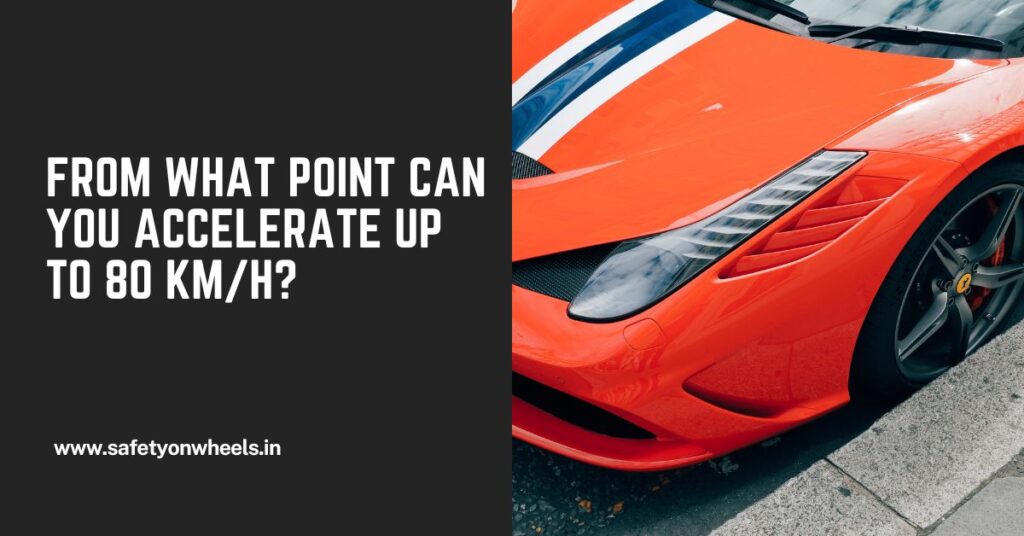
A very common and practical question arises: from what point can you accelerate up to 80 km/h?
The answer depends on more than just seeing an open road. It involves road signs, traffic conditions, visibility, and legal speed zones. In this detailed guide, we’ll break down exactly when and where accelerating to 80 km/h is appropriate, safe, and legal.
From What Point Can You Accelerate Up to 80 km/h?
Let’s address the question clearly.
You can accelerate up to 80 km/h only from the point where the speed limit allows it and road conditions make it safe to do so. This usually begins:
- After passing a speed limit sign indicating 80 km/h
- After exiting a lower-speed zone (such as residential or school areas)
- When entering highways or major roads designed for higher speeds
Until you reach that specific point, you must maintain the previously indicated speed limit.
In simple terms, you accelerate to 80 km/h only after the road legally and safely permits it—not before.
Also read: How Is Traffic Flow And Volume Controlled On Highways And Freeways?
Understanding Speed Limit Zones
To fully understand when you can accelerate, you need to recognize how speed zones work.
What Defines a Speed Zone?
A speed zone is determined by:
- Road type (urban, rural, highway)
- Traffic density
- Pedestrian activity
- Road design and visibility
Each zone has a clearly defined maximum speed.
Transition Between Speed Zones
Speed limits do not change gradually—they change at specific points marked by signs.
Example:
- You are driving at 50 km/h in a city zone
- You pass a sign indicating 80 km/h
- Only after passing that sign can you begin accelerating
Accelerating before reaching the sign is a violation, even if the road looks clear.
Role of Traffic Signs in Speed Control
Traffic signs are your primary guide for determining when to accelerate.
Speed Limit Signs
These signs indicate:
- Maximum allowed speed
- Start of a new speed zone
Once you pass the sign, the new limit applies.
End of Restriction Signs
Some roads use signs that indicate the end of a previous restriction. After this:
- A higher general speed limit may apply
- You can accelerate accordingly
Warning Signs
Even if the speed limit allows 80 km/h, warning signs (such as curves or intersections) may require you to maintain a lower speed temporarily.
Road Types Where 80 km/h Is Common
Understanding road categories helps you anticipate when higher speeds are appropriate.
Highways and Major Roads
These roads are designed for:
- Higher speeds
- Smooth traffic flow
- Limited interruptions
You can usually accelerate to 80 km/h once you:
- Merge safely
- Match the speed of traffic
Rural Roads
Rural roads often allow speeds up to 80 km/h, but conditions vary.
Factors to consider:
- Narrow lanes
- Sharp curves
- Limited visibility
Even if allowed, you should accelerate gradually and cautiously.
Transition Zones
Areas between urban and highway roads often have changing speed limits. Always wait for clear signage before increasing speed.
Safety Conditions Before Accelerating
Even if the law allows 80 km/h, safety must come first.
Clear Road Ahead
You should only accelerate when:
- The road is free from obstacles
- There is enough space ahead
Good Visibility
Poor visibility due to:
- Fog
- Rain
- Darkness
means you should delay acceleration, even in an 80 km/h zone.
Traffic Flow
Match your speed with surrounding traffic. Sudden acceleration in slow-moving traffic can create dangerous situations.
Why Accelerating Too Early Is Dangerous
Many drivers make the mistake of accelerating before reaching the designated point.
Legal Consequences
Driving above the current speed limit—even slightly early—can result in:
- Fines
- Penalty points
- Increased insurance costs
Safety Risks
Accelerating too soon can:
- Catch other drivers off guard
- Reduce reaction time
- Increase stopping distance
Misjudging Road Conditions
What looks like a safe stretch of road may have hidden risks:
- Intersections
- Pedestrian crossings
- Sudden curves
Waiting for the correct point ensures better decision-making.
Smooth Acceleration Techniques
Once you reach the correct point, how you accelerate matters just as much as when.
Gradual Acceleration
Avoid sudden bursts of speed. Smooth acceleration:
- Improves vehicle control
- Reduces fuel consumption
- Keeps traffic flow stable
Gear Control
For manual vehicles:
- Shift gears at appropriate speeds
- Avoid over-revving the engine
Maintain Awareness
Even while accelerating, stay alert for:
- Changing traffic conditions
- Road hazards
- Speed limit changes
Common Mistakes Drivers Make
Understanding these mistakes can help you avoid them.
Ignoring Speed Signs
Some drivers rely on memory or assumptions instead of reading signs. This often leads to speeding violations.
Accelerating Based on Road Feel
A wide, empty road may feel safe—but if the limit is lower, you must follow it.
Following Other Drivers Blindly
Just because others are accelerating early doesn’t mean it’s correct or safe.
Delayed Speed Adjustment
Some drivers accelerate too late, disrupting traffic flow. Balance is key—accelerate at the right point, not too early or too late.
The Science Behind Speed and Safety
Speed directly affects how a vehicle behaves.
Stopping Distance
At 80 km/h:
- Stopping distance increases significantly compared to lower speeds
- Reaction time becomes more critical
Impact Force
Higher speed means:
- Greater impact force in collisions
- Increased injury risk
Traffic Flow Stability
Consistent speeds reduce:
- Sudden braking
- Traffic waves
- Congestion
This is why controlled acceleration is essential.
Practical Driving Tips
Applying this knowledge in real driving situations makes a big difference.
Always Scan for Signs Ahead
Look ahead for upcoming speed changes so you can prepare in advance.
Adjust Speed Progressively
Transition smoothly between speed zones instead of making abrupt changes.
Stay Within Limits Even on Empty Roads
Empty roads can create a false sense of safety. Always follow posted limits.
Prioritize Safety Over Speed
Reaching 80 km/h a few seconds earlier is never worth the risk.
The Bigger Picture: Responsible Speed Management
Speed limits are not random—they are carefully determined based on road design, traffic patterns, and safety data.
When drivers respect these limits:
- Traffic flows more smoothly
- Accidents are reduced
- Roads become safer for everyone
Accelerating at the correct point is a small action, but it reflects responsible driving behavior.
Also read: What Factor Impacts a Change in the Quantity of a Product or Service?
Final Thoughts
So, from what point can you accelerate up to 80 km/h? The answer is simple yet crucial: only from the point where the speed limit changes and conditions allow safe acceleration.
It’s not about how fast you can go—it’s about when you should go.
By paying attention to road signs, understanding speed zones, and prioritizing safety, you not only avoid penalties but also contribute to a safer driving environment.
Because in driving, timing matters just as much as speed.