Road safety does not happen by chance. It is built on a strong legal framework that regulates driver behavior, vehicle standards, and enforcement practices. In countries with high traffic volumes and complex road systems, legislation plays a critical role in preventing accidents and saving lives.
When we discuss road safety in South Africa, two major legal frameworks stand out for their impact and importance. These laws shape how roads are used, how drivers are trained, and how violations are enforced.
In this guide, we will clearly explain these two key pieces of legislation, how they work, and why they matter in creating a safer driving environment.
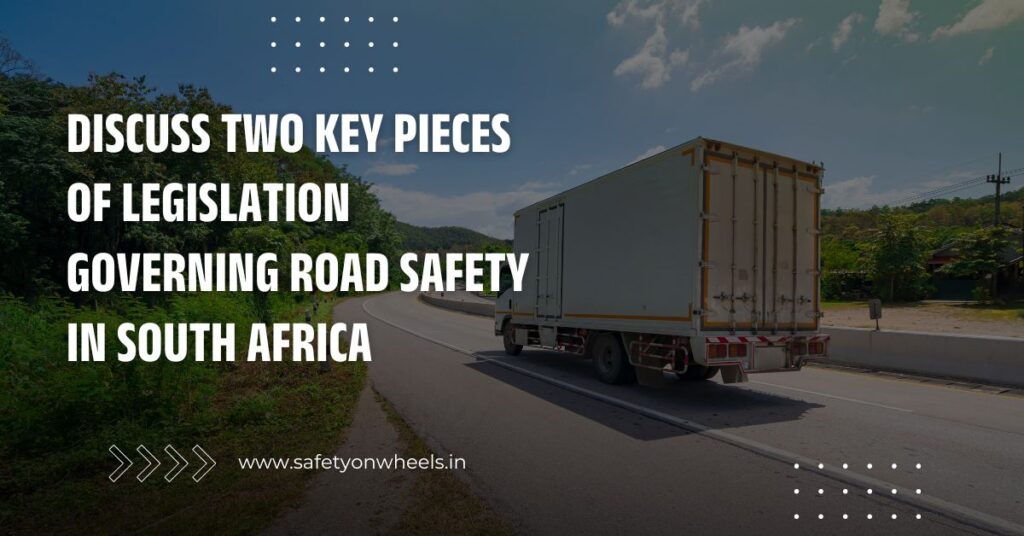
Discuss Two Key Pieces Of Legislation Governing Road Safety In South Africa
The two key pieces of legislation governing road safety in South Africa are:
- The National Road Traffic Act (NRTA)
- The Administrative Adjudication of Road Traffic Offences (AARTO) Act
Together, these laws form the backbone of road safety enforcement, driver accountability, and traffic regulation. While one focuses on rules and standards, the other ensures compliance through penalties and administrative processes.
Let’s explore each in detail.
Also read: What Violation That May Be Applied If A Driver Passed The Three Field Sobriety Test?
The National Road Traffic Act (NRTA): Foundation of Road Rules
The National Road Traffic Act is the primary law that governs how roads are used and managed.
What the NRTA Covers
This legislation provides a comprehensive framework for:
- Driver licensing and testing
- Vehicle registration and roadworthiness
- Traffic rules and road signs
- Speed limits and driving behavior
It acts as the rulebook that every driver must follow.
Driver Licensing and Competency
The NRTA establishes:
- Requirements for obtaining a driver’s license
- Testing procedures to assess driving skills
- Categories of licenses for different vehicle types
This ensures that only qualified individuals operate vehicles on public roads.
Vehicle Standards and Safety
Vehicles must meet specific requirements before being allowed on the road.
These include:
- Functional brakes and lights
- Roadworthy tires
- Compliance with safety standards
Regular inspections help reduce accidents caused by mechanical failure.
Rules of the Road
The Act defines essential driving rules, such as:
- Obeying traffic signals
- Following speed limits
- Maintaining lane discipline
These rules create predictability, which is essential for safe traffic flow.
Why the NRTA Matters
Without a clear legal framework:
- Drivers would interpret rules differently
- Road behavior would become unpredictable
- Accident rates would increase
The NRTA ensures consistency and sets the foundation for all road safety measures.
The AARTO Act: Enforcing Accountability on the Road
While the NRTA sets the rules, the AARTO Act ensures those rules are followed.
Purpose of the AARTO Act
The Administrative Adjudication of Road Traffic Offences Act focuses on:
- Enforcing traffic laws
- Penalizing violations
- Promoting responsible driving behavior
It introduces a structured system for handling traffic offenses.
The Demerit Points System
One of the most important features of AARTO is the demerit system.
How It Works
- Drivers receive points for traffic violations
- Accumulating too many points can lead to license suspension
- Continued violations may result in license cancellation
This system encourages long-term compliance rather than one-time punishment.
Streamlined Enforcement
AARTO simplifies the process of:
- Issuing fines
- Handling disputes
- Managing penalties
This reduces delays and improves efficiency in dealing with traffic offenses.
Promoting Behavioral Change
Unlike traditional systems that focus only on fines, AARTO aims to:
- Change driver behavior over time
- Reduce repeat offenses
- Improve overall road discipline
Why AARTO Is Important
Enforcement is essential for any law to be effective.
Without it:
- Rules would be ignored
- Violations would increase
- Road safety would decline
AARTO ensures that drivers remain accountable for their actions.
How These Laws Work Together
The NRTA and AARTO Act are not separate systems—they complement each other.
Division of Roles
- NRTA defines what is legal and safe
- AARTO ensures those rules are followed
Creating a Complete System
Together, they:
- Establish clear rules
- Enforce compliance
- Encourage responsible behavior
This combination creates a balanced and effective road safety framework.
Impact on Road Safety
These laws have a direct influence on reducing accidents and improving safety.
Improved Driver Behavior
Clear rules and consistent enforcement lead to:
- Better compliance
- Reduced risky behavior
- Increased awareness
Reduction in Traffic Violations
The demerit system discourages repeat offenses, leading to fewer violations over time.
Safer Vehicles on the Road
Strict vehicle standards ensure that:
- Unsafe vehicles are removed
- Mechanical failures are minimized
Enhanced Public Confidence
When laws are enforced consistently, drivers feel safer and more confident on the road.
Challenges in Implementation
No system is perfect, and these laws face certain challenges.
Public Awareness
Some drivers may not fully understand:
- Traffic rules
- Penalty systems
- Their responsibilities
Enforcement Consistency
Effective implementation requires:
- Well-trained officers
- Proper monitoring systems
Administrative Efficiency
Handling fines, disputes, and records requires:
- Efficient systems
- Accurate data management
Addressing these challenges is key to maximizing the effectiveness of the laws.
Practical Takeaways for Drivers
Understanding these laws helps drivers stay compliant and safe.
Know the Rules
Familiarize yourself with:
- Traffic signs
- Speed limits
- Road regulations
Drive Responsibly
Avoid behaviors that may lead to:
- Penalties
- Demerit points
- License suspension
Maintain Your Vehicle
Regular checks ensure:
- Compliance with safety standards
- Reduced risk of accidents
Stay Informed
Traffic laws may evolve, so keeping up-to-date helps you avoid unnecessary issues.
The Bigger Picture: Building a Safer Road Culture
Legislation alone cannot ensure safety—it requires cooperation from every road user.
Shared Responsibility
Road safety depends on:
- Drivers
- Pedestrians
- Authorities
Encouraging Better Habits
Laws like NRTA and AARTO encourage:
- Discipline
- Awareness
- Accountability
Long-Term Benefits
Over time, consistent enforcement leads to:
- Fewer accidents
- Safer roads
- Improved quality of life
Also read: Why Is It Important To Complete A Mock Test To Check Your Device Before The Actual Exam?
Final Thoughts
So, when we discuss two key pieces of legislation governing road safety in South Africa, the National Road Traffic Act and the AARTO Act clearly stand out.
One sets the rules. The other enforces them.
Together, they create a comprehensive system that promotes safe driving, reduces violations, and protects all road users.
Understanding these laws is not just about avoiding penalties—it’s about becoming a more responsible driver and contributing to safer roads for everyone.