
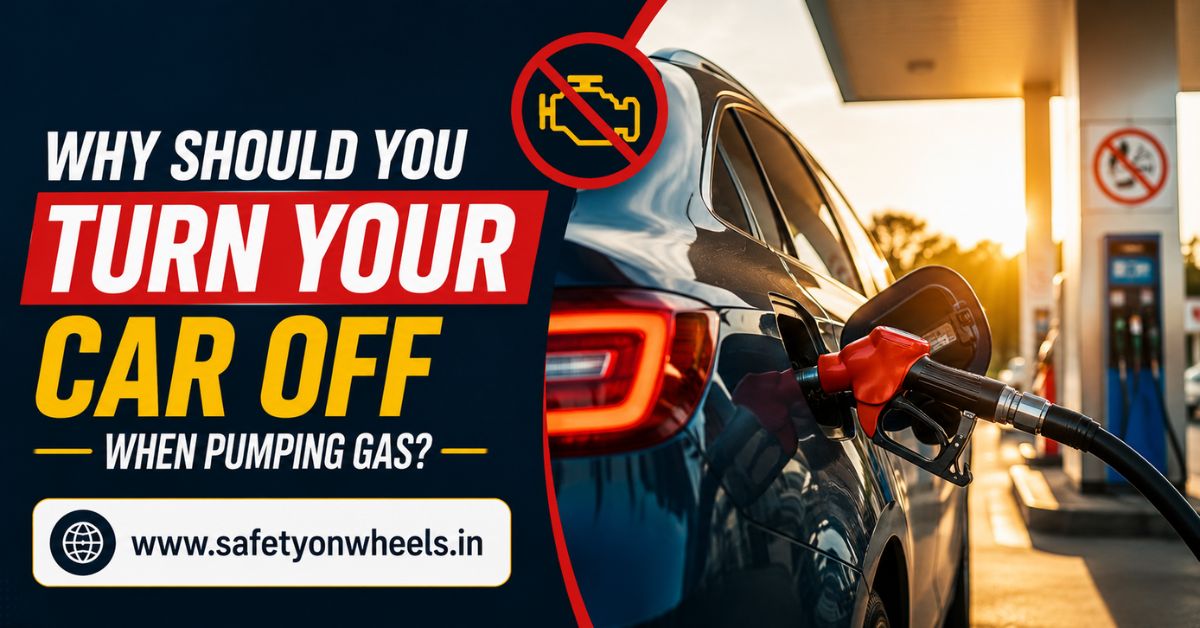
Pulling into a gas station is such a routine part of driving that many people barely think about it. You stop beside the pump, grab the nozzle, fill the tank, pay, and continue your journey. Yet there is one instruction that appears at virtually every fueling station around the world: Turn off your engine before refueling.
Most drivers follow this rule automatically, but few understand the real reasons behind it. Some assume it is simply an outdated safety precaution, while others believe modern vehicles eliminate the risk entirely. The truth lies somewhere in between.
Fuel stations handle highly flammable liquids and vapors every day. Although serious fueling accidents are rare, they can happen when safety procedures are ignored. Turning off your vehicle before pumping gas remains one of the simplest and most effective ways to reduce potential hazards.
Understanding why should you turn your car off when pumping gas is important for every driver. It helps protect you, other motorists, fuel station employees, and your vehicle itself.
This guide explains the science behind fuel safety, common myths, legal requirements, and practical fueling habits that every responsible driver should follow.
Why Should You Turn Your Car Off When Pumping Gas?
The primary reason you should turn your car off when pumping gas is to reduce the risk of ignition around flammable fuel vapors.
Gasoline does not burn easily as a liquid. Instead, the danger comes from gasoline vapors. These vapors mix with oxygen in the air and can ignite if they encounter a spark, flame, or sufficient heat source.
When your vehicle is running:
- Electrical systems remain active
- Engine components generate heat
- Ignition systems operate continuously
- Electrical faults, though rare, remain possible
By turning off the engine, you remove several potential ignition sources and create a safer fueling environment.
The risk may be small, but when dealing with highly flammable substances, even small risks deserve attention.
Also read: What Should You Do If A Traffic Signal Is Malfunctioning?
Understanding the Dangers of Gasoline Vapors
Many people assume the liquid fuel itself is the main hazard. In reality, gasoline vapors present the greater concern.
Why Vapors Are So Dangerous
Gasoline evaporates quickly, especially during warm weather.
As fuel enters your tank, vapors can escape into the surrounding air. These vapors are:
- Highly flammable
- Easily ignited
- Often invisible
- Capable of spreading several feet from the fuel source
According to fire safety experts, gasoline vapors can ignite at relatively low temperatures when exposed to a suitable ignition source.
That is why fuel stations enforce strict safety procedures.
Vapors Can Travel Unexpectedly
Gasoline vapors are heavier than air.
Instead of rising immediately, they can move along the ground and collect in low areas.
This means a spark several feet away could potentially ignite vapors under the right conditions.
While such incidents remain uncommon, safety standards exist specifically because rare events can have severe consequences.
How a Running Engine Can Increase Risk
Modern vehicles are much safer than older models, but running engines still create conditions that safety experts prefer to avoid during fueling.
Heat From Engine Components
Several engine parts become extremely hot during normal operation.
Examples include:
- Exhaust manifolds
- Catalytic converters
- Engine blocks
- Turbochargers
Some components can exceed several hundred degrees Celsius after extended driving.
Although fuel systems are designed to minimize exposure, eliminating unnecessary heat sources remains a smart safety practice.
Active Electrical Systems
A running vehicle continuously powers numerous electrical components:
- Alternator
- Ignition system
- Sensors
- Relays
- Cooling fans
Modern vehicles are engineered carefully, but electrical systems always carry a small possibility of malfunction.
Turning off the engine reduces this risk further.
Unexpected Mechanical Issues
Vehicles occasionally develop problems without warning.
Examples include:
- Damaged wiring
- Electrical shorts
- Battery issues
- Faulty ignition components
Most drivers never experience these failures, but safety procedures account for worst-case scenarios rather than average situations.
The Role of Static Electricity During Refueling
Static electricity creates another potential hazard during fueling.
How Static Builds Up
Static electricity develops when certain materials rub together.
Common examples include:
- Sliding across a vehicle seat
- Wearing synthetic clothing
- Entering and exiting the vehicle repeatedly
Under certain conditions, static charges can accumulate on the body.
Why Static Sparks Matter
When a person touches a metal fuel nozzle after building static charge, a small spark may occur.
Although most static shocks feel harmless, they can ignite gasoline vapors in rare situations.
The Petroleum Equipment Institute has documented incidents involving static electricity igniting fuel vapors during refueling.
How to Reduce Static Risks
Drivers can lower static risks by:
- Touching a metal part of the vehicle before handling the nozzle
- Avoiding unnecessary re-entry into the vehicle during fueling
- Following station safety instructions
These simple habits significantly improve fueling safety.
Fuel Station Safety Rules Exist for a Reason
Fuel stations process enormous volumes of fuel every day.
A single busy station may serve hundreds or thousands of vehicles daily.
Because of this volume, safety procedures become critically important.
Standard Fueling Safety Rules
Most fuel stations require customers to:
- Turn off engines
- Avoid smoking
- Stay near the pump
- Prevent fuel spills
- Avoid open flames
- Follow posted instructions
Each rule addresses a specific safety concern.
They may seem routine, but together they dramatically reduce accident risks.
Safety Standards Are Built on Real Incidents
Many fueling regulations originated after investigations into fires and accidents.
Safety experts study:
- Fire reports
- Equipment failures
- Human behavior
- Environmental factors
The resulting guidelines reflect decades of practical experience.
What Happens If You Leave Your Car Running While Refueling?
In most cases, nothing happens.
That fact sometimes leads drivers to ignore fueling precautions.
However, safety practices are not based on what usually happens. They are based on what could happen.
Potential Consequences
Leaving the engine running may:
- Increase ignition risk
- Violate station policies
- Breach local regulations
- Create unnecessary hazards
Even though modern vehicles are designed with extensive safety features, eliminating avoidable risks remains the better choice.
Station Employees May Intervene
Many fuel stations train employees to stop fueling if they notice a vehicle running.
This is particularly common in regions with strict fuel safety regulations.
Drivers may be asked to:
- Turn off the engine
- Restart the fueling process
- Follow posted safety instructions
Common Myths About Refueling Safety
Several misconceptions surround fuel station safety.
“Modern Cars Are Completely Safe to Refuel While Running”
Modern vehicles are safer than ever, but no system eliminates all risk.
Manufacturers still recommend shutting off the engine before refueling.
“Only Older Cars Need to Be Turned Off”
The recommendation applies to vehicles of all ages.
Newer technology reduces risk but does not eliminate it entirely.
“Gasoline Won’t Ignite Without a Large Flame”
False.
Small sparks can ignite gasoline vapors under the right conditions.
That includes:
- Static discharge
- Electrical faults
- Ignition-related sparks
“I’ve Done It for Years Without Problems”
Many risky behaviors never result in accidents until they suddenly do.
Safety procedures focus on prevention, not luck.
Additional Benefits of Turning Off Your Car
Safety is the primary reason, but other benefits exist as well.
Reduced Fuel Waste
A running engine continues consuming fuel while parked.
Although consumption is relatively low, turning off the engine prevents unnecessary waste.
Lower Emissions
Idling contributes to:
- Carbon dioxide emissions
- Air pollution
- Fuel consumption
Reducing idle time benefits both the environment and fuel economy.
Less Engine Wear
While modern engines handle idling efficiently, unnecessary operation still contributes to wear over time.
Shutting off the engine during fueling minimizes unnecessary running time.
Special Considerations for Hybrid and Electric Vehicles
Hybrid and electric vehicles introduce unique fueling and charging considerations.
Hybrid Vehicles
Some hybrid vehicles automatically start their engines when certain conditions occur.
Drivers should:
- Follow manufacturer instructions
- Turn off the vehicle completely before fueling
Even if the engine appears inactive, the system may still activate automatically.
Electric Vehicles
Electric vehicles do not use gasoline, but charging stations have their own safety procedures.
Drivers should follow:
- Manufacturer guidelines
- Charging station instructions
- Electrical safety recommendations
Different technologies require different safety practices, but the principle remains the same: follow established procedures.
Fueling Best Practices Every Driver Should Follow
Safe fueling habits go beyond simply turning off the engine.
Position the Vehicle Properly
Park close enough to the pump to avoid stretching hoses excessively.
This reduces equipment strain and trip hazards.
Stay With Your Vehicle
Remain near the pump while fueling.
This allows you to respond quickly if:
- Fuel overflows
- Equipment malfunctions
- Emergencies occur
Avoid Using Open Flames
Never use:
- Cigarettes
- Lighters
- Matches
Near fueling areas.
This rule may seem obvious, yet it remains one of the most important.
Follow Posted Instructions
Fuel stations display safety information for a reason.
Taking a few seconds to follow those instructions can prevent serious problems.
How Fuel Station Technology Improves Safety
Modern fueling stations include numerous safety features.
These systems help prevent:
- Overfills
- Vapor release
- Equipment failure
- Fire spread
Examples include:
- Automatic shutoff nozzles
- Vapor recovery systems
- Emergency fuel cutoffs
- Fire suppression equipment
These technologies significantly improve safety, but they work best when drivers follow proper procedures as well.
Safety remains a shared responsibility.
Why Fueling Safety Still Matters Today?
Fuel station fires remain relatively rare, which is excellent news.
However, rare does not mean impossible.
Road safety organizations and fire safety authorities continue to emphasize proper fueling habits because the consequences of ignition events can be severe.
A few seconds spent turning off the engine provides an easy layer of protection with virtually no downside.
That is why the recommendation continues to appear on fuel pumps, station signs, and vehicle owner manuals worldwide.
Also read: Why Is It Important To Complete A Mock Test To Check Your Device Before The Actual Exam?
Final Thoughts
Understanding why you should turn your car off when pumping gas is about more than simply following a rule posted at the fuel station. Gasoline vapors are highly flammable, and even though modern vehicles and fueling systems include advanced safety features, eliminating potential ignition sources remains one of the most effective ways to reduce risk. Turning off your engine takes only a few seconds, yet it helps create a safer environment for you, other drivers, and fuel station employees.
Safe fueling practices are an important part of responsible vehicle ownership. Along with turning off the engine, drivers should avoid distractions, stay near the pump while refueling, and follow all posted safety instructions. These habits may seem small, but they contribute significantly to preventing accidents and ensuring that fuel stations remain safe places for everyone.
The next time you pull up to a gas pump, remember that safety starts before you even begin filling the tank. A simple action like switching off your vehicle can help prevent unnecessary risks, protect those around you, and reinforce the good driving habits that every responsible motorist should practice. After all, when it comes to fuel safety, a few seconds of caution are always worth far more than the consequences of taking a chance.
Frequently Asked Questions (FAQ)
1. Why is it important to turn off your car while pumping gas?
Turning off your engine reduces potential ignition sources near gasoline vapors, helping prevent fires and ensuring a safer refueling environment.
2. Can a running engine ignite gasoline vapors at a gas station?
While rare, a running engine contains heat and electrical systems that could contribute to ignition risks if fuel vapors encounter a spark.
3. Is it illegal to leave your car running while refueling?
Many regions and fuel stations prohibit refueling with the engine running. Local laws and station policies may vary by location.
4. Can static electricity cause a fire while pumping gas?
Yes. Static electricity can create small sparks that may ignite gasoline vapors. Following fueling safety practices reduces this risk.
5. Should hybrid vehicles be turned off before refueling?
Yes. Hybrid vehicles should be fully powered down before fueling because their engines can sometimes start automatically during operation.