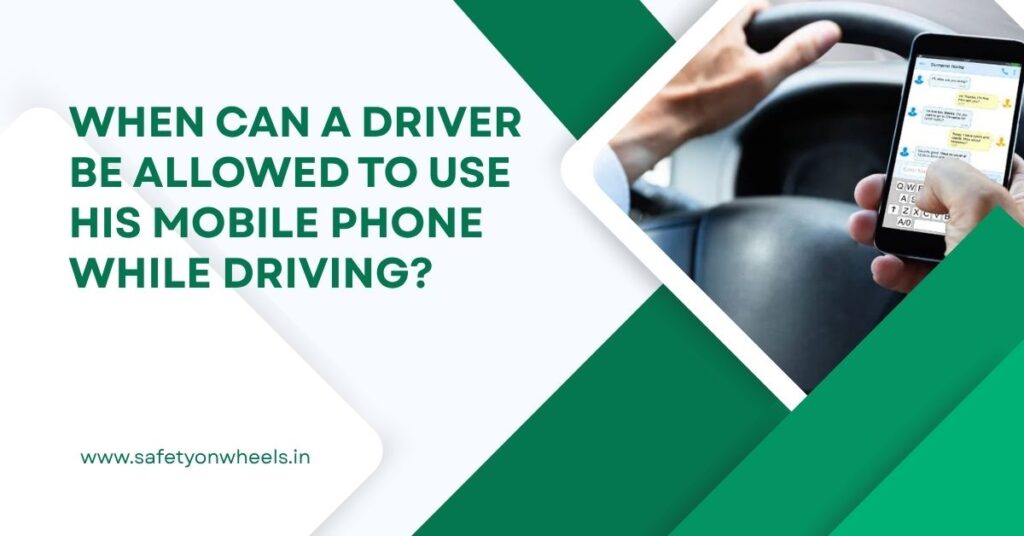
Mobile phones have become an essential part of everyday life. From navigation to communication, they make driving more convenient—but also significantly more dangerous when misused.
You’ve probably heard that using a phone while driving is illegal or unsafe. But the real question many drivers ask is: when can a driver be allowed to use his mobile phone while driving?
The answer is not as simple as “never.” There are specific situations where limited use may be allowed, but strict conditions apply—and safety always comes first.
In this detailed guide, we’ll explore when mobile phone use is permitted, when it’s strictly prohibited, and why responsible usage is critical for road safety.
When Can A Driver Be Allowed To Use His Mobile Phone While Driving?
A driver is generally allowed to use a mobile phone only when it does not involve holding the device and does not distract from full control of the vehicle.
This typically includes:
- Using hands-free or voice-controlled systems
- Making calls without physically handling the phone
- Using navigation systems mounted securely
However, any use that requires holding the phone, typing, or diverting attention from driving is unsafe and often illegal.
In simple terms, you may use your phone only if your hands remain on the wheel and your focus stays on the road.
Also read: What Are the Three Field Sobriety Tests?
Understanding the Risks of Mobile Phone Use While Driving
Before discussing allowed scenarios, it’s important to understand why restrictions exist.
Types of Distraction
Mobile phone use creates three main types of distraction:
Visual Distraction
Taking your eyes off the road—even for a few seconds.
Manual Distraction
Removing one or both hands from the steering wheel.
Cognitive Distraction
Losing mental focus on driving.
Even a brief distraction can increase the risk of accidents significantly.
Real-World Impact
Studies have shown that:
- Drivers using mobile phones are several times more likely to be involved in crashes
- Reaction times slow down dramatically
- Situational awareness decreases
This is why laws around mobile phone use are strict and widely enforced.
Situations Where Limited Use Is Allowed
Let’s look at the specific scenarios where mobile phone use may be permitted.
Hands-Free Communication
Using a hands-free system allows you to:
- Make or receive calls
- Keep both hands on the wheel
Important conditions:
- The system must not require manual interaction while driving
- Conversations should remain brief and non-distracting
Voice Commands
Modern smartphones and vehicles support voice assistants.
You can:
- Ask for directions
- Make calls
- Control music
Why this is safer:
- No need to touch the device
- Minimal visual distraction
Navigation Systems
Using your phone for navigation is allowed if:
- The device is mounted securely
- The route is set before driving
- You avoid interacting with it while moving
Emergency Situations
In genuine emergencies, limited phone use may be allowed.
Examples include:
- Calling emergency services
- Reporting a serious hazard
Even then, it’s safest to stop the vehicle before making the call.
When Mobile Phone Use Is Not Allowed
Understanding restrictions is just as important.
Holding the Phone While Driving
This is one of the most common violations.
You should not:
- Hold the phone to make calls
- Text or type messages
- Browse apps or social media
Using the Phone in Traffic
Even if the vehicle is stationary in traffic:
- You are still considered to be driving
- Phone use is generally prohibited
Taking Photos or Videos
This creates extreme distraction and significantly increases accident risk.
Adjusting Settings While Driving
Changing settings, typing addresses, or scrolling through apps should never be done while the vehicle is moving.
Why Hands-Free Doesn’t Mean Risk-Free
Many drivers assume hands-free use is completely safe—but that’s not entirely true.
Cognitive Distraction Still Exists
Even without holding the phone:
- Your mind shifts away from driving
- Reaction time decreases
Complex Conversations Are Risky
Engaging in emotional or complicated discussions can:
- Reduce focus
- Increase decision-making errors
Best Practice
Use hands-free systems sparingly and only when necessary.
The Legal Perspective
Laws regarding mobile phone use while driving focus on minimizing distraction.
Common Legal Principles
- Drivers must maintain full control of the vehicle
- Any activity that distracts from driving is restricted
- Hands-free use is allowed under strict conditions
Penalties for Violations
Depending on the severity, consequences may include:
- Fines
- Penalty points
- License suspension in serious cases
Why Laws Are Strict
Distracted driving is a leading cause of road accidents worldwide. Regulations aim to reduce this risk.
Safe Alternatives to Using a Phone While Driving
Instead of using your phone while driving, consider safer options.
Plan Ahead
- Set navigation before starting your journey
- Inform contacts if you will be unavailable
Use Do Not Disturb Mode
Many phones offer driving modes that:
- Silence notifications
- Send automatic replies
Pull Over Safely
If you must use your phone:
- Stop in a safe location
- Turn off the engine if necessary
This simple step eliminates risk completely.
Common Mistakes Drivers Make
Even well-intentioned drivers often make these errors.
Quick Glances at the Phone
Even a two-second glance can:
- Double crash risk
- Reduce awareness significantly
Multitasking While Driving
Trying to manage calls, messages, and navigation simultaneously leads to overload.
Overconfidence
Some drivers believe they can handle phone use safely—but distraction affects everyone.
Ignoring Hands-Free Limitations
Using hands-free excessively can still impair driving performance.
Practical Tips for Responsible Driving
Developing good habits makes a big difference.
Keep Your Phone Out of Reach
Place it in a holder or storage area to avoid temptation.
Prioritize Driving Over Communication
No message or call is more important than safety.
Stay Mentally Present
Focus fully on:
- Road conditions
- Traffic flow
- Surroundings
Limit Conversations
Keep calls short and simple if necessary.
The Bigger Picture: Driving Demands Full Attention
Driving is a complex task that requires:
- Constant awareness
- Quick decision-making
- Full physical control
Mobile phones interfere with all three.
Even small distractions can have serious consequences. Responsible drivers understand that attention is their most valuable safety tool.
Also read: What Is the Primary Purpose of Business Monitoring in Agentic AI Systems?
Final Thoughts
So, when can a driver be allowed to use his mobile phone while driving? The answer is clear: only in limited situations where the phone is not held, does not distract attention, and allows full control of the vehicle.
Hands-free systems, voice commands, and pre-set navigation can make phone use safer—but they are not risk-free.
The safest approach is simple: minimize phone use while driving and prioritize the road at all times.
Because in driving, focus isn’t optional—it’s essential.