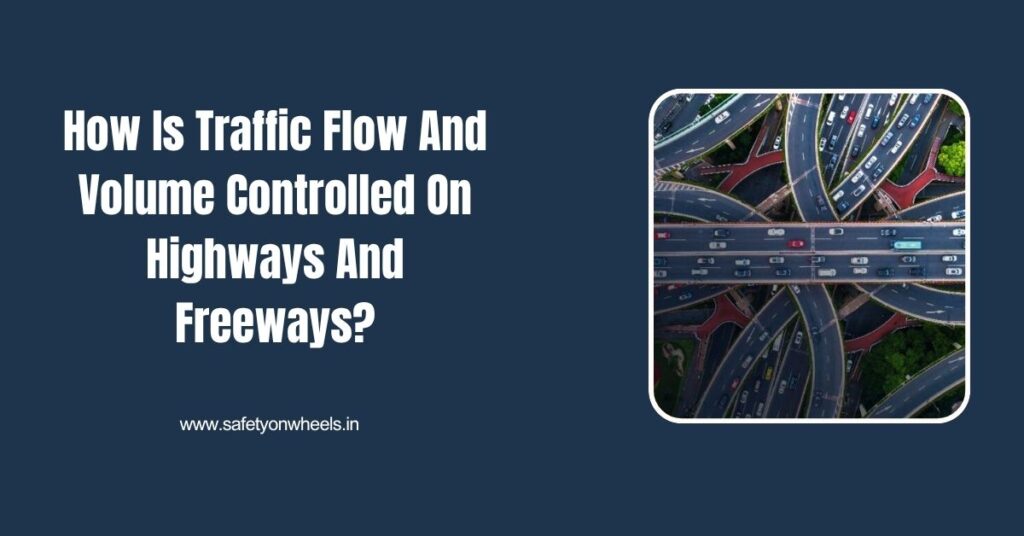
Highways and freeways are designed for speed, efficiency, and long-distance travel. But without proper control, they can quickly turn into congested, unpredictable, and even dangerous environments. If you’ve ever been stuck in a sudden traffic jam with no visible cause, you’ve already experienced what happens when traffic flow is not managed effectively.
So, how is traffic flow and volume controlled on highways and freeways? The answer lies in a combination of engineering design, real-time monitoring, driver behavior, and advanced traffic management systems.
In this guide, we’ll break down the key methods used to control traffic flow and volume, explain how they work in real-world conditions, and help you understand the logic behind smoother, safer highways.
How Is Traffic Flow and Volume Controlled on Highways and Freeways?
Traffic flow and volume on highways and freeways are controlled through a mix of infrastructure design, traffic regulations, and intelligent systems that monitor and manage vehicle movement in real time.
These systems aim to:
- Maintain steady traffic speed
- Prevent congestion buildup
- Reduce accidents
- Optimize road capacity
Instead of reacting to problems after they occur, modern traffic control focuses on preventing disruptions before they happen.
Also read: Can An Expired Child Restraint System Be Used When It Still Looks In Good Shape?
Understanding Traffic Flow vs Traffic Volume
Before diving deeper, it’s important to understand these two key concepts.
Traffic Flow
Traffic flow refers to how smoothly vehicles move along a roadway. It focuses on:
- Speed consistency
- Minimal stops and delays
- Predictable driving patterns
A highway with good flow feels smooth and efficient.
Traffic Volume
Traffic volume refers to the number of vehicles using a road within a specific time period.
High volume does not always mean congestion—but when volume exceeds road capacity, traffic flow breaks down.
Why This Distinction Matters
Effective traffic control aims to:
- Balance volume with road capacity
- Maintain flow even during peak hours
When this balance is disrupted, congestion occurs.
Road Design and Infrastructure Planning
One of the most fundamental ways to control traffic begins long before vehicles hit the road—through design.
Lane Configuration and Width
Highways are designed with:
- Multiple lanes to distribute traffic
- Standardized widths for safety and consistency
More lanes allow higher capacity, but only if drivers use them efficiently.
Entry and Exit Ramps
On-ramps and off-ramps are carefully planned to:
- Allow smooth merging
- Prevent sudden slowdowns
Poorly designed ramps often lead to bottlenecks.
Curves and Gradients
Sharp curves and steep slopes reduce speed and disrupt flow. Engineers design highways with:
- Gentle curves
- Gradual inclines
This helps maintain consistent speed.
Traffic Signals and Ramp Metering
Even on highways, controlled entry plays a big role in maintaining flow.
Ramp Metering Systems
Ramp meters are traffic signals placed at on-ramps. They control how many vehicles enter the highway at a time.
Why this works:
- Prevents sudden influx of vehicles
- Maintains steady flow on main lanes
- Reduces merging conflicts
It may feel like a delay, but it actually saves time by preventing larger congestion ahead.
Coordinated Signal Systems
In urban freeway sections, traffic signals may be synchronized to:
- Manage traffic density
- Avoid stop-and-go patterns
This coordination improves overall efficiency.
Intelligent Traffic Management Systems
Modern highways rely heavily on technology to monitor and control traffic in real time.
Traffic Sensors and Cameras
These systems collect data on:
- Vehicle speed
- Traffic density
- Incident detection
This information helps authorities respond quickly to changing conditions.
Variable Message Signs
Electronic boards display real-time information such as:
- Traffic delays
- Speed advisories
- Lane closures
Drivers can adjust their behavior based on these updates.
Adaptive Traffic Control
Advanced systems use algorithms to:
- Predict congestion
- Adjust traffic signals
- Suggest alternate routes
This proactive approach keeps traffic moving more smoothly.
Speed Limits and Lane Discipline
Driver behavior plays a huge role in traffic flow.
Speed Regulation
Consistent speed is key to smooth traffic flow.
Why it matters:
- Sudden braking creates ripple effects (also called “shockwave traffic”)
- Speed differences between vehicles increase collision risk
Some highways use variable speed limits that adjust based on traffic conditions.
Lane Usage Rules
Proper lane discipline helps distribute traffic evenly.
Common principles include:
- Slower vehicles stay in designated lanes
- Overtaking lanes remain clear for faster traffic
When drivers ignore lane rules, congestion increases—even without high traffic volume.
Incident Management and Emergency Response
Unexpected events can disrupt traffic instantly.
Types of Incidents
- Accidents
- Vehicle breakdowns
- Road debris
- Weather-related hazards
Even a minor incident can create major delays if not handled quickly.
Rapid Response Systems
Traffic authorities use:
- Patrol units
- Tow services
- Emergency teams
Quick clearance reduces congestion and restores normal flow.
Real-Time Communication
Drivers are informed through:
- Digital signs
- Navigation apps
- Radio updates
This helps reroute traffic and reduce pressure on affected areas.
Role of Driver Behavior in Traffic Control
Technology and infrastructure can only do so much. Drivers play a critical role.
Maintaining Safe Following Distance
Tailgating leads to sudden braking and chain reactions.
Avoiding Unnecessary Lane Changes
Frequent lane switching disrupts flow and creates instability.
Smooth Acceleration and Braking
Gentle driving reduces traffic waves and improves overall efficiency.
Staying Alert
Distracted driving slows reaction time and contributes to congestion.
In simple terms, every driver contributes to traffic flow—either positively or negatively.
Managing High Traffic Volume During Peak Hours
Rush hours are the ultimate test of traffic control systems.
Demand Management Strategies
Authorities may use:
- Carpool lanes
- Toll pricing adjustments
- Public transport incentives
These strategies aim to reduce the number of vehicles on the road.
Time-Based Traffic Planning
Some highways implement:
- Reversible lanes
- Time-based restrictions
These adapt road usage based on peak demand.
The Science Behind Traffic Congestion
Understanding congestion helps explain why control measures are necessary.
Traffic Flow Breakdown
When vehicle density reaches a critical point:
- Speed drops suddenly
- Stop-and-go patterns begin
This is known as traffic flow breakdown.
Shockwave Effect
A single driver braking suddenly can create a wave of slowing vehicles behind them. This ripple effect can cause congestion without any visible obstacle.
Capacity Limits
Every road has a maximum capacity. Exceeding it leads to:
- Reduced speed
- Increased delays
- Higher accident risk
Traffic control systems aim to keep volume below this critical threshold.
Future of Traffic Flow Management
Traffic control is evolving rapidly with new technologies.
Smart Highways
Future systems may include:
- AI-driven traffic prediction
- Connected vehicles communicating with infrastructure
- Automated traffic adjustments
Autonomous Vehicles
Self-driving cars have the potential to:
- Maintain consistent speed
- Reduce human error
- Improve traffic flow efficiency
While still developing, these technologies could transform highway traffic management.
Also read: Explain Why Using Credit to Buy Products and Services Wasn’t Common Before 1920.
Final Thoughts
So, how is traffic flow and volume controlled on highways and freeways? It’s not just one system—it’s a carefully coordinated combination of design, technology, rules, and human behavior.
From ramp metering and smart sensors to speed control and driver discipline, every element works together to keep traffic moving smoothly and safely.
The next time you drive on a highway, remember—traffic flow isn’t random. It’s the result of thoughtful planning and constant management. And as a driver, you’re not just part of the traffic—you’re part of the solution.