
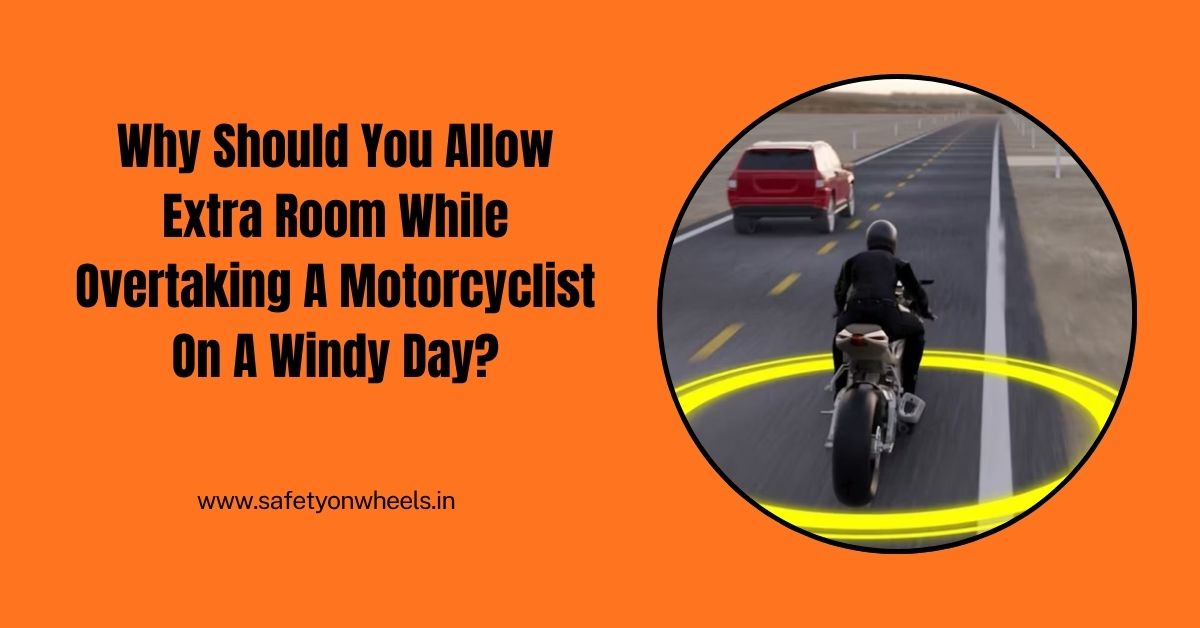
Overtaking a motorcyclist already requires care, patience, and awareness. Add strong winds into the mix, and the situation becomes far more unpredictable. What might seem like a simple maneuver can quickly turn risky if you don’t adjust your approach.
This leads to an important question every driver should understand: why should you allow extra room while overtaking a motorcyclist on a windy day? The answer lies in how wind affects motorcycle stability, rider control, and overall road safety.
In this blog guide, we’ll explore the real risks, explain the science behind wind impact, and show you how to overtake safely and responsibly.
Why Should You Allow Extra Room While Overtaking a Motorcyclist on a Windy Day?
Let’s address the key point directly.
You should allow extra room because strong winds can cause a motorcyclist to drift or lose stability, making their movement less predictable.
Unlike cars, motorcycles have:
- Less surface stability
- Narrow tire contact with the road
- Greater exposure to wind forces
This means even a sudden gust can push a rider sideways without warning.
How Wind Affects Motorcyclists on the Road?
To understand the need for extra space, it helps to look at how wind interacts with motorcycles.
Lateral Movement and Drift
Strong crosswinds can push a motorcycle sideways.
Even experienced riders may:
- Shift slightly within their lane
- Adjust their position frequently
- React to sudden gusts
This movement may seem minor, but when you’re overtaking closely, even a small drift can become dangerous.
Reduced Stability
Motorcycles rely heavily on balance. Wind disrupts that balance by applying uneven force.
This can lead to:
- Wobbling
- Sudden steering corrections
- Difficulty maintaining a straight line
Rider Compensation and Its Limits
Motorcyclists often lean into the wind to maintain control. However, when wind conditions change suddenly, that compensation may not be enough.
A quick shift in wind direction can surprise even skilled riders.
Also read: What Could You Do To Help Injured People At An Incident?
The Impact of Your Vehicle While Overtaking
Wind isn’t the only factor at play—you also contribute to the problem.
Air Displacement From Your Vehicle
As your car passes a motorcycle, it creates a wave of air pressure.
This can:
- Pull the motorcycle toward your vehicle
- Push it away suddenly after passing
- Increase instability during the maneuver
Combined Effect With Natural Wind
When vehicle-generated wind combines with natural gusts, the effect becomes unpredictable.
This is why maintaining extra distance isn’t just recommended—it’s essential.
Safe Overtaking Distance: What “Extra Room” Really Means
Many drivers underestimate how much space is actually needed.
Standard vs Windy Conditions
Under normal conditions, you should already give at least:
- 1.5 meters (or more, depending on local guidelines)
On a windy day, increase this distance further.
Creating a Safety Buffer
Think of extra room as a buffer zone that accounts for:
- Sudden rider movement
- Wind gusts
- Your vehicle’s air pressure
The more unpredictable the conditions, the larger this buffer should be.
When Wind Conditions Are Most Dangerous?
Not all windy situations are the same. Some conditions increase risk significantly.
Open Roads and Highways
Areas without natural barriers allow wind to flow freely, increasing its strength.
Bridges and Elevated Roads
These locations often experience stronger and more sudden gusts.
Passing Large Vehicles
Trucks and buses can block wind temporarily, followed by sudden exposure when you pass them.
This creates abrupt changes in wind pressure for motorcyclists.
Changing Weather Conditions
Wind intensity can vary quickly during storms or changing weather, making it harder for riders to adapt.
How to Overtake a Motorcyclist Safely on a Windy Day?
Safe overtaking is about control, awareness, and patience.
Observe Before You Act
Watch the motorcyclist’s movement.
Are they:
- Drifting slightly?
- Adjusting position frequently?
These signs indicate wind impact.
Maintain a Wider Gap
Give more space than usual—don’t rush the maneuver.
Overtake Smoothly
Avoid sudden acceleration or sharp steering.
A steady, predictable movement helps reduce additional pressure on the rider.
Return to Your Lane Gradually
Don’t cut in too quickly after overtaking.
Allow enough space before moving back.
Common Mistakes Drivers Make in Windy Conditions
Even experienced drivers can overlook key risks.
Passing Too Closely
This is the most common mistake and the most dangerous.
Underestimating Wind Impact
Many drivers assume the rider is fully in control at all times.
In reality, wind can disrupt even skilled riders.
Rushing the Overtake
Trying to complete the maneuver quickly often reduces safety margins.
Ignoring Environmental Clues
Wind effects are often visible:
- Moving trees
- Dust or debris in the air
- Swaying vehicles
Ignoring these signs can lead to poor decisions.
The Motorcyclist’s Perspective
Understanding the rider’s experience helps you become a better driver.
Constant Adjustment
Motorcyclists continuously adjust their position to stay balanced.
Limited Protection
Unlike car drivers, motorcyclists are fully exposed to the environment.
Higher Risk of Injury
Even minor contact or imbalance can result in serious consequences.
Why This Rule Matters for Road Safety?
Allowing extra room isn’t just courteous—it’s critical for preventing accidents.
Reducing Collision Risk
More space means more time to react if something unexpected happens.
Supporting Predictable Driving
Safe distance allows both drivers and riders to maintain control.
Protecting Vulnerable Road Users
Motorcyclists are among the most vulnerable road users.
Your actions directly impact their safety.
Practical Tips to Handle Windy Driving Conditions
Developing good habits helps you adapt to challenging environments.
Stay Aware of Weather Conditions
Check forecasts before driving long distances.
Adjust Your Speed
Driving slightly slower gives you more control and reaction time.
Keep Both Hands Firmly on the Wheel
Wind can affect your vehicle as well, especially at higher speeds.
Be Patient
Waiting a few extra seconds to overtake safely is always worth it.
Also read: How Would a Potential Ignition Source in Your Workplace Be Described?
Final Thoughts
Understanding why should you allow extra room while overtaking a motorcyclist on a windy day comes down to recognizing how unpredictable and vulnerable motorcycles become in such conditions. Wind doesn’t just affect speed—it affects balance, control, and the rider’s ability to maintain a steady path.
When you combine that with the air pressure created by your own vehicle, the risk increases significantly if you pass too closely. Giving extra space is not just a precaution; it’s a responsibility that reflects awareness and respect for other road users. In real-world driving, it’s often these small, thoughtful adjustments that prevent accidents and create safer roads for everyone.