
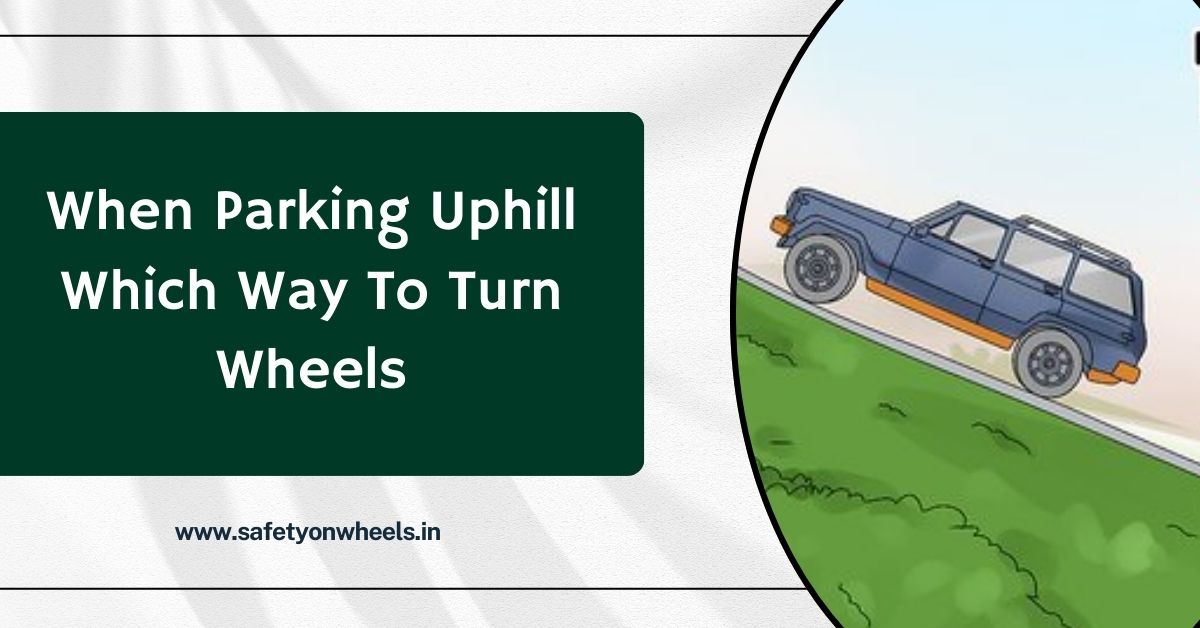
Parking on a hill might seem simple—pull over, stop the car, and engage the handbrake. But if you skip one small step, your vehicle could slowly roll away, creating a dangerous situation.
That’s why one question matters more than most drivers realize: when parking uphill which way to turn wheels?
The correct answer depends on whether there’s a curb or not. In general, when parking uphill, you should turn your front wheels away from the curb. If there’s no curb, turn them toward the side of the road.
It’s a small action, but it plays a huge role in preventing accidents. In this guide, we’ll break down exactly how it works, why it matters, and how to do it correctly every time.
Understanding Why Wheel Direction Matters
Before we dive into the technique, it’s important to understand the logic behind it.
Gravity Is Always Working Against You
When you park on an incline, gravity constantly pulls your vehicle downhill.
Even with:
- The handbrake engaged
- The transmission in gear or “Park”
There’s still a chance the car could move if something fails.
Wheels Act as a Backup Safety System
Turning your wheels creates a physical barrier. If the car rolls, the tyres will:
- Hit the curb
- Redirect the vehicle safely
- Prevent it from entering traffic
Think of it as a simple but highly effective safety backup.
Also read: What Is The Main Purpose Of Having A Vehicle Undergo Regular Vehicle Maintenance Inspection?
When Parking Uphill Which Way to Turn Wheels?
Let’s directly answer the main keyword: when parking uphill which way to turn wheels?
Uphill With a Curb
Turn your front wheels away from the curb.
Why This Works
If the vehicle rolls backward:
- The rear of the tyre will touch the curb
- The car will stop instead of rolling into the road
This method uses the curb as a natural block.
Uphill Without a Curb
Turn your front wheels toward the edge of the road.
Why This Is Important
Without a curb, there’s nothing to stop the vehicle directly.
If the car rolls:
- It will move away from traffic
- It will reduce the risk of collision
Step-by-Step Guide to Parking Uphill Safely
Knowing the direction is one thing—executing it correctly is another.
Step 1: Position Your Vehicle
Pull up parallel to the curb or roadside.
Keep a safe distance—typically within 15–30 cm (6–12 inches).
Step 2: Turn the Steering Wheel
- With curb: turn away from the curb
- Without curb: turn toward the roadside
Make sure the wheels are fully turned, not just slightly angled.
Step 3: Secure the Vehicle
- Engage the handbrake firmly
- Shift into “Park” (automatic) or first gear (manual)
Step 4: Release the Brake Slowly
Let the car roll slightly until the tyres rest against the curb (if present).
This ensures the wheel positioning works effectively.
Why This Simple Habit Prevents Serious Accidents?
It might seem like a minor detail, but it has major safety implications.
Preventing Runaway Vehicles
A rolling vehicle can cause:
- Collisions with other cars
- Damage to property
- Injuries to pedestrians
Wheel positioning reduces this risk significantly.
Adding Redundant Safety
Even if:
- The handbrake fails
- The transmission slips
Your wheels still provide protection.
Common Mistakes Drivers Make
Even experienced drivers get this wrong sometimes.
Forgetting to Turn the Wheels
Many drivers rely only on the handbrake.
That’s risky—especially on steep hills.
Turning the Wheels the Wrong Way
Turning toward the curb uphill (instead of away) defeats the purpose.
Not Turning Enough
A slight angle isn’t enough.
You need a full turn for maximum effectiveness.
Difference Between Uphill and Downhill Parking
Understanding both situations helps avoid confusion.
Uphill Parking
- With curb: wheels away from curb
- Without curb: wheels toward roadside
Downhill Parking
- With curb: wheels toward curb
- Without curb: wheels toward roadside
Quick Memory Trick
- Uphill = away from curb
- Downhill = toward curb
The Role of the Handbrake and Gears
Wheel direction alone isn’t enough.
Why the Handbrake Matters
The handbrake holds the vehicle in place.
Always apply it firmly.
Using Gears for Extra Safety
- Automatic: shift to “Park”
- Manual: use first gear (uphill)
These steps provide additional resistance against movement.
Real-World Scenarios Where This Matters
Let’s look at practical situations.
Steep Urban Streets
Cities with hilly terrain make correct wheel positioning essential.
Residential Areas
Parked cars near homes must remain stable to avoid property damage.
Busy Roads
A rolling car on a busy street can quickly lead to serious accidents.
What Driving Tests Expect You to Know?
If you’re preparing for a driving test, this topic is crucial.
Examiner Expectations
You must:
- Turn wheels correctly
- Apply the handbrake
- Position the car safely
Why It’s Tested
It shows:
- Awareness of safety
- Understanding of real-world driving risks
How Modern Vehicles Help (But Don’t Replace This Skill)
Technology has improved vehicle safety—but it’s not foolproof.
Hill Hold Assist
Some cars prevent rollback temporarily.
Electronic Parking Brakes
These offer stronger braking force.
Why You Still Need This Skill
Technology can fail.
Proper wheel positioning remains a reliable backup.
Tips to Make This a Habit
Consistency is key.
Practice Regularly
Make it part of your routine every time you park on a hill.
Use Visual Cues
Check the curb and slope before exiting the vehicle.
Double-Check Before Leaving
A quick glance at your wheels can prevent mistakes.
Why This Topic Builds Better Driving Habits?
Understanding when parking uphill which way to turn wheels improves overall driving discipline.
Increased Awareness
You become more conscious of your surroundings.
Better Safety Practices
Small habits lead to safer driving behavior.
Greater Confidence
You’ll feel more secure parking in challenging situations.
Also read: How Would a Potential Ignition Source in Your Workplace Be Described?
Final Thoughts
Knowing when parking uphill which way to turn wheels is a simple yet essential skill every driver should master. Turning your wheels away from the curb when parking uphill—with a curb—and toward the roadside when there isn’t one can prevent your vehicle from rolling into traffic. Combined with proper use of the handbrake and gears, this small action provides a powerful layer of safety. It may take only a few seconds, but it can prevent accidents, protect property, and even save lives. In driving, it’s often the smallest habits that make the biggest difference.