
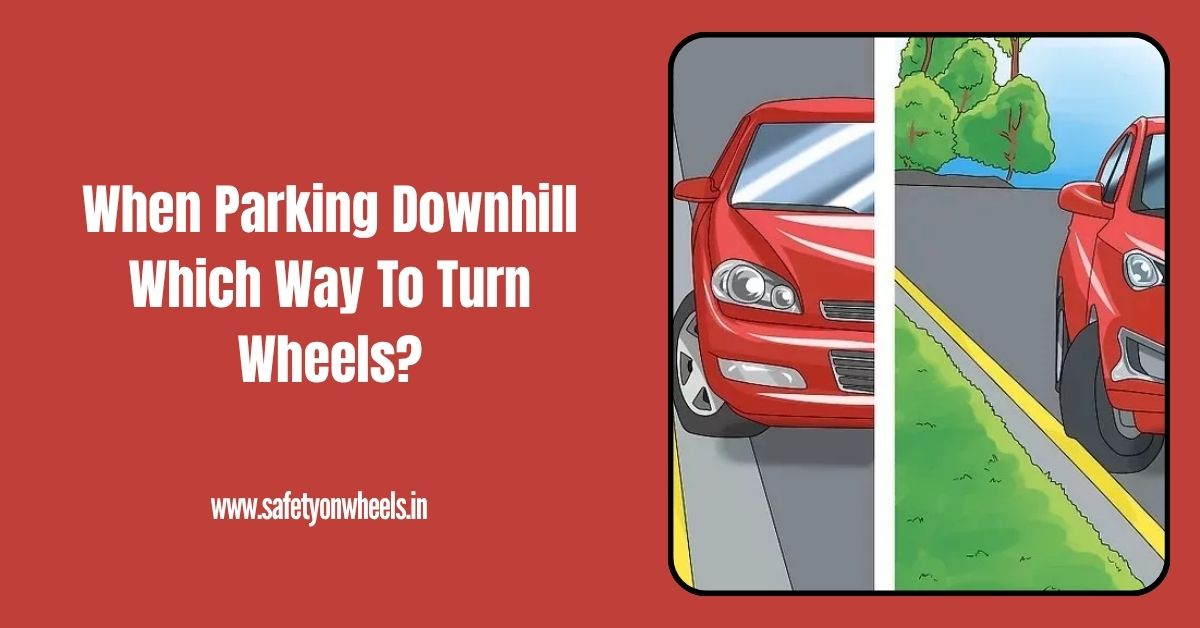
Parking on a downhill slope might seem like a simple everyday task, but doing it incorrectly can lead to serious consequences—vehicle rollaways, accidents, and even legal trouble. Many drivers, especially new ones, often wonder about one specific detail: when parking downhill which way to turn wheels?
This blog will walk you through everything you need to know, from the correct technique to the reasoning behind it, along with practical tips that will make your parking safer and more confident. Let’s break it down step by step.
Why Proper Wheel Position Matters When Parking Downhill?
Before diving into technique, it’s important to understand why turning your wheels correctly matters.
When you park on a slope, gravity is constantly trying to move your car downhill. While your parking brake and transmission (park gear or low gear) are your primary defenses, they are not foolproof. Mechanical failure, wear and tear, or improper engagement can cause them to fail.
Turning your wheels correctly acts as a secondary safety measure. If your car starts rolling, the wheels will guide it toward a curb or away from traffic, reducing the risk of damage or injury.
According to road safety authorities worldwide, improper parking on slopes is a common cause of low-speed accidents in urban areas. This small habit can make a big difference.
Also read: What Is The Proper Following Distance Behind A Motorcyclist?
When Parking Downhill Which Way To Turn Wheels
This is the core question—and fortunately, the answer is simple once you understand the logic.
Parking Downhill With a Curb
If you are parking downhill with a curb present, follow this rule:
Turn your front wheels toward the curb (to the right side of the road in most countries like India).
Why This Works
If your vehicle begins to roll forward, the front tires will hit the curb and stop the car from continuing downhill. The curb essentially acts as a physical barrier.
Visualizing the Situation
Think of it this way:
- Wheels turned toward the curb
- Car rolls forward slightly
- Tires press into curb
- Vehicle stops safely
This simple positioning can prevent your car from rolling into traffic or hitting another vehicle.
Parking Downhill Without a Curb
If there is no curb, the strategy changes slightly:
Turn your wheels toward the edge of the road (away from traffic).
Why This Matters
Without a curb, there’s nothing to physically stop your car. So instead, you guide the vehicle away from danger. If it rolls, it will move off the roadway rather than into traffic.
Step-by-Step Guide to Parking Downhill Safely
Knowing the theory is great, but applying it correctly is what truly matters. Here’s a clear, practical step-by-step process:
1. Slow Down and Position Your Car
Approach the parking spot slowly and align your vehicle parallel to the curb or edge of the road.
2. Turn Your Wheels Correctly
- With curb → Turn wheels toward the curb
- Without curb → Turn wheels toward the roadside
Do this before or immediately after stopping.
3. Engage the Parking Brake Firmly
Your parking brake is your primary safety mechanism. Pull it up firmly (or engage it fully if electronic).
4. Shift Into Gear
- Automatic cars → Shift to Park (P)
- Manual cars → Shift to first gear
This adds another layer of resistance against rolling.
5. Gently Release the Brake Pedal
Let the car settle slightly so the tires rest against the curb (if present). This ensures the wheel positioning is effective.
Common Mistakes Drivers Make (And How to Avoid Them)
Even experienced drivers occasionally get this wrong. Let’s look at some frequent mistakes:
1. Forgetting to Turn the Wheels
Many drivers rely only on the parking brake. This is risky because brakes can fail over time.
Fix: Always make wheel positioning a habit.
2. Turning Wheels the Wrong Direction
Turning wheels away from the curb when parking downhill can cause the car to roll straight into traffic.
Fix: Remember the rule:
- Downhill = toward the curb
3. Not Using the Parking Brake Properly
Some drivers lightly engage the brake or skip it altogether, especially during quick stops.
Fix: Always fully engage the parking brake—no shortcuts.
4. Ignoring Road Conditions
Wet roads, loose gravel, or icy conditions can reduce friction and increase rolling risk.
Fix: Be extra cautious and double-check your setup in such conditions.
The Science Behind It: How Physics Plays a Role
Let’s briefly touch on why this technique works from a physics standpoint.
When a car is parked downhill:
- Gravity creates a force pulling the car forward
- The parking brake provides resistance
- Wheel angle determines the direction of movement if rolling occurs
By turning the wheels toward the curb, you introduce a mechanical stopping point. The curb creates a counterforce that prevents further motion.
This simple use of physics is why driving instructors emphasize this technique globally.
Parking Downhill vs Uphill: Key Differences
It’s easy to confuse downhill and uphill parking rules, so let’s clarify:
| Situation | Wheel Direction |
|---|---|
| Downhill with curb | Toward curb |
| Downhill without curb | Toward roadside |
| Uphill with curb | Away from curb |
| Uphill without curb | Straight or slight turn |
Why the Difference?
When parking uphill, the car tends to roll backward, so the wheel direction is reversed to counter that motion.
Real-Life Scenarios Where This Matters
Let’s look at a few everyday situations where proper wheel positioning becomes critical:
City Streets
In crowded urban areas, even a small roll can lead to collisions with parked vehicles.
Residential Areas
Children, pets, and pedestrians make safety even more important.
Hilly Regions
In places with steep slopes, incorrect parking can result in serious accidents.
Parking Near Intersections
A rolling vehicle here can disrupt traffic flow or cause chain reactions.
Legal and Safety Implications
In many regions, traffic laws require proper parking techniques on slopes. Failing to follow them can result in:
- Fines or penalties
- Liability in case of an accident
- Increased insurance claims
Beyond legality, it’s about responsibility. A poorly parked car can harm others—even when you’re not around.
Pro Tips for Safer Downhill Parking
Here are some expert tips to take your parking skills to the next level:
1. Always Double-Check Wheel Position
Before leaving your car, take a quick glance at your front wheels.
2. Listen for Tire Contact
When parking with a curb, gently release the brake until you feel the tires touch it.
3. Avoid Over-Turning
Turn the wheels enough to guide the car, but don’t crank them excessively—it’s unnecessary.
4. Use Wheel Chocks on Steep Slopes
In extremely steep areas, especially with heavy vehicles, wheel chocks provide added safety.
5. Stay Consistent
Make this a habit every time you park on a slope. Consistency builds muscle memory.
Also read: Why is Accreditation of Nursing Education Programs Important?
Final Thoughts
Understanding when parking downhill which way to turn wheels is one of those small driving skills that delivers big safety benefits. It’s simple, quick, and incredibly effective when done correctly.
To recap:
- With curb → Turn wheels toward the curb
- Without curb → Turn wheels toward the roadside
- Always use your parking brake and proper gear
- Build the habit until it becomes second nature
Driving isn’t just about moving—it’s also about how you leave your vehicle. And parking safely on a slope is a mark of a responsible and skilled driver.
A few extra seconds of attention today can prevent a costly mistake tomorrow.