
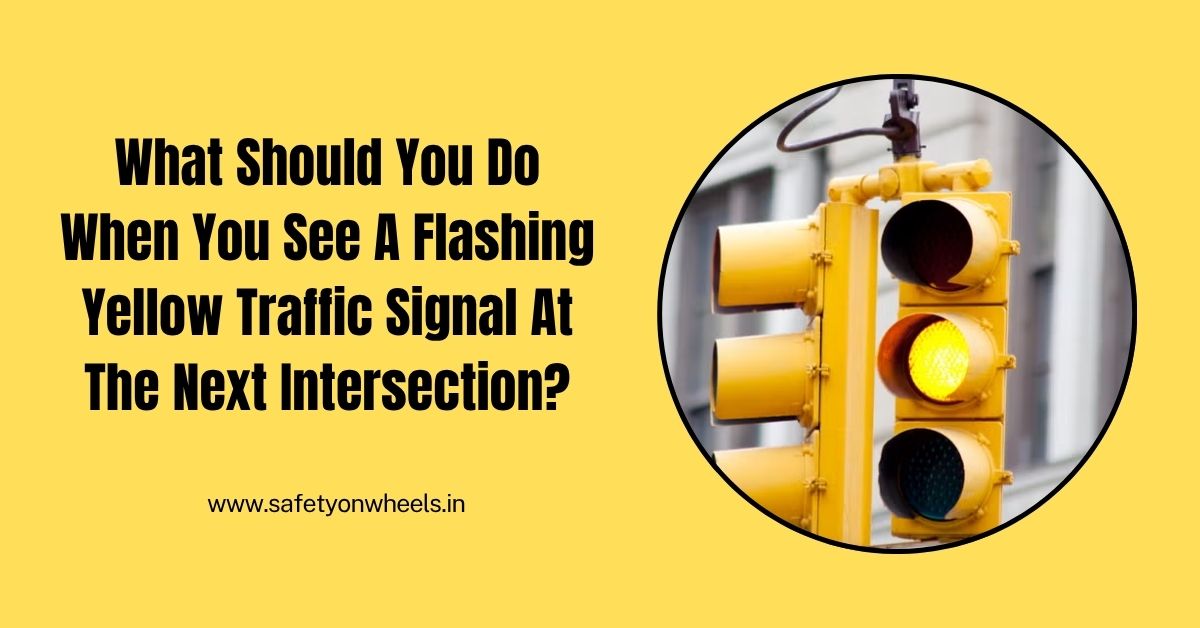
Traffic signals are designed to guide, control, and protect. Most drivers understand red, yellow, and green lights without hesitation. But when a signal starts flashing—especially yellow—it often creates confusion.
So, what should you do when you see a flashing yellow traffic signal at the next intersection? The answer is simple on the surface but important to understand in depth if you want to drive safely and confidently.
This guide breaks down the meaning, correct response, common mistakes, and real-world driving strategies so you can handle flashing yellow signals like a pro.
What Should You Do When You See a Flashing Yellow Traffic Signal at the Next Intersection?
Let’s answer the main question clearly:
When you see a flashing yellow traffic signal, you should slow down, stay alert, and proceed with caution.
Unlike a steady yellow light (which warns that a red light is coming), a flashing yellow signal means:
- You do not need to stop
- You must reduce speed
- You must be prepared to react to hazards
Why “Proceed with Caution” Matters
A flashing yellow signal indicates that the intersection requires extra attention. It often replaces regular signal control in situations where traffic flow is lighter or where full signals are unnecessary.
In simple terms, the responsibility shifts more onto the driver.
Also read: Does Georgia Law Require You To Stop Before Turning Right On A Red Light?
Understanding the Purpose of Flashing Yellow Signals
To drive correctly, you need to understand why flashing yellow signals exist in the first place.
Managing Low-Traffic Intersections
In areas with less traffic—especially during late hours—traffic lights may switch to flashing mode. This helps:
- Reduce unnecessary stopping
- Improve traffic flow
- Maintain basic safety control
Warning Drivers of Potential Hazards
A flashing yellow light acts as a warning system. It tells you:
- Cross traffic may be present
- Pedestrians might be crossing
- The usual right-of-way rules still apply
Temporary Traffic Control
You’ll often see flashing yellow signals during:
- Road construction
- Signal malfunctions
- Emergency situations
In these cases, extra caution becomes even more important.
How to Approach a Flashing Yellow Signal Safely
Knowing the rule is one thing—executing it correctly is what keeps you safe.
Slow Down Before the Intersection
Don’t maintain your current speed. Gradually reduce it as you approach.
Slowing down gives you:
- More reaction time
- Better control of your vehicle
- A clearer view of the surroundings
Scan the Intersection Thoroughly
Look in all directions—not just ahead.
Pay attention to:
- Vehicles approaching from side roads
- Pedestrians stepping onto the road
- Cyclists or two-wheelers
Be Ready to Stop If Needed
Even though stopping is not mandatory, you should always be prepared to stop instantly if:
- Another vehicle enters your path
- A pedestrian crosses
- Visibility is limited
Proceed Only When It Feels Safe
This is where judgment comes in. If something doesn’t feel right, wait.
Safe driving is not about speed—it’s about awareness.
Flashing Yellow vs Other Traffic Signals
Confusion often arises because drivers mix up flashing signals with regular ones.
Flashing Yellow vs Steady Yellow
- Flashing Yellow: Proceed with caution
- Steady Yellow: Prepare to stop (signal is about to turn red)
Flashing Yellow vs Flashing Red
- Flashing Yellow: Slow down and proceed
- Flashing Red: Come to a complete stop (like a stop sign)
Flashing Yellow Arrow
Some intersections use a flashing yellow arrow specifically for turns.
It means:
- You can turn
- But must yield to oncoming traffic
This is common at busy intersections with dedicated turn lanes.
Common Mistakes Drivers Make
Even though the rule is straightforward, many drivers get it wrong.
Driving at Full Speed
Some drivers treat flashing yellow lights as green lights.
This is dangerous because:
- It reduces reaction time
- Increases accident risk
Ignoring Cross Traffic
Assuming you have full right of way can lead to collisions.
Overconfidence in Familiar Areas
Drivers often become careless in areas they know well.
Familiarity should never replace caution.
Sudden Braking
Some drivers panic and brake abruptly.
This can:
- Cause rear-end collisions
- Confuse drivers behind you
Smooth, controlled slowing is always better.
The Role of Right-of-Way Rules
A flashing yellow signal does not override right-of-way rules.
Who Has Priority?
- Pedestrians always have priority
- Vehicles already in the intersection have priority
- Drivers on main roads generally have the advantage, but must still be cautious
Why Right-of-Way Awareness Matters
Misjudging priority is one of the leading causes of intersection accidents.
A flashing yellow light requires you to actively assess who should go first.
Real-Life Driving Scenarios
Understanding real situations makes the concept easier to apply.
Late-Night Driving
You approach an intersection with a flashing yellow signal.
Action:
- Slow down
- Check for any vehicles or pedestrians
- Proceed carefully
Even if the road looks empty, don’t skip the caution step.
Construction Zones
Temporary signals often flash yellow in construction areas.
Action:
- Reduce speed significantly
- Watch for workers and equipment
- Follow any additional signage
Rural Intersections
Flashing yellow lights are common in less crowded areas.
Action:
- Stay alert for fast-moving vehicles
- Be cautious of limited visibility
Safety Statistics That Highlight Its Importance
Intersection-related accidents remain a major concern globally.
Studies show that a large percentage of crashes occur due to:
- Failure to yield
- Inattention
- Misjudging speed or distance
Flashing yellow signals are specifically designed to reduce these risks by encouraging drivers to slow down and stay alert.
Tips to Improve Your Driving Judgment
Handling flashing yellow signals confidently comes down to awareness and habit.
Build a “Slow and Scan” Habit
Every time you see a flashing yellow light:
- Ease off the accelerator
- Look around carefully
- Make a conscious decision
Avoid Distractions
Phones, conversations, or even daydreaming can reduce your reaction time.
At intersections, your full attention is non-negotiable.
Maintain Safe Following Distance
If the driver ahead slows down, you need enough space to react safely.
Trust Your Instincts
If something feels off—wait. A few seconds can prevent serious consequences.
Why This Rule Matters More Than You Think
It’s easy to underestimate a flashing yellow signal because it doesn’t force you to stop.
But that’s exactly why it’s important.
It relies on your judgment rather than strict control. And good judgment comes from understanding the rule—not guessing it.
Also read: Discuss the Importance of Conducting Self Evaluation to Identify Suitable Career Field
Final Thoughts
Understanding what should you do when you see a flashing yellow traffic signal at the next intersection is less about memorizing a rule and more about adopting a mindset of cautious, attentive driving. A flashing yellow light gives you permission to move forward, but it also places responsibility squarely in your hands. Slowing down, observing your surroundings, and making thoughtful decisions are what keep you—and everyone else—safe at the intersection. In real-world driving, it’s not the signals themselves that prevent accidents, but how drivers respond to them. When you treat every flashing yellow as a moment to pause mentally, assess carefully, and proceed wisely, you turn a simple traffic signal into a powerful safety habit that stays with you for life.