
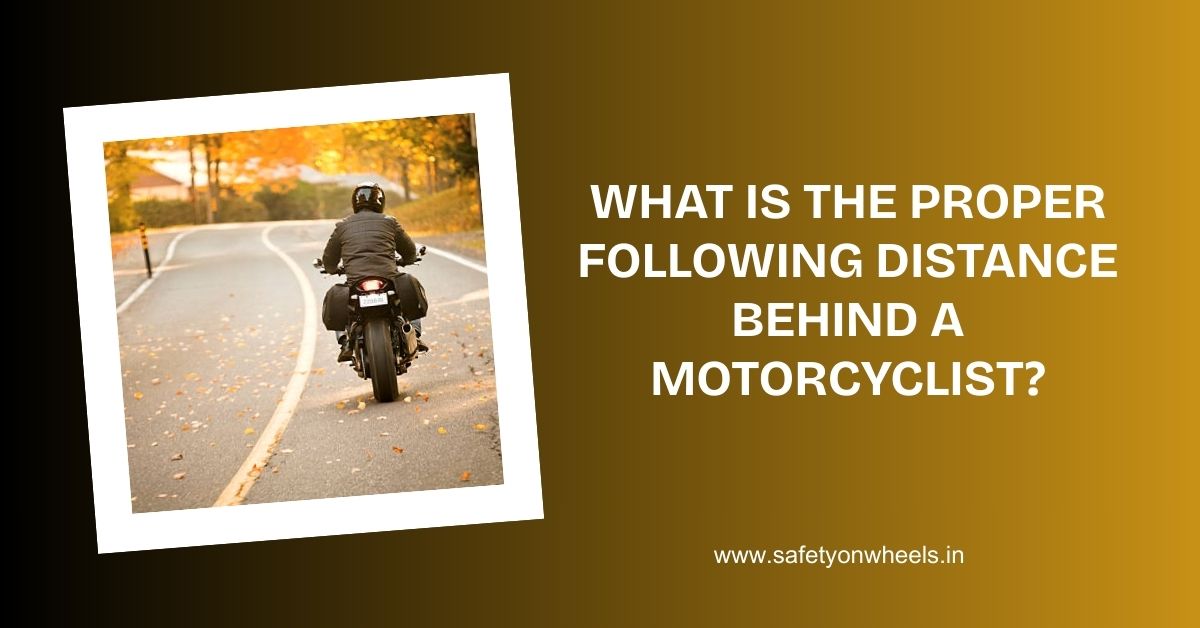
Sharing the road with motorcyclists requires a higher level of awareness than many drivers realize. Unlike cars, motorcycles are smaller, less stable, and far more vulnerable in traffic. That’s why one question every responsible driver should understand is: what is the proper following distance behind a motorcyclist?
The short answer: you should maintain at least a 3 to 4-second following distance under normal conditions—and even more in poor weather, heavy traffic, or high speeds.
But that’s just the starting point.
In this in-depth guide, we’ll break down the science, safety logic, and real-world application behind following distance, so you can drive more confidently—and responsibly—around motorcyclists.
Understanding Why Following Distance Matters More for Motorcyclists
Following distance matters for all vehicles, but it becomes critical when you’re behind a motorcycle.
Motorcycles Behave Differently Than Cars
Motorcycles:
- Brake faster in some situations
- Slow down quickly by downshifting
- Respond more sharply to road conditions
This unpredictability requires extra space.
Motorcyclists Are More Vulnerable
Unlike drivers in cars, motorcyclists don’t have:
- Seatbelts
- Airbags
- Structural protection
Even a minor rear-end collision can result in serious injury.
Visibility Challenges
Motorcycles are smaller and harder to see.
A safe following distance gives you:
- More reaction time
- Better visibility of the road ahead
Also read: What Must You Do When The Amber Light Is Flashing At A Pelican Crossing?
What Is the Proper Following Distance Behind a Motorcyclist?
Let’s directly address the main keyword: what is the proper following distance behind a motorcyclist?
The 3–4 Second Rule
Under normal driving conditions, maintain at least:
- 3 seconds in city traffic
- 4 seconds on highways
This time-based method is more reliable than measuring distance in meters.
How to Measure It
Here’s a simple technique:
- Pick a fixed object on the road (like a sign or pole)
- When the motorcycle passes it, start counting:
- “One thousand one, one thousand two…”
- You should reach the object no sooner than 3–4 seconds later
If you arrive earlier, you’re following too closely.
When to Increase Following Distance
You should extend your following distance to 5–6 seconds or more when:
- Roads are wet or icy
- Visibility is poor
- Traffic is heavy
- You’re driving at high speeds
Key Risks of Following Too Closely
Tailgating a motorcyclist is one of the most dangerous driving behaviors.
Reduced Reaction Time
If the motorcyclist brakes suddenly, you may not have enough time to respond.
Increased Stopping Distance
Even modern braking systems can’t overcome physics.
At higher speeds, stopping distance increases significantly.
Higher Risk of Severe Injury
Rear-end collisions involving motorcycles often result in:
- Rider ejection
- Serious injuries
- Fatal outcomes
Maintaining distance is not just courteous—it’s life-saving.
Why Motorcyclists May Slow Down Suddenly?
Understanding rider behavior helps you anticipate their actions.
Road Hazards
Motorcyclists react strongly to:
- Potholes
- Gravel
- Oil spills
These hazards may not affect cars as much but can be dangerous for bikes.
Engine Braking
Motorcycles can slow down without using brake lights.
This happens when the rider:
- Downshifts
- Releases the throttle
If you’re too close, you might not notice the slowdown in time.
Weather Conditions
Rain, wind, or slippery roads may cause riders to reduce speed quickly.
The Science Behind Safe Following Distance
Let’s look at the numbers behind safe driving.
Reaction Time
The average driver takes about 1.5 seconds to react.
At 60 km/h, that’s roughly 25 meters traveled before braking begins.
Braking Distance
Braking distance depends on:
- Speed
- Road conditions
- Vehicle condition
Combined with reaction time, total stopping distance can double or triple.
Why Time-Based Distance Works Better?
Measuring in seconds accounts for:
- Speed variations
- Road conditions
- Real-time driving dynamics
That’s why experts recommend the 3–4 second rule.
Common Mistakes Drivers Make Around Motorcyclists
Even experienced drivers can develop bad habits.
Tailgating
Some drivers follow too closely without realizing it.
This reduces safety margins significantly.
Misjudging Speed
Motorcycles may appear farther away than they actually are.
This can lead to poor distance judgment.
Distracted Driving
Looking at your phone—even briefly—can eliminate your reaction window.
How to Maintain Safe Distance Consistently?
Safe driving is about habits, not occasional effort.
Stay Focused on the Road
Avoid distractions and keep your attention on traffic conditions.
Adjust for Traffic Flow
Don’t let other drivers pressure you into reducing your distance.
Safety comes first.
Use Cruise Control Carefully
On highways, cruise control can help maintain consistent spacing—but stay alert.
Special Situations That Require Extra Distance
Some scenarios demand even more caution.
Night Driving
Reduced visibility means slower reaction times.
Increase your following distance accordingly.
Heavy Traffic
Stop-and-go traffic increases the risk of sudden braking.
Maintain extra space to avoid collisions.
Riding Groups
Motorcyclists often ride in staggered formations.
Avoid cutting into their space or following too closely.
Legal Guidelines and Recommendations
Many driving authorities emphasize safe following distances.
General Road Safety Rules
Drivers must maintain a safe distance to:
- Prevent collisions
- Allow for sudden stops
Penalties for Tailgating
In many regions, tailgating can result in:
- Fines
- Penalty points
- Increased insurance premiums
The Role of Defensive Driving
Defensive driving plays a major role in maintaining proper distance.
Anticipate the Unexpected
Expect sudden changes in speed or direction.
Keep Escape Options Open
Maintain space not just in front—but around your vehicle.
Stay Calm and Patient
Aggressive driving reduces safety for everyone.
Why This Topic Builds Trust and Safer Roads?
Understanding what is the proper following distance behind a motorcyclist? helps create safer road environments.
Respect for Vulnerable Road Users
Motorcyclists rely on other drivers to act responsibly.
Improved Driving Confidence
Knowing the correct distance reduces uncertainty.
Reduced Accident Rates
Maintaining proper spacing significantly lowers collision risks.
Practical Tips to Remember
Let’s simplify everything into quick, actionable points:
- Keep at least 3–4 seconds distance
- Increase to 5–6 seconds in poor conditions
- Never tailgate a motorcyclist
- Watch for sudden slowing without brake lights
- Stay alert and avoid distractions
Also read: Identify the Social and Economic Groups Which Are Most Vulnerable to Poverty in India
Final Thoughts
Understanding what is the proper following distance behind a motorcyclist? is essential for safe and responsible driving. Maintaining at least a 3 to 4-second gap gives you the time and space needed to react to sudden changes, road hazards, or unexpected stops. Because motorcyclists are more vulnerable and less visible than other vehicles, keeping a safe distance is not just a recommendation—it’s a responsibility. By practicing this simple habit consistently, you reduce risks, protect lives, and contribute to a safer driving environment for everyone on the road.