
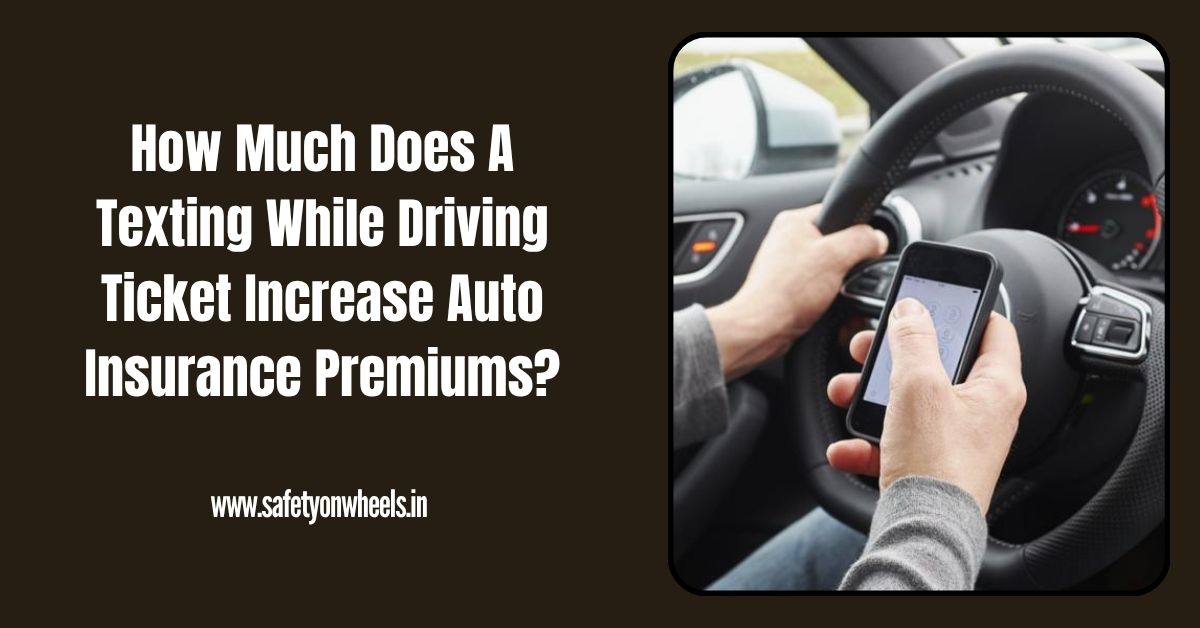
Texting while driving isn’t just risky—it’s expensive in ways many drivers don’t expect. Most people think about the fine, maybe a few penalty points, and then move on. But the real financial impact often shows up later, quietly increasing your insurance premium.
So, how much does a texting while driving ticket increase auto insurance premiums? The answer depends on several factors, but one thing is certain: the impact can be significant and long-lasting.
In this blog guide, we’ll break down the actual cost increase, explain why insurers penalize this violation heavily, and show you how to minimize the damage if you’ve already received a ticket.
How Much Does A Texting While Driving Ticket Increase Auto Insurance Premiums?
Let’s get straight to the point.
A texting while driving ticket can increase your auto insurance premiums by 20% to 50% on average.
In some high-risk cases, the increase can go even higher, especially if:
- You have previous violations
- The offense led to an accident
- You’re classified as a high-risk driver
What This Looks Like in Real Numbers
If your annual premium is:
- ₹15,000 → It could increase to ₹18,000–₹22,500
- $1,200 → It could rise to $1,440–$1,800
These increases don’t just apply for one month—they can last for several years.
Why Insurance Companies Penalize Texting While Driving So Heavily?
Insurance companies don’t increase premiums randomly. They rely on risk data, and texting while driving is considered a high-risk behavior.
High Accident Probability
Studies show that texting while driving increases crash risk by up to 23 times compared to attentive driving.
That statistic alone explains why insurers take it seriously.
Distracted Driving Is Hard to Predict
Unlike speeding, which is situational, texting involves:
- Visual distraction
- Manual distraction
- Cognitive distraction
This combination makes it more dangerous and less predictable.
Strong Correlation With Claims
Drivers with distracted driving violations are statistically more likely to file insurance claims.
From an insurer’s perspective, that equals higher financial risk.
Also read: What Is The Maximum Speed Limit On A Road Outside A Built Up Area Unless Otherwise Signed?
Factors That Affect How Much Your Premium Increases
Not all drivers see the same increase. Several variables influence the final impact.
Your Driving History
If this is your first violation, the increase may be on the lower end.
However, if you already have:
- Speeding tickets
- Reckless driving records
- Previous claims
your premium could spike significantly.
Your Age and Experience
Younger drivers often face higher increases because insurers already consider them higher risk.
Your Insurance Provider
Different companies assess risk differently. Some may increase premiums more aggressively than others.
State or Regional Laws
In some regions, texting while driving is classified as a minor offense, while in others, it’s treated as a major violation.
Stricter classifications usually lead to higher premium increases.
Whether an Accident Occurred
This is a major factor.
If texting led to an accident:
- Premiums can increase by 50% or more
- You may lose safe driver discounts
- You could be moved to a high-risk category
How Long Does the Increase Last?
This is where many drivers underestimate the impact.
Typical Duration
A texting while driving ticket can affect your insurance for 3 to 5 years, depending on your insurer and local regulations.
Gradual Reduction Over Time
If you maintain a clean driving record after the violation, your premium may gradually decrease.
However, the first renewal after the ticket usually shows the biggest jump.
Additional Financial Consequences Beyond Insurance
The ticket itself is just the beginning.
Fines and Penalties
Depending on the region, fines can range from moderate to significant.
Points on Your License
Accumulating points can lead to:
- Higher insurance premiums
- License suspension (in severe cases)
Loss of Discounts
Many drivers lose:
- Safe driver discounts
- No-claim bonuses
These losses indirectly increase your insurance cost.
Real-Life Scenario: What Actually Happens
Let’s look at a realistic example.
Scenario
A driver receives a texting while driving ticket but has no prior violations.
Outcome:
- Insurance premium increases by around 25%
- Safe driver discount removed
- Higher renewal cost for the next 3 years
Now consider a second scenario.
Scenario With Accident
The same violation leads to a minor accident.
Outcome:
- Premium increases by 40–60%
- Claim filed, raising insurer risk assessment
- Longer impact period
Can You Reduce the Impact on Your Insurance?
Yes, while you can’t erase the violation, you can take steps to limit its financial effect.
Maintain a Clean Driving Record
After the ticket, avoid any further violations.
Consistency helps rebuild your risk profile.
Compare Insurance Providers
Not all insurers treat violations the same way.
Shopping around may help you find a better rate.
Take Defensive Driving Courses
Some insurers offer discounts if you complete certified driving courses.
Increase Your Deductible
A higher deductible can lower your premium, though it increases out-of-pocket costs during claims.
Ask About Forgiveness Programs
Some insurance companies offer “first-time forgiveness” for minor violations.
Why Avoiding This Ticket Matters More Than You Think?
The financial cost is only one part of the equation.
Safety Risks
Texting while driving reduces reaction time dramatically.
Legal Consequences
Repeated violations can lead to stricter penalties.
Long-Term Driving Record Impact
Your driving history affects:
- Insurance rates
- Job opportunities (for driving roles)
- Overall driving reputation
Common Myths About Texting While Driving Tickets
Let’s clear up some misconceptions.
“It’s Just a Small Fine”
The fine is often the smallest cost compared to insurance increases.
“Insurance Won’t Notice One Ticket”
Insurance companies regularly review driving records.
“It Won’t Affect Me If I Don’t Have an Accident”
Even without an accident, the violation itself increases your risk profile.
Practical Tips to Avoid Distracted Driving
Prevention is always better than dealing with consequences.
Use Hands-Free Features
Modern vehicles offer voice commands and Bluetooth connectivity.
Keep Your Phone Out of Reach
Place it where you can’t easily grab it while driving.
Enable “Do Not Disturb” Mode
Many smartphones have driving modes that silence notifications.
Plan Ahead
Set navigation and music before starting your journey.
The Bigger Picture: Risk vs Responsibility
Texting while driving isn’t just a personal risk—it affects everyone on the road.
Insurance companies raise premiums because they need to balance the increased risk.
But as a driver, the goal should go beyond avoiding higher costs. It should focus on safer, more responsible driving.
Also read: Environment Project Topics for Students
Final Thoughts
Understanding how much does a texting while driving ticket increase auto insurance premiums reveals a reality many drivers overlook—the true cost goes far beyond the initial fine. A single moment of distraction can lead to years of higher insurance payments, lost discounts, and a lasting mark on your driving record. While the average increase of 20% to 50% may not seem overwhelming at first, it adds up significantly over time.
More importantly, it reflects the serious safety risks associated with distracted driving. The smartest approach isn’t just managing the consequences but avoiding them altogether by staying focused behind the wheel. In the end, a simple habit—keeping your phone away while driving—can save you money, stress, and potentially much more.