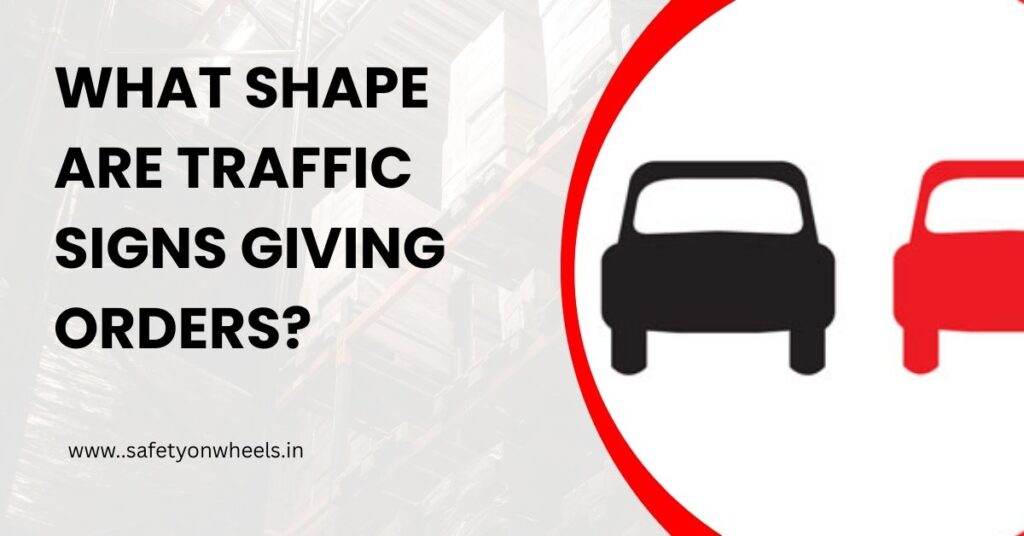
Traffic signs exist for one simple reason: to keep road users safe and organized. Whether you’re driving on a motorway, navigating a busy city street, or approaching a quiet residential junction, road signs constantly communicate important instructions. Some warn about hazards ahead, others provide helpful directions, and a specific group of signs gives clear orders that drivers must follow by law.
These mandatory instructions include rules like stopping, turning in a specific direction, keeping to a particular lane, or not entering certain roads. Because these instructions affect safety and traffic flow, they must be easy to recognize instantly—even from a distance or at high speed.
That raises an important question many learner drivers encounter during theory tests: what shape are traffic signs giving orders?
In most road systems, particularly those following the UK Highway Code and many international traffic standards, traffic signs that give orders are typically circular. These circular signs either show red borders for prohibitions (things you must not do) or blue backgrounds for mandatory instructions (things you must do).
Understanding these shapes is essential not only for passing driving exams but also for becoming a confident and responsible driver. In this guide, we’ll explore how order signs work, why their shape matters, and how drivers can quickly interpret them while driving.
Why Traffic Signs Use Specific Shapes?
Road signs must communicate information quickly and clearly. Drivers often make decisions in seconds, especially on busy roads or motorways. Because of this, traffic authorities rely on visual consistency to ensure drivers can understand a sign before even reading it.
The Role of Shape in Road Sign Recognition
The shape of a sign provides an immediate clue about its purpose.
For example:
- Triangular signs typically warn about hazards
- Rectangular signs usually provide information or directions
- Circular signs give orders or instructions
By learning these shapes, drivers can understand the message faster—even before they focus on the specific symbol inside the sign.
Why Shapes Improve Reaction Time?
Studies in traffic psychology show that visual patterns improve recognition speed. Drivers who recognize the shape of a sign can begin responding to it before fully reading the details.
This early recognition helps drivers:
- Adjust speed sooner
- Prepare for changes in road rules
- Avoid dangerous mistakes
In short, shape acts as the first layer of communication between road authorities and drivers.
Also read: What Should You Do When You Move Off From Behind A Parked Car?
What Shape Are Traffic Signs Giving Orders?
If you’re wondering what shape are traffic signs giving orders, the answer is circular.
Circular traffic signs indicate rules that drivers must follow. These signs appear in two main categories:
- Prohibitory signs (red circles) – These tell drivers what they must not do.
- Mandatory signs (blue circles) – These tell drivers what they must do.
The circular shape instantly signals that the sign carries a legal instruction rather than a suggestion.
Prohibitory Circular Signs
Most prohibitory signs have:
- A red border
- A white background
- A black symbol
These signs prohibit certain actions.
Examples include:
- No entry
- No left turn
- No U-turn
- No overtaking
- Speed limits
Because these signs often prevent dangerous actions, drivers must obey them strictly.
Mandatory Circular Signs
Mandatory signs typically appear as blue circles with white symbols.
They instruct drivers to follow specific actions.
Examples include:
- Turn left ahead
- Turn right ahead
- Keep left
- Cycle route only
- Minimum speed limits
Ignoring these signs can disrupt traffic flow or create safety hazards.
How Circular Order Signs Help Maintain Road Safety?
Traffic signs giving orders play a critical role in maintaining order on the road network.
Without them, traffic would become unpredictable and chaotic.
Preventing Dangerous Driving Behaviors
Prohibitory circular signs stop drivers from performing risky actions.
For example:
- “No entry” prevents drivers from entering one-way streets incorrectly.
- “No overtaking” protects drivers on narrow or hazardous roads.
These rules reduce accident risk and improve road discipline.
Guiding Drivers Through Complex Intersections
Mandatory circular signs help drivers navigate complicated road layouts.
For instance, signs that indicate “turn left only” ensure that drivers follow the correct lane direction.
This guidance prevents confusion and reduces intersection conflicts.
Supporting Traffic Flow Efficiency
Order signs also help traffic move smoothly.
Speed limits, lane directions, and turning restrictions all contribute to predictable driving behavior.
When drivers follow these instructions, congestion and accidents decrease.
Common Examples of Traffic Signs That Give Orders
To understand circular order signs better, it helps to look at some common examples seen on roads worldwide.
Speed Limit Signs
Speed limit signs use a circular shape with a red border and a number indicating the maximum permitted speed.
Drivers must never exceed this speed under normal conditions.
No Entry Signs
“No entry” signs prevent vehicles from entering a road from the wrong direction.
These signs typically appear at one-way streets or restricted access points.
Turn Direction Signs
Some intersections require drivers to turn in a specific direction.
Mandatory circular signs indicate:
- Turn left only
- Turn right only
- Straight ahead only
These instructions prevent dangerous crossing movements.
Keep Left or Keep Right Signs
On roads with central islands or traffic dividers, drivers may see circular signs instructing them to pass on a specific side.
These signs help maintain safe traffic flow around obstacles.
How Drivers Should Respond to Order Signs?
Recognizing circular order signs is only the first step. Drivers must also respond appropriately to ensure safety and legal compliance.
Observe Signs Early
Good drivers scan the road ahead and identify signs well before reaching them.
This habit allows enough time to:
- Adjust speed
- Change lanes safely
- Prepare for required maneuvers
Follow Instructions Immediately
Order signs represent legal requirements, not suggestions.
Drivers should follow them as soon as they come into effect.
Ignoring them may result in traffic violations or accidents.
Stay Alert in Unfamiliar Areas
Drivers traveling in new locations should pay extra attention to traffic signs.
Unfamiliar road layouts often rely heavily on order signs to guide drivers correctly.
Differences Between Order Signs and Other Traffic Signs
Understanding how order signs differ from other types helps drivers interpret road information more quickly.
Warning Signs
Warning signs typically use triangular shapes with red borders.
They alert drivers to hazards such as:
- Sharp bends
- Slippery roads
- Pedestrian crossings
These signs provide caution but usually do not give direct commands.
Information Signs
Information signs often appear as rectangles or squares.
They provide helpful details such as:
- Parking areas
- Hospitals
- Fuel stations
- Motorway directions
These signs guide drivers but do not impose legal instructions.
Temporary Traffic Signs
Temporary road signs may appear during construction or roadwork.
Although some may use circular shapes, they usually include distinct colors such as yellow backgrounds to indicate temporary changes.
Why Learning Traffic Sign Shapes Matters for Drivers?
Many driving theory tests include questions about road sign shapes because this knowledge improves real-world driving awareness.
Faster Decision-Making
Drivers who recognize sign shapes instantly can respond more quickly.
This skill proves especially useful on high-speed roads.
Reduced Risk of Violations
Understanding order signs helps drivers avoid traffic fines and penalties.
Ignoring signs like speed limits or no-entry instructions can lead to serious legal consequences.
Safer Road Environments
When drivers consistently follow order signs, traffic becomes more predictable.
Predictability improves safety for everyone on the road.
Tips for Remembering Traffic Sign Shapes
Learner drivers often use simple memory tricks to remember road sign shapes.
Think “Circle Means Command”
Circular signs almost always represent commands or instructions.
Remembering this rule makes identification easier.
Practice Observing Signs While Driving
Instead of memorizing signs from books alone, drivers should observe them during everyday driving.
Real-world exposure strengthens recognition.
Use Driving Test Preparation Resources
Driving manuals and practice tests frequently include sign identification exercises.
These tools help learners reinforce their knowledge before taking exams.
Also read: Why is Accreditation of Nursing Education Programs Important?
Final Thoughts
Understanding what shape are traffic signs giving orders is a fundamental part of safe and responsible driving. Circular traffic signs communicate clear instructions that drivers must follow, whether they prohibit certain actions or require specific movements on the road. Their consistent design helps drivers recognize important rules quickly, even in fast-moving traffic or unfamiliar areas.
By learning how these circular order signs work—and responding to them correctly—drivers improve their awareness, reduce the risk of accidents, and contribute to smoother traffic flow. In the end, recognizing the shape of a sign may seem like a small detail, but it plays a big role in maintaining safety and order on modern roads.