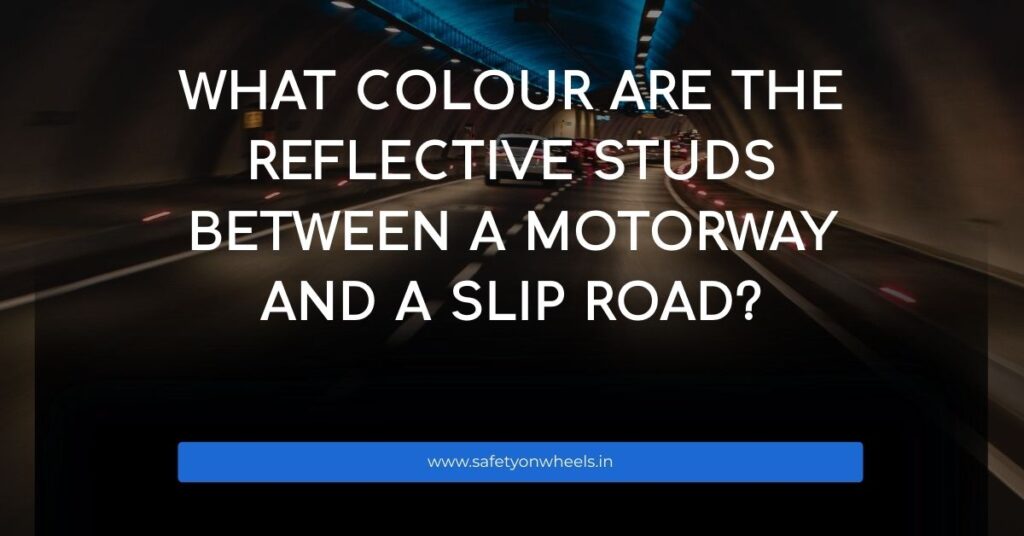
If you’ve ever driven on a motorway at night or in heavy rain, you’ve probably noticed small reflective markers embedded in the road surface. These markers, often called reflective studs or cat’s eyes, help drivers stay in the correct lane when visibility becomes poor.
While they might look like simple road features, reflective studs actually play a crucial role in road safety. Their color coding provides important information about lane boundaries, road edges, and junctions. Understanding these colors helps drivers interpret the road layout more quickly, especially when painted lane markings become harder to see.
One of the most common questions from learner drivers and even experienced motorists is: what colour are the reflective studs between a motorway and a slip road?
The correct answer is green. Green reflective studs mark the boundary between the main motorway carriageway and the slip road, indicating areas where traffic can either join or leave the motorway.
But that’s only one part of the story. To fully understand why green studs appear there—and how to interpret them correctly—it’s helpful to explore how reflective studs work, what each color means, and how they guide drivers safely along high-speed roads.
Why Reflective Studs Are Important for Night and Poor-Visibility Driving?
Reflective road studs exist primarily to improve visibility when conditions make normal road markings harder to see.
Painted lane markings work well in daylight, but they can fade, become wet, or disappear under headlights’ glare at night. Reflective studs solve this problem by reflecting vehicle headlights back toward the driver, making lane boundaries much easier to recognize.
How Reflective Studs Improve Driver Awareness
When headlights strike a reflective stud, the internal reflector sends light back toward the driver’s eyes. This design makes the studs visible from a long distance, even on dark roads.
Drivers benefit in several ways:
- They can identify lane boundaries quickly.
- They can recognize motorway exits and merges earlier.
- They can maintain proper lane position during rain or fog.
According to road safety studies, reflective studs significantly improve lane visibility at night, especially on high-speed roads like motorways where drivers have less time to react.
Why Motorways Use Color-Coded Studs
Motorways carry traffic at higher speeds than most other roads. At those speeds, drivers must interpret road information almost instantly.
Color-coded studs allow drivers to understand the road layout without needing to read signs or markings in detail. A quick glance at the color tells the driver where they are on the road.
Also read: Which Sign Means ‘no Stopping’?
What Colour Are the Reflective Studs Between a Motorway and a Slip Road?
If you’re wondering what colour are the reflective studs between a motorway and a slip road, the answer is green.
Green reflective studs mark the edge of the main carriageway where vehicles enter or exit via slip roads.
What Green Reflective Studs Indicate
When drivers see green studs, they know they are approaching an area where traffic may join or leave the motorway.
These locations typically include:
- Motorway exits
- Entry slip roads
- Motorway junctions
The green studs help drivers recognize that the road layout is about to change. This early warning allows them to prepare for merging traffic or adjust their lane position safely.
Why Green Is Used for Slip Roads
Traffic engineers selected green because it stands out clearly from the other stud colors used on motorways.
Each color represents a different road boundary. Green uniquely identifies areas where traffic flows between the motorway and connecting roads.
This distinction helps prevent confusion, especially at night when drivers rely heavily on reflective guidance.
Understanding the Full Reflective Stud Color System
To appreciate the role of green studs, drivers should also understand the other colors used on motorways. Each one marks a different boundary on the road.
White Reflective Studs
White studs appear between lanes on the motorway.
They mark the lane divisions between traffic traveling in the same direction. Drivers use them to maintain their position within a lane.
Red Reflective Studs
Red studs mark the left edge of the motorway carriageway.
These studs warn drivers that they are approaching the edge of the road or the hard shoulder. If you see red studs immediately beside your vehicle, you may be drifting too far left.
Amber Reflective Studs
Amber studs appear between the right-hand lane and the central reservation (the barrier separating traffic moving in opposite directions).
These studs indicate the far-right edge of the motorway lanes.
Green Reflective Studs
Green studs appear between the main carriageway and slip roads.
They indicate where vehicles can safely enter or leave the motorway.
Together, these four colors form a system that helps drivers understand their position on the road instantly.
Where You’ll Most Commonly See Green Reflective Studs?
Green studs appear in specific areas where traffic joins or leaves the motorway. Recognizing these locations helps drivers anticipate changes in traffic flow.
Motorway Exit Points
As drivers approach a motorway exit, green studs begin marking the separation between the main carriageway and the slip road.
These studs help drivers move safely into the exit lane.
Entry Slip Roads
When traffic joins the motorway, green studs mark the boundary between the slip road and the main traffic lanes.
Drivers already on the motorway can recognize merging areas and remain alert for incoming vehicles.
Motorway Interchanges
Large motorway junctions often include multiple entry and exit points.
Green studs guide drivers through these complex areas and prevent confusion during lane changes.
Why Green Reflective Studs Improve Road Safety?
Motorway driving involves high speeds and fast decision-making. Small visual cues can significantly affect safety.
Green studs provide several key benefits.
Early Warning for Merging Traffic
Slip roads introduce vehicles entering or leaving the motorway. Green studs signal these areas well in advance.
Drivers can prepare by checking mirrors and adjusting speed if necessary.
Clear Lane Separation at Night
At night or in heavy rain, road paint may become difficult to see.
Reflective studs remain visible under headlights, ensuring drivers can still identify lane boundaries.
Reduced Driver Confusion
Without clear guidance, motorway exits might appear suddenly—especially on unfamiliar routes.
Green studs provide a visual cue that helps drivers identify exit points earlier.
Tips for Recognizing Reflective Stud Colors While Driving
Although the color system is straightforward, drivers often overlook these details during normal driving.
Learning to recognize reflective studs quickly can improve your awareness of road layouts.
Pay Attention During Night Driving
Reflective studs become most noticeable at night when headlights illuminate them.
Observing their colors can help you confirm your lane position.
Use Them as Lane Guidance
If road markings fade or disappear in poor weather, reflective studs provide reliable guidance.
Follow the line of studs to maintain a safe lane position.
Study the Colors Before Driving Tests
Many driving theory tests include questions about reflective stud colors.
Memorizing the color system helps learner drivers pass these tests and become more confident on the road.
Common Mistakes Drivers Make with Reflective Studs
Even experienced drivers sometimes misunderstand reflective stud meanings.
Confusing Green and White Studs
Some drivers mistake green studs for normal lane dividers.
Remember: white studs separate lanes, while green studs mark slip road boundaries.
Ignoring Slip Road Signals
Drivers who fail to notice green studs may miss exit lanes or merge areas.
This can lead to sudden lane changes, which increase accident risk.
Driving Too Close to the Road Edge
Red studs warn drivers that they are approaching the left edge of the motorway.
Ignoring this warning can lead to drifting onto the hard shoulder.
Why Reflective Stud Knowledge Matters for Driving Tests?
Driving exams often include questions about road markings and reflective studs.
Test designers include these questions because understanding road markings improves real-world safety.
For example, a typical theory question might ask:
- What color studs mark the motorway edge?
- What color studs separate slip roads from the main carriageway?
Knowing the answers helps drivers demonstrate their awareness of motorway safety features.
Also read: How Would a Potential Ignition Source in Your Workplace Be Described?
Final Thoughts
Understanding what colour are the reflective studs between a motorway and a slip road is more than just a theory test question—it’s a practical piece of knowledge that helps drivers interpret the road safely. The correct answer, green, indicates the boundary between the main motorway carriageway and the slip road where vehicles enter or exit. These studs form part of a wider color-coded system designed to guide drivers clearly, especially during night driving or poor weather conditions. By learning how reflective stud colors work, drivers can improve lane awareness, anticipate motorway exits earlier, and react more confidently to changing road layouts. Small details like these often make a big difference in safe and responsible motorway driving.