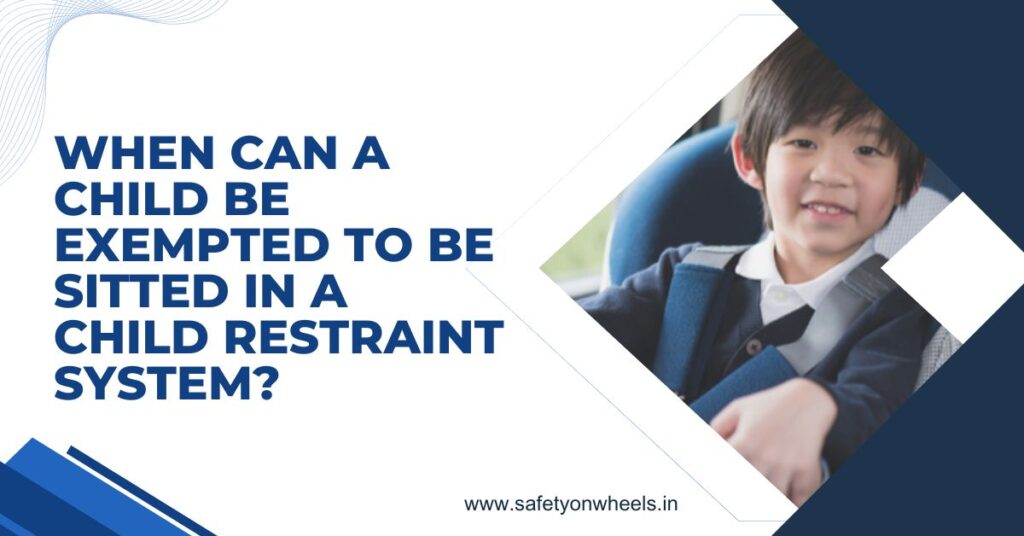
Child safety in vehicles is not just a legal requirement—it’s a life-saving necessity. A properly used child restraint system (CRS), such as a car seat or booster seat, significantly reduces the risk of injury during a crash. Yet many parents and caregivers still wonder: are there situations where a child does not need to use one?
This leads to an important and often misunderstood question: when can a child be exempted to be sitted in a child restraint system?
The answer is not as simple as age alone. It involves a combination of factors like height, weight, vehicle type, seating position, and specific circumstances. In this guide, we’ll break everything down clearly, focusing on safety, practical judgment, and globally accepted best practices.
When Can a Child Be Exempted to Be Sitted in a Child Restraint System?
Let’s address the key question directly: a child can only be exempted from using a child restraint system when they meet the minimum height or size requirements to safely use an adult seat belt, or in rare, specific exceptions defined by law or practicality.
In most safety guidelines worldwide, a child may no longer need a dedicated restraint system when:
- They are typically around 135 cm to 150 cm tall (depending on regulations)
- The adult seat belt fits them correctly without adjustments
However, this is not just about age. A child might be 10 years old but still too small for a proper seat belt fit. Conversely, a taller child may transition earlier.
The goal is not to “graduate early,” but to ensure the child remains protected at every stage.
Also read: Can You Drive A Motorcycle With Dl Code B?
Why Child Restraint Systems Are So Important
Before discussing exemptions, it’s important to understand why CRS use is strongly enforced.
Crash Safety Statistics
According to global road safety studies:
- Proper child restraints reduce fatal injury risk by up to 70% for infants
- They reduce serious injury risk by over 50% for young children
These numbers highlight a simple truth—seat belts alone are not designed for small bodies.
How Adult Seat Belts Fail Children
Adult seat belts are designed for fully grown individuals. When used by smaller children:
- The lap belt may sit on the abdomen instead of the hips
- The shoulder belt may cut across the neck or face
- The child may slide under the belt during impact (submarining)
A child restraint system corrects these issues by positioning the child properly.
Key Conditions for Exemption
Let’s explore the legitimate conditions under which a child may not need a CRS.
Proper Seat Belt Fit (The Most Important Factor)
A child can safely use a regular seat belt only if it fits correctly. This includes:
- The lap belt sits snugly across the upper thighs (not the stomach)
- The shoulder belt crosses the chest and shoulder (not the neck)
- The child can sit upright with their back against the seat
- Their knees bend naturally at the edge of the seat
If any of these conditions fail, the child still needs a booster or restraint system.
Height-Based Criteria
Most international guidelines suggest:
- Minimum height: 135 cm to 150 cm
Below this range, a booster seat is usually required.
Height matters more than age because it directly affects how the seat belt fits.
Age Guidelines (General Reference Only)
While age alone is not the deciding factor, general recommendations include:
- Under 12 years: Prefer rear seating with appropriate restraints
- Over 12 years: May use standard seat belts if height criteria are met
Again, these are guidelines—not strict rules.
Situations Where Exemptions May Apply
Apart from size and fit, certain practical situations may allow temporary exemption.
Limited Seating Capacity
If a vehicle does not have enough space to install multiple child seats:
- One child may need to use a regular seat belt temporarily
- Priority should always be given to younger or smaller children
Short Distance Travel
Some regulations allow flexibility for very short journeys. However:
- Risk does not disappear with distance
- Even short trips can result in accidents
From a safety perspective, this exemption should be used cautiously.
Emergency Situations
In emergencies (medical or otherwise):
- Immediate transport may take priority over perfect restraint use
- Safety should still be maximized as much as possible
Taxi or Ride-Sharing Scenarios
In some regions, taxis may be exempt from strict CRS requirements. However:
- This varies widely
- Lack of requirement does not equal lack of risk
Whenever possible, portable child seats are a safer choice.
Common Misconceptions About Child Restraint Exemptions
Misunderstanding these rules can lead to unsafe decisions.
“My Child Is Old Enough”
Age alone does not determine readiness. A small 11-year-old may still need a booster seat.
“Seat Belts Are Enough”
Seat belts are effective only when they fit correctly. Poor fit increases injury risk.
“We’re Just Going Nearby”
Many accidents happen close to home. Distance does not reduce impact force.
“Holding the Child Is Safer”
This is a dangerous myth. In a crash, the force can make it impossible to hold onto a child securely.
Choosing the Right Transition Time
Moving a child out of a restraint system should be a gradual and informed decision.
The 5-Step Seat Belt Fit Test
You can use this simple test to decide:
- Does the child sit all the way back against the seat?
- Do their knees bend naturally at the seat edge?
- Does the lap belt stay low on the hips?
- Does the shoulder belt cross the chest properly?
- Can the child stay seated like this for the entire trip?
If the answer to any of these is “no,” continue using a booster seat.
Safety Tips for Parents and Caregivers
Even when exemptions apply, safety should remain the priority.
Keep Children in the Back Seat
The rear seat is significantly safer for children, especially in collisions.
Use Booster Seats Longer Than Required
There’s no harm in using a booster seat beyond the minimum requirement if it improves safety.
Check Seat Belt Position Regularly
Children grow quickly. What fits today may not fit properly in a few months.
Avoid Rushing the Transition
Many parents move children out of restraints too early. Patience improves safety.
The Bigger Picture: Safety Over Convenience
It’s tempting to look for exceptions—especially during busy days or short trips. But when it comes to child safety, convenience should never override protection.
Child restraint systems are designed based on years of crash data, engineering, and real-world testing. They are not just legal tools—they are life-saving devices.
Exemptions exist, but they are meant for specific situations—not as shortcuts.
Also read: State Four Reasons Why the Youth Often Involve Themselves in Risky Behaviors
Final Thoughts
So, when can a child be exempted to be sitted in a child restraint system? The answer comes down to one key principle: only when the child is physically ready to be protected by an adult seat belt, or when specific limited exceptions apply.
Even then, safety should guide every decision.
As a driver or caregiver, your responsibility goes beyond following rules. It’s about making choices that protect the most vulnerable passengers in your vehicle.
Because at the end of the day, the goal isn’t just to follow the law—it’s to ensure every journey ends safely.