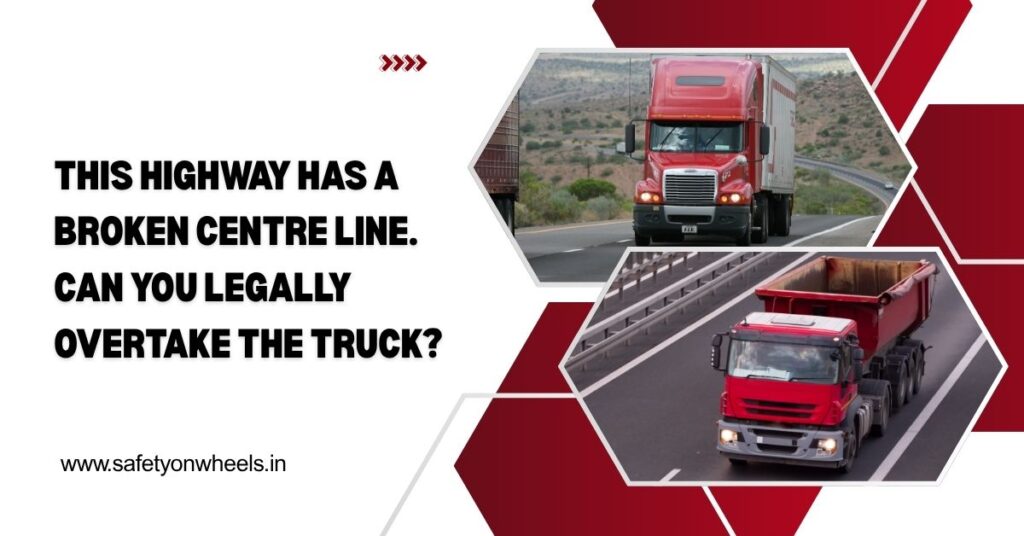
You’re driving on a highway, maintaining a steady speed, when you find yourself stuck behind a slow-moving truck. The road ahead has a broken centre line, and the obvious question pops into your mind: is it safe—and more importantly, legal—to overtake here?
This is one of the most common real-world driving scenarios, yet many drivers either misunderstand the rules or rely on guesswork. The truth is, a broken centre line does allow overtaking in many cases—but not always. The legality depends on several conditions beyond just road markings.
In this guide, we’ll break down the rules, safety considerations, and practical driving judgment you need to make the right decision every time.
This Highway Has a Broken Centre Line. Can You Legally Overtake the Truck?
The short answer is: yes, you can legally overtake a truck when the highway has a broken centre line—but only if it is safe and no other restrictions apply.
A broken (or dashed) centre line generally indicates that crossing the line is permitted for overtaking, provided you follow traffic rules and ensure the maneuver is safe.
However, this permission is conditional, not absolute. You must still evaluate:
- Oncoming traffic
- Road visibility
- Speed and behavior of the truck
- Any nearby signs or restrictions
Think of the broken line as an invitation, not a guarantee. You’re allowed to overtake, but you’re also responsible for doing it safely.
Also read: What Is The Maximum Speed Limit On A Road Outside A Built Up Area Unless Otherwise Signed?
Understanding Road Markings and What They Mean
Road markings are designed to communicate critical information quickly. Misinterpreting them can lead to dangerous decisions.
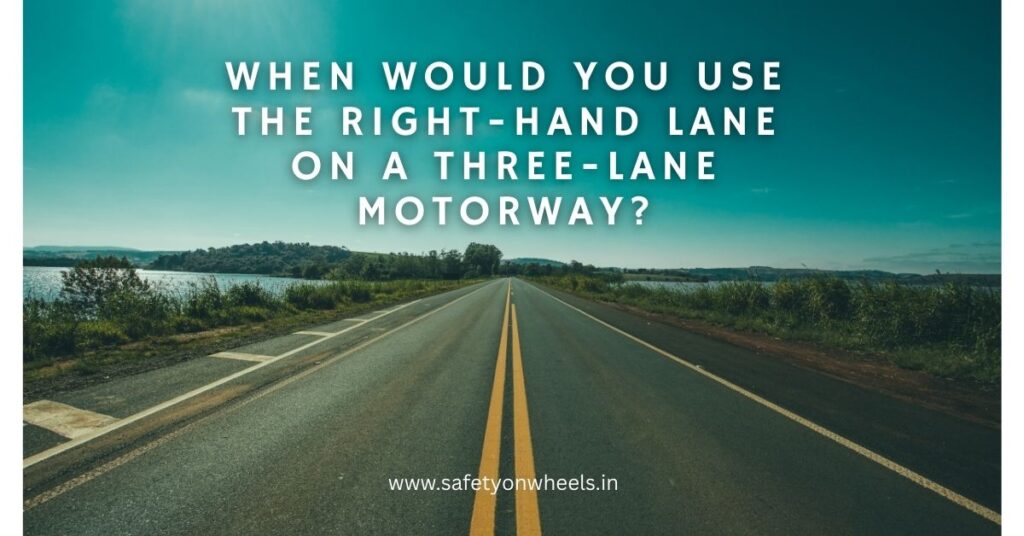
Broken Centre Line
A broken white or yellow centre line means:
- You may cross the line to overtake
- Overtaking is allowed if the road ahead is clear
- Drivers must still exercise caution
This marking is commonly used on highways where visibility is generally good.
Solid Centre Line
A continuous solid line indicates:
- No overtaking allowed
- Crossing the line is prohibited except in emergencies
If you see a solid line on your side, overtaking becomes illegal regardless of how slow the truck is.
Combination of Solid and Broken Lines
Sometimes, you’ll see one solid line and one broken line side by side:
- If the broken line is on your side, you may overtake
- If the solid line is on your side, you must not overtake
This setup controls overtaking direction based on road safety conditions.
Legal Framework Behind Overtaking on Highways
Traffic laws in most countries, including India, align with international road safety principles. The rules are simple in theory but require judgment in practice.
According to standard traffic regulations:
- Overtaking is permitted only when it does not endanger other road users
- Drivers must have a clear view of the road ahead
- Overtaking near intersections, pedestrian crossings, or curves is prohibited
Even if the road marking allows overtaking, violating any of these rules can make your action illegal.
For example, overtaking on a broken line near a blind curve is still considered dangerous and unlawful.
When It Is Safe to Overtake a Truck
Legal permission alone isn’t enough. Safety must come first. Here’s how to assess whether it’s actually safe to proceed.
Clear Visibility Ahead
You should be able to see a long stretch of road ahead. If your view is obstructed by curves, hills, or weather conditions like fog, do not attempt to overtake.
A good rule: if you cannot see far enough to complete the maneuver comfortably, wait.
No Oncoming Traffic
Even a distant vehicle can close the gap quickly at highway speeds. Make sure the opposite lane is completely clear before moving out.
Stable Speed of the Truck
If the truck is maintaining a steady speed, overtaking becomes predictable. Avoid overtaking if the truck is accelerating, slowing down unpredictably, or swerving.
Adequate Road Width
Ensure there is enough space to move into the opposite lane and return safely. Narrow roads increase risk significantly.
Situations Where Overtaking Is Not Allowed (Even With Broken Lines)
This is where many drivers make mistakes. A broken centre line does not override all restrictions.
Near Intersections and Junctions
Overtaking close to intersections is risky because vehicles may enter or cross unexpectedly.
At Pedestrian Crossings
Pedestrians may step onto the road suddenly. Overtaking here reduces your reaction time.
On Curves and Hills
Limited visibility makes it impossible to judge oncoming traffic accurately.
In Heavy Traffic Conditions
Frequent lane changes and unpredictable movements increase the risk of collisions.
When Road Signs Prohibit Overtaking
Always follow road signs. If a sign says “No Overtaking,” it overrides the broken line marking.
The Science Behind Safe Overtaking
Overtaking isn’t just a driving skill—it’s also a matter of physics and timing.
At 80 km/h, your vehicle travels approximately 22 meters per second. If overtaking takes 5–7 seconds, you’ll need over 150 meters of clear road space.
Now add:
- Reaction time (about 1.5 seconds)
- Acceleration time
- Safety margin
This is why experts recommend having at least 300–400 meters of clear visibility before overtaking on highways.
Misjudging this distance is one of the leading causes of head-on collisions.
Step-by-Step Guide to Overtaking a Truck Safely
Let’s turn theory into practice. Here’s a simple, effective process you can follow.
Step 1: Observe and Plan
Check road conditions, traffic, and visibility. Decide whether overtaking is necessary and safe.
Step 2: Maintain Safe Distance
Stay far enough behind the truck to see the road ahead clearly.
Step 3: Check Mirrors and Blind Spots
Look for vehicles approaching from behind or already in the overtaking lane.
Step 4: Signal Your Intent
Use your indicator early to communicate your move.
Step 5: Accelerate Smoothly
Move into the opposite lane and accelerate confidently. Avoid hesitation.
Step 6: Pass Quickly but Safely
Minimize the time spent beside the truck. Trucks have large blind spots and can create air turbulence.
Step 7: Return to Your Lane
Only move back when you can see the entire truck in your rearview mirror. This ensures safe distance.
Common Mistakes Drivers Make
Even experienced drivers sometimes misjudge overtaking situations. Here are a few common errors to avoid.
Assuming Broken Line Means “Always Safe”
This is the biggest misconception. The line allows overtaking—but conditions determine safety.
Underestimating Oncoming Traffic Speed
Vehicles approaching from a distance can reach you faster than expected.
Hesitating Mid-Maneuver
Uncertainty can leave you stuck beside the truck, increasing risk.
Ignoring Road Signs
Drivers often focus on road markings and miss critical signs.
Practical Tips for Better Driving Judgment
Driving safely isn’t about memorizing rules—it’s about applying them intelligently.
Think Ahead
Anticipate road conditions and plan your moves early.
Stay Patient
Not every slow vehicle needs to be overtaken immediately. Sometimes waiting is the smarter choice.
Avoid Aggression
Impatience leads to risky decisions. A calm driver is a safer driver.
Practice Defensive Driving
Assume others may make mistakes and keep a buffer space.
Also read: Features of Your Creative Writing
Final Thoughts
So, this highway has a broken centre line—can you legally overtake the truck? Yes, you can. But legality is only part of the equation. Safety, awareness, and judgment matter far more.
A broken line gives you permission, not protection. Every overtaking decision should be based on clear visibility, road conditions, and traffic behavior.
Smart drivers don’t just follow rules—they understand them. And when you combine knowledge with patience, you make the road safer not just for yourself, but for everyone around you.