Towing a trailer isn’t just about hooking it up and hitting the road. It requires careful attention to weight limits, balance, and safety guidelines—especially when it comes to something many drivers overlook: noseweight.
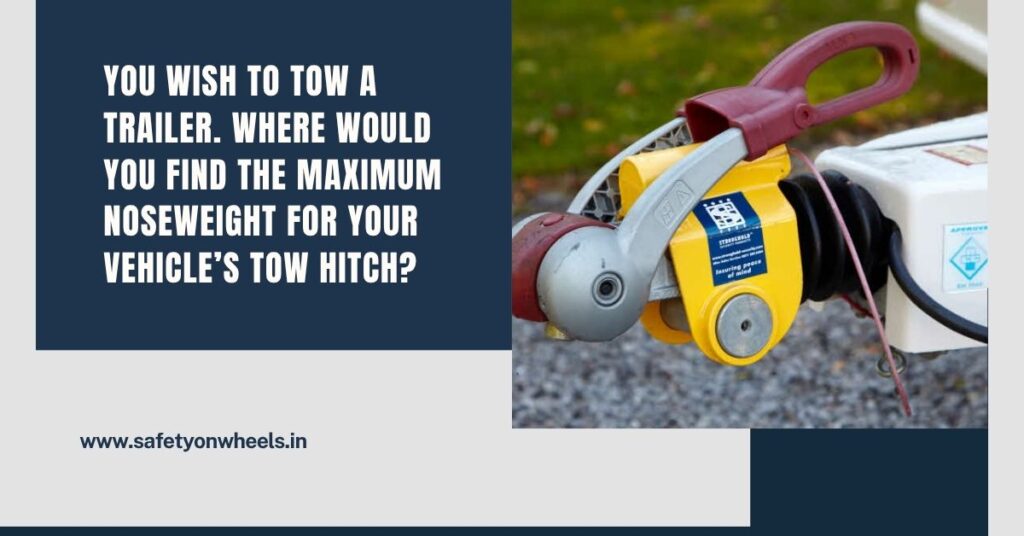
If you’ve ever wondered, “You wish to tow a trailer. Where would you find the maximum noseweight for your vehicle’s tow hitch?”, you’re asking exactly the right question. Getting this wrong can affect handling, braking, and overall safety.
In this guide, we’ll break down where to find this information, why it matters, and how to apply it in real-world driving situations.
You Wish To Tow A Trailer. Where Would You Find The Maximum Noseweight For Your Vehicle’s Tow Hitch?
Let’s answer this clearly.
You can find the maximum noseweight for your vehicle’s tow hitch in the vehicle manufacturer’s handbook, on the tow bar identification plate, or sometimes in official vehicle specifications provided by the manufacturer.
These are the only reliable sources you should trust.
Why This Information Matters?
Noseweight refers to the downward force exerted by the trailer onto the tow hitch. If this weight is too high or too low, it can:
- Reduce vehicle stability
- Affect steering control
- Increase the risk of trailer sway
Understanding where to find the correct value is the first step toward safe towing.
Also read: Is It Legal to Drive Through the Red Light to Make Way for the Police Vehicle?
What Is Noseweight and Why Is It Important?
Before diving deeper, it’s essential to understand what noseweight actually is.
Defining Noseweight
Noseweight is the vertical load that the trailer applies to the tow ball.
Think of it as how much “push” the trailer places on the back of your vehicle.
Why Proper Noseweight Is Critical
Correct noseweight ensures:
- Balanced weight distribution
- Stable towing performance
- Reduced risk of swaying
Too Much vs Too Little Noseweight
This is where things get interesting.
Too much noseweight:
- Overloads the rear suspension
- Reduces front-wheel traction
- Affects steering response
Too little noseweight:
- Causes trailer instability
- Increases the chance of snaking
The goal is always to stay within the recommended range.
Where to Find the Maximum Noseweight?
Let’s explore each source in detail so you know exactly where to look.
Vehicle Manufacturer’s Handbook
This is the most reliable and detailed source.
Inside the handbook, you’ll typically find:
- Maximum noseweight
- Towing capacity
- Safety guidelines
Manufacturers design vehicles with specific limits, so their recommendations should always come first.
Tow Bar Identification Plate
Most tow bars include a small metal plate.
This plate usually displays:
- Maximum towing weight
- Maximum noseweight
Manufacturer’s Official Specifications
If you don’t have the handbook, you can:
- Check the manufacturer’s website
- Contact a dealership
Why You Should Avoid Guessing?
Using estimates or assumptions can lead to:
- Overloading
- Mechanical stress
- Unsafe driving conditions
Always rely on verified data.
How to Measure Noseweight Correctly?
Knowing the limit is only half the job—you also need to measure it.
Using a Noseweight Gauge
This is the most accurate method.
A noseweight gauge allows you to:
- Measure the downward force directly
- Adjust load distribution accordingly
Alternative Methods
If a gauge isn’t available, some drivers use:
- Bathroom scales (with proper setup)
- DIY measuring tools
However, these methods require care to ensure accuracy.
Adjusting the Load
To achieve correct noseweight:
- Move heavier items forward to increase it
- Shift weight backward to reduce it
Balance is key.
Practical Towing Tips for Safe Driving
Once you understand noseweight, applying it correctly becomes easier.
Load Distribution Matters
Place heavy items:
- Low
- Near the axle
- Slightly forward
This improves stability.
Check Before Every Trip
Conditions can change depending on what you’re carrying.
Always recheck noseweight before setting off.
Drive Smoothly
Towing requires a different driving style:
- Gentle acceleration
- Gradual braking
- Controlled steering
Common Mistakes Drivers Make
Even experienced drivers sometimes overlook important details.
Ignoring Noseweight Limits
Some drivers focus only on total towing capacity.
Noseweight is just as important.
Uneven Loading
Poor load distribution can lead to instability.
Skipping Measurements
Assuming the weight is “about right” is risky.
Overloading the Tow Hitch
Exceeding limits can damage:
- Suspension
- Tow bar
- Vehicle structure
How Noseweight Affects Vehicle Performance
Understanding the impact helps you take it seriously.
Steering and Control
Excessive noseweight can:
- Lift the front of the vehicle slightly
- Reduce steering precision
Braking Efficiency
Improper weight distribution affects braking balance.
Trailer Stability
Correct noseweight reduces:
- Swaying
- Snaking
Legal and Safety Considerations
Towing isn’t just about mechanics—it’s also about compliance.
Following Manufacturer Guidelines
Exceeding limits may:
- Void warranties
- Lead to fines in some regions
Insurance Implications
Improper towing setup can affect insurance claims.
Road Safety Responsibility
Safe towing protects:
- You
- Other road users
Real-World Example
Imagine you’re towing a small camping trailer.
Scenario A: Correct Noseweight
- Balanced load
- Smooth handling
- Stable driving
Scenario B: Incorrect Noseweight
- Trailer sway at higher speeds
- Difficulty steering
- Increased braking distance
The difference is immediately noticeable.
Why This Knowledge Matters
Towing safely isn’t just about following rules—it’s about understanding your vehicle.
When you know:
- Where to find noseweight limits
- How to measure and adjust them
You reduce risks significantly.
Also read: How Many Lessons Do You Need to Observe for Your Portfolio
Final Thoughts
Understanding you wish to tow a trailer. Where would you find the maximum noseweight for your vehicle’s tow hitch is more than just a theory question—it’s a practical aspect of safe and responsible driving. The correct noseweight ensures that your vehicle and trailer work together as a stable unit, rather than against each other. By relying on trusted sources like the manufacturer’s handbook and tow bar plate, and by taking the time to measure and adjust load distribution properly, you create a safer towing experience for yourself and everyone around you. In real-world driving, it’s often these small technical details that make the biggest difference, turning a potentially risky situation into a controlled and confident journey.