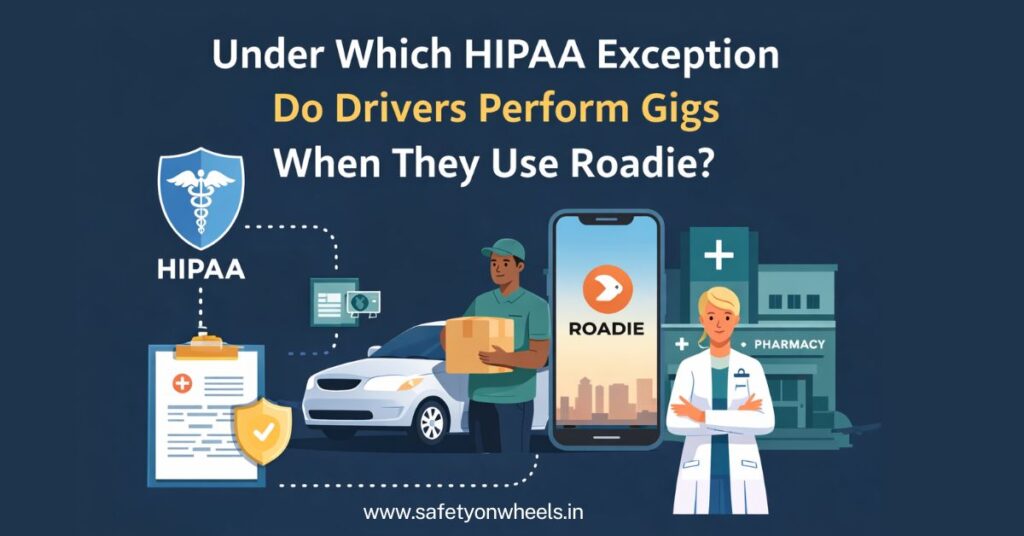
Gig economy platforms have transformed how deliveries work, especially in healthcare logistics. Services like Roadie connect drivers with delivery opportunities that can include medical supplies, lab specimens, and even prescription medications. This raises an important and often misunderstood question: under which HIPAA exception do drivers perform gigs when they use Roadie?
At first glance, it may seem like a legal gray area. After all, healthcare information is highly protected under HIPAA (Health Insurance Portability and Accountability Act). But the reality is more structured than it appears.
In this guide, we’ll break down how HIPAA applies in this context, explain the relevant exceptions, and clarify the role drivers play when handling healthcare-related deliveries.
Under Which HIPAA Exception Do Drivers Perform Gigs When They Use Roadie?
Let’s address the core question clearly.
Drivers performing gigs through Roadie typically operate under the “treatment, payment, and healthcare operations” (TPO) exception of HIPAA, or as part of a business associate relationship depending on how the service is structured.
This means:
- Deliveries tied to patient care or healthcare services may fall under permitted disclosures
- Drivers themselves are usually not directly covered entities
- The platform (like Roadie) may act as a business associate of a healthcare provider
Why This Distinction Matters
HIPAA doesn’t prohibit all sharing of health-related information. It regulates how and why information is shared, especially when it relates to patient care.
Also read: How Many Mistakes Are Allowed On Driving Test California?
Understanding HIPAA Basics in Simple Terms
Before diving deeper, it’s important to understand what HIPAA actually covers.
What Is HIPAA?
HIPAA is a U.S. law designed to protect protected health information (PHI).
PHI includes:
- Patient names linked to medical details
- Prescription information
- Lab results or medical records
Who Must Follow HIPAA?
HIPAA applies to:
- Healthcare providers
- Health plans
- Healthcare clearinghouses
These are known as covered entities.
What About Third Parties?
Third-party service providers can also fall under HIPAA if they handle PHI on behalf of a covered entity.
These are called business associates.
The Role of Roadie in Healthcare Deliveries
To understand the exception, we need to look at how Roadie fits into the system.
What Roadie Does
Roadie is a delivery platform that connects:
- Businesses needing deliveries
- Independent drivers willing to complete them
Healthcare Use Cases
In healthcare, Roadie may be used for:
- Prescription deliveries
- Medical equipment transport
- Lab sample logistics
Where HIPAA Comes In
If a delivery involves PHI, HIPAA rules apply to the organization arranging the delivery—not necessarily the individual driver directly.
The TPO Exception: Treatment, Payment, and Operations
This is the most relevant HIPAA exception in this context.
What Is the TPO Exception?
HIPAA allows sharing of PHI without patient authorization for:
- Treatment: Providing or coordinating care
- Payment: Billing and reimbursement
- Healthcare operations: Administrative and support activities
How It Applies to Deliveries
Delivering medication or medical supplies can fall under:
- Treatment (ensuring the patient receives care)
- Operations (logistics and coordination)
Why Drivers Are Included Indirectly
Drivers act as part of the delivery chain, supporting healthcare operations.
However, they typically do not access or use PHI beyond what is necessary for delivery.
Business Associate Agreements (BAAs) Explained
Another key concept is the business associate relationship.
What Is a Business Associate?
A business associate is a third party that performs services involving PHI on behalf of a covered entity.
Role of Platforms Like Roadie
In many cases:
- The platform enters into a Business Associate Agreement (BAA)
- This agreement outlines how PHI is handled and protected
Where Drivers Fit In
Drivers usually operate as:
- Independent contractors
- Agents of the platform
They follow guidelines set by the platform but are not individually signing BAAs in most cases.
What Information Drivers Typically Handle?
This is where things become more practical.
Limited Exposure to PHI
Drivers usually receive minimal information, such as:
- Delivery address
- Recipient name
Avoiding Sensitive Data
Well-designed systems limit access to:
- Medical details
- Prescription contents
- Patient history
Why This Matters
The less PHI a driver handles, the lower the compliance risk.
Compliance Measures in Healthcare Deliveries
Healthcare organizations take several steps to stay compliant.
Data Minimization
Only essential information is shared with drivers.
Secure Packaging
Medical items are packaged to protect privacy and integrity.
Driver Guidelines
Drivers may receive instructions such as:
- Do not open packages
- Deliver only to the intended recipient
- Follow verification procedures
Common Misconceptions About HIPAA and Delivery Drivers
There’s a lot of confusion around this topic.
“Drivers Are Fully Covered by HIPAA”
Not exactly.
Drivers are part of the process but are not usually covered entities themselves.
“All Health-Related Deliveries Violate HIPAA”
Incorrect.
HIPAA allows certain disclosures under defined conditions, including TPO.
“No Information Can Be Shared”
HIPAA permits sharing when it is necessary for care and operations.
Risks and Responsibilities for Drivers
Even if drivers are not directly covered entities, responsibility still exists.
Protecting Privacy
Drivers should:
- Avoid discussing deliveries
- Respect confidentiality
- Follow platform guidelines
Handling Packages Carefully
Medical deliveries may be sensitive or time-critical.
Maintaining Professional Conduct
Simple actions—like verifying recipients—help maintain trust and compliance.
Why This System Works?
The combination of HIPAA exceptions and business associate structures allows healthcare logistics to function efficiently.
Supporting Patient Care
Timely delivery of medications and supplies is essential.
Enabling Modern Logistics
Gig platforms provide flexibility and speed.
Balancing Privacy and Practicality
The system ensures:
- Patient data remains protected
- Necessary services continue without disruption
Real-World Example
Imagine a pharmacy using a delivery platform to send medication to a patient.
What Happens Behind the Scenes
- The pharmacy (covered entity) initiates the delivery
- The platform operates under a BAA
- The driver receives only delivery details
Why This Is Allowed
The delivery supports treatment and falls under healthcare operations.
Also read: Which Service is a Student Who is Homeless Automatically Eligible for?
Final Thoughts
Understanding under which HIPAA exception do drivers perform gigs when they use Roadie requires looking beyond the surface and recognizing how modern healthcare logistics operate within legal frameworks. In most cases, these deliveries fall under the treatment, payment, and healthcare operations exception, allowing necessary information to be shared without violating patient privacy. At the same time, platforms act as business associates, ensuring that proper safeguards are in place.
Drivers, while not directly bound as covered entities, play an important role by handling deliveries responsibly and respecting privacy guidelines. This balance between accessibility and confidentiality is what allows healthcare services to remain efficient while still protecting sensitive information. As delivery systems continue to evolve, understanding these principles becomes increasingly important for both professionals and everyday participants in the gig economy.